Duke Heart Pulse — January 25, 2026
Chief’s message: Winter storms
Hope everyone is staying warm as winter storms come across the east coast. Please note our Health systems activation of essential services until 11:30 AM currently Monday. We will continue to re-assess over the weekend. As we get ready for February and heart month we will be sure to share updates and work of our teams across the multiple areas that we connect with our community. Stay warm.
Highlights of the week:
Weather Update — Staying Safe
We hope all of you are staying safe and warm as winter storm Fern approaches our area.
As a result of expected hazardous conditions resulting from accumulations of ice, Duke University and Duke University Health System has activated the severe weather and emergency conditions policy from 7 p.m. Saturday, Jan. 24 through 11:30 a.m. Monday, Jan. 26. A decision will be made on Sunday, Jan. 25, on whether to extend the policy based on conditions across the region.
During times of severe weather, some staff positions require on-site presence to continue operations. All jobs should be assigned a service category by their manager to ensure continuous operations of patient care, student support, and research functions. The three categories are:
- Essential Service: during severe weather/emergency conditions, essential service staff report or remain at work. Transportation service and childcare services may be provided for those required to work during severe weather/emergency conditions.
- Reserve Service: during severe weather/emergency conditions, reserve service staff are assigned a status at the time of severe weather/emergency conditions.
- Delayed Service: during severe weather/emergency conditions, delayed service staff do not report to work or remain at work.
Roads, especially bridges and overpasses, are likely to become slick and hazardous during this time as overnight temperatures are projected to drop into single digits Monday night into Tuesday morning. Individuals should also avoid walking under trees that may be stressed with ice accumulations.
Duke crews are pre-treating and applying brine solution to campus streets, outdoor stairways, walkways, and entries to parking facilities. Crews will be on-site ready to respond during the weekend.
Operational Updates:
- Parking: medical staff should avoid parking in surface lots throughout the weekend so that crews can safely remove snow and ice. Access to all Medical Center garages (PG1, PG2, PG3, and Research Drive Garage) began on Friday with any parking permit.
- Bus routes: continued operation will depend on weather and road conditions. Every effort will be made to maintain service on the C-1 route; Duke community members should monitor Duke TransLoc for real-time updates on transit routes.
- Downed trees: Downed trees or large limbs should be reported to the Facilities Snow Desk (919-660-4280), and crews will be prepared to respond, as needed.
Duke community members are encouraged to stay informed by checking the DukeALERT website (https://emergency.duke.edu), as well as the Campus Service Updates web page for additional updates on parking lots, bus routes, dining facilities, and stores.
Thank you to everyone who is staying on-site to care for inpatients during the storm – we appreciate you!
December Funding Awards — Cardiology
Congratulations to the following cardiology faculty for receiving sponsored and industry-sponsored research awards in December 2025.
Sponsored Research
- Sudarshan Rajagopal has received a sub-award (1UG3HL180990-01) through Stanford University for a project entitled “1/2 A Phase 2 Study of Elafin (Tiprelestat) for the Treatment of Pulmonary Arterial Hypertension (PAH).” Total funding will be $82,989.
Industry-Sponsored Research
- Stephen Greene has received an award from AstraZeneca Pharmaceuticals, LP for a project entitled “REFOCUS-HTN US.” Total funding will be $2,022,948.
- Neha Pagidipati has received an award from Boehringer Ingelheim International GmbH for a project entitled “BI OBESITY+ DESIGN STUDIO – MASLD, Switch, Women’s Health.” Total funding will be $100,685.
- Sean Pokorney has received an award from Biotronik, Inc. for a project entitled “Independent Core Lab.” Total funding will be $584,644.
- Nishant Shah has received an award from Kardigan Inc. for a project entitled “Biomarkers in Acute Severe Hypertension (ASH): Analysis of Clinical Blood Samples from patients presenting to the ED and/or admitted with a diagnosis of Acute Severe Hypertension or recorded SBP � 180 mmHg.” Total funding will be $219,675.
- Sreekanth Vemulapalli has received an award from the American Heart Association for a project entitled “AHA AI HCM.” Total funding will be $543,793.
Congratulations to all!
Join Pagidipati and Research Goes Red
Neha Pagidipati, MD, is serving as a 2026 Clinical Lead for the American Heart Association’s (AHA) Research Goes Red initiative. Let’s help her with her recruitment push so that Duke can have a great showing this year!
What is Research Goes Red?
Historically, clinical studies haven’t included enough women, particularly women of color. As of 2020, women represent only 38% of research participants. We need women to be equally represented, allowing us to understand their specific risks, symptoms, diagnosis, and treatment.
Research Goes Red is an AHA-led initiative calling on women across the United States to contribute to health research. The AHA’s vision for Research Goes Red is to create the world’s most engaged and largest women’s health registry and research platform designed to put women directly in the driver’s seat to accelerate our understanding of how cardiovascular disease uniquely impacts women.
Both healthy women and those with an episodic or chronic health condition are encouraged to participate in research. The more we know about women and their overall health and well-being, the better we can treat, beat, and prevent cardiovascular disease.

Be on the lookout for flyers, posters, and postcards in the clinics. It’s easy for anyone to sign up for Research Goes Red – just look for the QR code and scan it. If you have any questions regarding how best to support Neha in this recruitment drive, please let her know.
Cardiac Sarcoidosis and Arrhythmias Support Meeting Held
 Our Duke Heart Sarcoidosis team held a successful second gathering of their Sarcoidosis Patient Support Group this week. The event, Cardiac Sarcoidosis and Arrhythmias, was held on Wednesday, Jan. 21, with excellent presentations — including one by electrophysiologist Daniel Friedman, MD, who was the key presenter on heart abnormalities that can be seen in this patient population. Johana Fajardo, one of our excellent Advanced Heart Failure and Transplant Nurse Practitioners, planned and moderated the meeting, which had more than 40 patients registered to attend.
Great job, everyone!
ICYMI: Duke Network Services Becomes Duke Health Affiliations & Networks
For more than 30 years, Duke Network Services has supported a wide range of community-based specialty and hospital affiliations by connecting them with the world-class expertise of Duke Health. However, the department’s name caused many people to think it was responsible for IT or technology at Duke.
As a result, Duke Network Services is now known as Duke Health Affiliations & Networks – a new name that better conveys the department’s mission to collaborate with community hospitals that advance patient safety and clinical quality, improve community health, and facilitate access to expert care and research.
We look forward to our continued partnership with the team!
Mandatory Masking on Heart Units; Tier 2 Visitation Restrictions
As of Thursday, Jan. 8, 2026, Duke Heart has implemented mandatory masking for staff and is strongly recommending them for visitors. Meanwhile, Duke has moved to Tier 2 Visitation Restrictions as of Jan. 6. Complete information is available on Duke Health Now.
Upcoming Events & Opportunities
National Wear Red Day & Heart Month
 February is Heart Month – and National Wear Red Day — part of the American Heart Association’s Go Red for Women awareness campaign — is Friday, Feb. 6th. Wear your red and get some team selfies – submit them to Tracey Koepke for inclusion in Pulse!
Cardiology Grand Rounds
Feb. 3: RV-PA Coupling- State of the Art with Khodr Tello, MD. 5 p.m., DN 2002 and via Zoom.
CD Fellows Core Curriculum Conference
Jan. 28: EP Case Presentation with Dorothy Avoke and Marcus Threadcraft. Noon, DMP 7E39 and via Zoom.
Jan. 30: DHP Case Presentation with Jon Taylor-Fishwick. Noon, Zoom only.
MMCVI Grand Rounds
Multi-Modality Cardiovascular Imaging Grand Rounds: A multi-imaging approach to cardiovascular disease cases. Thursdays, Noon to 1 p.m., via Zoom.
Jan. 29: NO CONFERENCE
Feb. 5: Quality in the Echo lab with Ashlee Davis
Feb. 12: Mitral Stenosis with Jon Mark
Feb. 19: LV Strain with Fawaz Alenezi
Feb. 26: Mitral Valve Pre-Interventional Imaging Screening with Fawaz Alenezi
Medicine Grand Rounds
Jan. 30: Quality and Safety at Duke: The Integral Role of the Department of Medicine with Drs. Mike Pignone and Rick Shannon. 8 a.m. Trent Semans Great Hall.
DCRI 30th Anniversary Forum Series
Jan. 27: A Fireside Chat with Jay Bhattacharya, MD, PhD, 18th Director, National Institutes of Health. 2 p.m., Zoom.
Bhattacharya will share insights on the NIH’s priorities for the nation’s healthcare and research initiatives as part of this fireside chat, which will be held virtually.
School of Medicine Events:
School of Medicine Forum
January 29, 2026 at 12:00 PM
Join leadership to discuss strategic priorities for education, research, clinical care, and community partnership. Your input is essential as we shape the future together.
Join the Webinar | Add to Your Calendar
Research Symposium: Metabolism and Health Across the Lifespan*
*Speakers include Leanna Ross, PhD and Svati Shah, MD, MHS
February 5, 2026 from 10:00 a.m. – 4:00 p.m.
Great Hall, Trent Semans Center for Health Education
Includes the Dr. Robert J. Lefkowitz Distinguished Lecture by Dr. Daniel Drucker: “Emerging Indications, Molecules, and Mechanisms for GLP-1 Medicines.”
Upcoming CME Activities:
2026 Duke Heart CMEs
The dates for the following 2026 Duke Heart symposia have been set. We will announce others as they are added.
- June 6: Duke Heart Failure Symposium — Course directors are Marat Fudim, Rob Mentz, Richa Agarwal, and Stephanie Barnes. Location: Durham Convention Center, Durham, NC.
- October 30: 18th Annual NC Research Triangle Pulmonary Hypertension Symposium – Course directors are Terry Fortin, Sudar Rajagopal, and Jimmy Ford. Location: Durham Convention Center, Durham, NC.
Please save the dates!
Have news to share?
If you have news to share with the Pulse readership, please contact Tracey Koepke, director of communications for Duke Heart & Vascular at tracey.koepke@duke.edu. We would love to hear about your latest accomplishments, professional news, cool happenings, and any events or opportunities that may be of interest to our team. Please call me with any questions: 919-681-2868. Feedback on Pulse is welcome and encouraged. Submissions by Noon on Wednesdays will be considered for weekend inclusion.
Duke Heart in the News:
January 20 — Nishant Shah
Everyday Health
Heartburn or Heart Attack? How to Tell the Difference
January 21 — Neha Pagidipati
Science Friday podcast
Looking Beyond Statins For New Ways To Lower Cholesterol
January 22 — Duke Health
Becker’s Hospital Review
100 hospitals and health systems with great heart programs (2025)
Duke Heart Pulse — January 18, 2026
Highlights of the week:
CVRC Mandel Awards
We’re excited to share the Duke Cardiovascular Research Center’s latest Mandel Award winners. These awards have a one-year project period starting January 1, 2026. The awards include five Mandel Seed Awards at $51,656 and two Mandel Bridge Awards at $53,178.
Our Mandel Seed Award winners are:
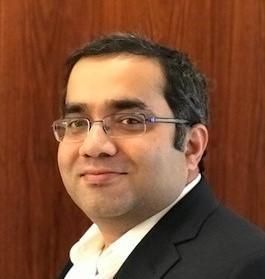 Rohit Singh, PhD, Assistant Professor in the Departments of Biostatistics & Bioinformatics and Cell Biology, with Charles Gersbach, PhD, John W. Strohbehn Distinguished Professor of Biomedical Engineering, for the project: Comprehensive Characterization of the Genetic Contributions to Dilated Cardiomyopathy.
Heart failure is a major public health burden and is projected to affect nearly 8 million Americans by 2030. Hypertension is known to cause dilated cardiomyopathy (DCM), which accounts for 30– 40% of all heart failure cases. DCM has a strong genetic basis, with both familial and sporadic forms linked to pathogenic variants or mutations in genes. However, only ~25% of all DCM cases have a genetic cause that has been identified. Moreover, large-scale studies recently identified over 100 genetic regions and sequences associated with increased risk of developing DCM, though the vast majority of causal genetic variants within these regions and others remain unmapped. Together these data provide strong evidence that there are many unknown genes and related sequences yet to be discovered that cause DCM. The goal of our study is to establish a comprehensive genetic map of drivers of DCM, providing novel insights into disease processes, new tools for evaluating patient risk, and a foundation for developing genetically informed therapies.
 Stephanie Kereliuk, PhD, a Mandel Fellow and post-doctoral associate in surgery, with Walter J. Koch, PhD, professor in Surgery, Pharmacology and Cancer Biology for the project: Heart to Fat Communication: Defining the Cardiac Secretome in Obesity and Beyond
Obesity is a key risk factor in the development of heart disease, yet the mechanisms linking excess body fat to cardiac dysfunction remain poorly understood. Recent research shows that the heart releases signaling molecules that allows it to communicate with other organs, especially during metabolic stress such as obesity. However, the identity of these cardiac signaling molecules, and how they change in disease are still unknown. Our lab has developed a novel mouse that allows us to tag and identify proteins secreted by heart cells. This powerful tool allows us to map, for the first time, the molecules that the heart releases, known as the cardiac secretome, under both healthy and diseased conditions. With support from the Mandel Foundation and this Seed Grant, we will use our innovative mouse to identify the cardiac secreted factors altered by obesity and determine how they affect fat tissue and metabolism. By uncovering these molecular signals, we aim to reveal new ways the heart communicates with fat and other organs, leading the way for the development of future treatments for cardiovascular and metabolic disease.
 Guofang Zhang, PhD, associate professor in endocrinology, metabolism, and nutrition, with Deborah Muoio, PhD, George Barth Geller Distinguished Professor of Cardiovascular Disease for the project: Exploring the interplay between ketolysis and heme biosynthesis in hypertrophied and failing hearts
Due to its vital role as a continuously working muscle that pumps blood to all other organs in the body, the heart requires an enormous amount of energy. Accordingly, cardiac muscle is densely packed with tiny biological batteries called mitochondria–cellular powerhouses that transform energy from the food we eat to a form of biochemical energy that keeps the heart pumping. When the heart is healthy, its mitochondria are metabolically omnivorous, feeding indiscriminately off sugar, fat, and/or fat-derived ketones. By contrast, when hearts become abnormally enlarged due to high blood pressure, their mitochondria become less metabolically flexible and more heavily dependent on ketones. Concomitantly, in an effort to adapt to new physiological circumstances, stressed hearts attempt to expand and remodel their mitochondria via a process that requires an essential building block known as heme. Recently, our lab uncovered new evidence that a high rate of heme synthesis, needed to bolster mitochondrial power output, is incompatible with heavy dependence on ketone metabolism. This setting of metabolic inflexibility, ketone dependency, and a simultaneous need for the heart to rebuild its electrical grid appears to create an energy crisis that triggers a downward spiral towards cardiac decline and heart failure. The proposed SEED project aims to develop new research methods and tools that will help us fully understand and ultimately combat the foregoing mitochondrial energy crisis, thereby advancing our long-term goal of guiding novel therapeutic strategies for treating and preventing cardiometabolic diseases.
 Andrew Cangelosi, PhD, post-doctoral associate in the Duke Molecular Physiology Institute, with Christopher Newgard, PhD, W. David and Sarah W. Stedman Distinguished Professor of Nutrition in the School of Medicine and professor of Pharmacology and Cancer Biology for the project: Investigating Chchd5 as a novel regulator of cardiovascular disease through a liver-heart axis
To better prevent and treat cardiovascular diseases (CVD) – the top cause of death worldwide – we must find new ways to improve heart health. Heart function is closely connected to and influenced by other organs, particularly the liver. For instance, liver disease caused by obesity is increasingly common and is strongly associated with CVD. Our lab has recently discovered a gene (Chchd5) that controls the health of liver cells during obesity. Blocking this gene alters liver metabolism and improves liver health, but the potential impact on heart health and disease is unknown. This project will study how Chchd5 affects heart metabolism, and how this influences heart function and the development of CVD. Understanding how Chchd5 affects liver and heart health may provide a new avenue to fight the CVD epidemic.
 Jessica Regan, MD, assistant professor of medicine in cardiology, with Svati Shah, MD, MHS, Ursula Geller Distinguished Professor of Research in Cardiovascular Diseases and professor of medicine in cardiology, and William Kraus, MD, Richard and Pat Johnson University Distinguished Professor and professor of medicine in cardiology for the project: Skeletal Muscle Cellular Composition and Molecular Pathways at a Single Cell Level in Clonal Hematopoiesis and Exercise Response
Clonal hematopoiesis of indeterminate potential (CHIP) is the age-related accumulation of DNA mutations in blood cells and has been associated with higher levels of inflammation and increased risk of heart disease. Traditional risk factors for heart disease are primarily metabolic in origin, including obesity, sedentary lifestyle and pre-diabetes. These conditions are associated with higher levels of inflammation and exercise training can decrease this inflammation. Healthy skeletal muscle function is a critical element for exercise capacity and training but has been understudied in heart disease. CHIP can impact multiple organ systems, including heart, liver and kidney, but the potential impact of inflammation on skeletal muscle and changes with exercise training have not been explored. In this study, we will use skeletal muscle from participants who are overweight with pre-diabetes who joined a 6-month exercise program. We will evaluate RNA changes at a single-cell level to understand detailed composition and differences with both CHIP and exercise training. Paired analysis of baseline and follow-up samples will allow us to understand skeletal muscle predictors of response to exercise training. This knowledge may uncover new ways to treat heart and metabolic diseases.
Our two Mandel Bridge Award winners are:
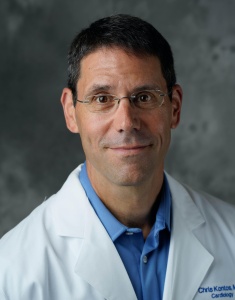 Christopher D. Kontos, MD, professor of medicine in cardiology for his project: The Role of Caskin2 in Prevention of Vascular Calcification
Atherosclerosis causes obstruction of coronary, peripheral, and cerebral blood vessels and remains a leading cause of death and disability as it results in heart attacks, strokes, and limb amputations. Atherosclerosis is often associated with vascular calcification in each of these vascular beds, and the presence of calcification in blood vessels is associated with worse outcomes. How vascular calcification occurs remains poorly understood, but better understanding of this process may lead to improved treatments for cardiovascular diseases. We have identified a protein in vascular cells called Caskin2 and have found that it is required for quiescence of endothelial cells, which line all blood vessels. We have recently found that Caskin2 is also in vascular smooth muscle cells (VSMCs), which make up the muscular layer of blood vessels and are largely responsible for the calcification that occurs in atherosclerosis. We have discovered that loss of Caskin2 in these VSMCs results in increased calcification in isolated smooth muscle cells, suggesting that Caskin2 may be a natural inhibitor of vascular calcification. In this application, we propose to identify mechanisms by which Caskin2 may have its beneficial effects on vascular calcification. In addition, we have generated mice in which Caskin2 can be deleted or increased specifically in VSMCs, and we will test its effects on vascular calcification in these mice. Completing these studies will shed light on this important process and may lead to the development of treatments for the harmful calcium deposits that occur in many patients with cardiovascular disease.
 Sudha K. Shenoy, PhD, professor of medicine in cardiology, for her project: Biased Allosteric Modulators of the Glucagon Receptor: A Novel Strategy to Improve Cardiac Function and Glucose Homeostasis
Heart disease and type 2 diabetes (T2D) are among the most prevalent and serious health challenges, affecting millions of individuals worldwide. A key hormone called glucagon helps regulate blood sugar levels, but when its signaling becomes dysregulated, it can contribute to both hyperglycemia and heart failure. While current drugs that activate or block the glucagon receptor (GCGR) can offer therapeutic benefits, they often come with significant side effects due to their broad and non-selective actions. Our research focuses on discovering novel small molecule compounds that can fine-tune GCGR signaling— rather than fully activating or inhibiting the receptor. These compounds aim to preserve beneficial effects on blood sugar and heart function while minimizing adverse outcomes. This innovative approach could lead to safer and more effective treatments for both diabetes and cardiovascular disease. This project was initially supported by a Mandel Seed Award, which enabled us to generate key preliminary data and submit an NIH R01 grant application. Unfortunately, the review of this application has been delayed due to the ongoing government shutdown and associated funding disruptions. Bridge support from the Mandel Foundation would allow us to continue critical experiments during this gap period, ensuring momentum toward developing transformative therapies for heart failure and diabetes.
Congratulations to all!
DUHS Update: Prioritizing Safety: Parking & Vehicle Security Awareness
Duke University Hospital Operations leadership issued a notice on Friday, Jan. 16, to make the Duke Health community aware of recent vehicle break-ins occurring across Durham, including areas around Duke University Hospital and some of our surrounding locations.
Duke teams are actively working with local law enforcement and security partners, increasing patrols where appropriate, and following up on available information. While this activity is not isolated to any one location, the team shared practical reminders that can help reduce risk:
Parking Safety Tips
- Avoid leaving valuables in your vehicle whenever possible.
- If items must be left in a vehicle, place them in the trunk before arriving.
- Lock your vehicle and ensure windows are fully closed.
- Be mindful of your surroundings when parking or returning to your vehicle, especially in larger or less-populated lots.
- Take note of individuals sitting in vehicles for extended periods or vehicles parked unusually close when other spaces are available.
- Whenever possible, park near lighting, entrances, or other vehicles.
- Trust your instincts — if something doesn’t look right, report it promptly.
Across the health system, we continue to work collaboratively on enhanced security measures, informed by ongoing assessments and coordination with our partners. Adjustments will continue as needed to support safety across our locations. If you observe suspicious behavior, have concerns, or need assistance, please contact local law enforcement, security at your location, or use the LiveSafe app.
Thank you for your continued awareness and partnership in helping keep our Duke Health community safe.
Mandatory Masking on Heart Units; Tier 2 Visitation Restrictions
As of Thursday, Jan. 8, 2026, Duke Heart has implemented mandatory masking for staff and is strongly recommending them for visitors. Meanwhile, Duke has moved to Tier 2 Visitation Restrictions as of Jan. 6. Complete information is available on Duke Health Now.
Upcoming Events & Opportunities
National Wear Red Day & Heart Month
February is Heart Month – and National Wear Red Day — part of the American Heart Association’s Go Red for Women awareness campaign — is Friday, Feb. 6th. Wear your red and get some team selfies – submit them to Tracey Koepke for inclusion in Pulse!
Cardiology Grand Rounds
Feb. 3: RV-PA Coupling- State of the Art with Khodr Tello, MD. 5 p.m., DN 2002 and via Zoom.
CD Fellows Core Curriculum Conference
Jan. 21: HF/Transplant Case Presentation with Nishkala Shivakumar. Noon, DMP 7E39 and via Zoom.
Jan. 23: Topic and speaker to be announced. Noon, Zoom only.
Jan. 28: EP Case Presentation with Dorothy Avoke and Marcus Threadcraft. Noon, DMP 7E39 and via Zoom.
Jan. 30: DHP Case Presentation with Jon Taylor-Fishwick. Noon, Zoom only.
MMCVI Grand Rounds
Multi-Modality Cardiovascular Imaging Grand Rounds: A multi-imaging approach to cardiovascular disease cases. Thursdays, Noon to 1 p.m., via Zoom.
Jan. 22: Multi-Modality Imaging on Pericardial Disease with Cosette Champion
Jan. 29: NO CONFERENCE
Feb. 5: Quality in the Echo lab with Ashlee Davis
Feb. 12: Mitral Stenosis with Jon Mark
Feb. 19: LV Strain with Fawaz Alenezi
Feb. 26: Mitral Valve Pre-Interventional Imaging Screening with Fawaz Alenezi
Medicine Grand Rounds
Jan. 30: Quality and Safety at Duke: The Integral Role of the Department of Medicine with Drs. Mike Pignone and Rick Shannon. 8 a.m. Trent Semans Great Hall.
DCRI Research Forum: A Fireside Chat with Jag Singh, MD, PhD

Please join us for DCRI Research Forum on Thursday, Jan. 22, when they will host cardiologist and author Jag Singh, MD, PhD for a fireside chat.
Singh is a Professor of Medicine at Harvard Medical School and former Clinical Director of the Cardiology Division and the Roman W. DeSanctis Endowed Chair in Cardiology at Mass General Hospital, Boston. Singh is also the author of the book Future Care: Sensors, Artificial Intelligence, and the Reinvention of Medicine, which explores the upswell of virtual care, the evolving role of sensors, and the impact of artificial intelligence in medicine, targeted at patients, healthcare professionals, caregivers and readers interested in big ideas and the future of humankind.
What: DCRI Research Forum: A Fireside Chat with Jag Singh, MD, PhD
When: Noon-1 p.m., Thursday, January 22.
Where: Zoom
Webinar ID: 940 1213 9236 | Passcode: 649097
DCRI 30th Anniversary Forum Series
Jan. 27: A Fireside Chat with Jay Bhattacharya, MD, PhD, 18th Director, National Institutes of Health. 2 p.m., Zoom.
Bhattacharya will share insights on the NIH’s priorities for the nation’s healthcare and research initiatives as part of this fireside chat, which will be held virtually.
School of Medicine Events:
School of Medicine Forum
January 29, 2026 at 12:00 PM
Join leadership to discuss strategic priorities for education, research, clinical care, and community partnership. Your input is essential as we shape the future together.
Join the Webinar | Add to Your Calendar
Research Symposium: Metabolism and Health Across the Lifespan*
*Speakers include Leanna Ross, PhD and Svati Shah, MD, MHS
February 5, 2026 from 10:00 a.m. – 4:00 p.m.
Great Hall, Trent Semans Center for Health Education
Includes the Dr. Robert J. Lefkowitz Distinguished Lecture by Dr. Daniel Drucker: “Emerging Indications, Molecules, and Mechanisms for GLP-1 Medicines.”
Upcoming CME Activities:
2026 Duke Heart CMEs
The dates for the following 2026 Duke Heart symposia have been set. We will announce others as they are added.
- June 6: Duke Heart Failure Symposium — Course directors are Marat Fudim, Rob Mentz, Richa Agarwal, and Stephanie Barnes. Location: Durham Convention Center, Durham, NC.
- October 30: 18th Annual NC Research Triangle Pulmonary Hypertension Symposium – Course directors are Terry Fortin, Sudar Rajagopal, and Jimmy Ford. Location: Durham Convention Center, Durham, NC.
Please save the dates!
Have news to share?
If you have news to share with the Pulse readership, please contact Tracey Koepke, director of communications for Duke Heart & Vascular at tracey.koepke@duke.edu. We would love to hear about your latest accomplishments, professional news, cool happenings, and any events or opportunities that may be of interest to our team. Please call me with any questions: 919-681-2868. Feedback on Pulse is welcome and encouraged. Submissions by Noon on Wednesdays will be considered for weekend inclusion.
Duke Heart in the News:
January 9 — William Kraus
Men’s Health
Which Workout Helps Cholesterol More: Weights or Cardio?
January 11 — Monique Starks
The Duke Chronicle
Duke researchers deploy drones to speed AED delivery in cardiac emergencies
January 12 — Monique Starks
Dronelife
Duke Researchers Deploy Drones for AED Delivery in Cardiac Arrest Study
January 12 — Duke Health
Victoria Advocate (TX)
How Heart Attacks Differ in Women and How the Community Can Take Action
January 12 — William Kraus
Men’s Health (en Espanol)
¿Qué entrenamiento ayuda más al colesterol: pesas o cardio?
January 13 — William Kraus
Men’s Health SA
Lower Your Cholesterol with These Workouts Backed by Science
January 14 — Brian MacGrory
Breaking Med
Migraine CGRP Inhibitors Tied to Modest Cardiovascular Events
January 15 — William Kraus
Today
Try 1 Simple Diet Change to Reduce Heart Disease Risk and Lose Weight
January 15 — Harry Severance
Medscape
Duke Heart Pulse — January 11, 2026
Chief’s message: Happy New Year and End of Era
We return with the weekly Pulse for 2026 and hope you all had a happy and healthy new year. We return with great energy and work towards our goals. We appreciate all the faculty, fellows, residents, and staff that helped cover the holiday weeks.
We have several updates below. The most notable being that Saturday night there was an event to honor Dr. Donald Glower and his wife Sue Ann Glower as he is retiring for CT surgery. Dr. Glower has been a consistent north star in our heart center and cardio-thoracic surgical division – expanding and innovating mitral valve surgery including bringing minimally invasive surgery to our group, training countless surgical residents, and serving our patients and community over 45 years while performing over 7500 heart surgeries. It was telling to hear the number of surgeons, cardiologists, anesthesiologists,APPs, OR nurses, ICU team members, perfusionists, and others that attended and provided their appreciation for the teamwork, culture and patient centered care that Dr. Glower embodied. Funny stores, gifts and Jumbo Honey Buns were shared. We hope Dr. Glower has a wonderful time in retirement.
Highlights of the week:
Happy New Year!
On behalf of the leadership team for Duke Heart & Vascular, we wish each of you a very happy, healthy, and safe 2026!
Glower Celebrated, Officially Retires from Duke
Last night, members of the Division of Cardiovascular and Thoracic Surgery, leadership of Duke Heart & Vascular, CT Anesthesiology, and supporting teams from across Duke gathered to celebrate surgeon Dr. Donald Glower and his wife, Sue Ann Glower as he retires from Duke. The gathering was held on Saturday, Jan. 10 at the University Club in Durham.


After a reception and dinner, remarks in celebration of his long career were made by numerous colleagues and former trainees. Led by Dr. Carmelo Milano, speakers included senior surgeons Drs. Peter Smith, David Harpole, and Tommy D’Amico; Drs. Manesh Patel, Andrew Wang (who read four patient letters honoring Glower), and Jill Engel from cardiology and Duke Heart & Vascular leadership; Drs. Jeff Gaca, Chad Hughes, Jeff Keenan, Adam Williams, Shu Lin, Brittany Zwischenberger, Andrew Vekstein, and Joe Turek from Duke CT Surgery; Drs. Mihai Podgoreanu and Mark Newman of anesthesiology; Richard Sabulsky spoke, representing the CT Surgery physician assistants; Jennifer Ritz spoke, representing OR nursing, as did Sandra Halloway, representing the perfusion team.
The evening was filled with camaraderie, gratitude, well-deserved accolades, lots of laughter, and tributes to his much-loved honey-buns and driver’s caps.


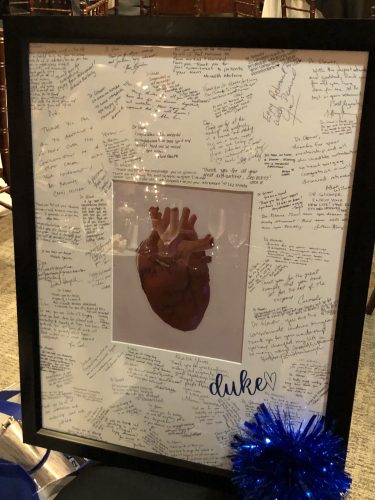
Congratulations, Dr. Glower – you will be missed in the OR!
A longer piece in recognition of Dr. Glower’s accomplishments and contributions to the field of cardiovascular and thoracic surgery will appear in the coming weeks.
Rymer Named Program Director, IC Fellowship
 Congratulations to interventional cardiologist Jennifer Rymer, MD, MBA! She has been named program director of our Interventional Cardiology Fellowship program. She is taking the reins from Schuyler Jones, MD, who continues to serve as medical director of the cardiac catheterization lab.
Shout-outs to Kusner, Haywood, Akunor, Arshad, Sink & Champion!
A big shout-out to cardiology fellows Jon Kusner and Hubie Haywood from the Cardiac Diagnostic Unit for being spectacular fellows and making December a wonderful month!
Also, a shout-out to Harriet Akunor, Verda Arshad, Josh Sink, and Cosette Champion for filling in spots where we needed backup.
Having only two fellows for the whole month was rough but Jon and Hubie made the month go by smoothly! — Kelly Shull, MSN, RN, NCME, Clinical Nurse III, Cardiac Diagnostic Unit
Newest Guidelines for Management of Adult Congenital Heart Disease Published
The American College of Cardiology and American Heart Association recently released the statement below regarding publication of updated Guidelines for the Management of Adults with Congenital Heart Disease:
The American College of Cardiology (ACC) and the American Heart Association (AHA), along with several other leading medical associations, issued new guidelines for managing congenital heart disease in adults. The guideline was jointly published on Dec. 18, 2025 in JACC, the flagship journal of the American College of Cardiology, and Circulation, the flagship journal of the American Heart Association.
Congenital heart disease—being born with defects in the heart’s structure—is the most common birth defect. According to the Centers for Disease Control and Prevention, it affects nearly 1% of births, or about 40,000 babies per year, in the U.S. Advances in surgical treatments over the last few decades have contributed to over 90% of babies born with heart defects in the United States now surviving well into adulthood. This has led to a rapidly growing population of adults with congenital heart disease (ACHD) who remain at increased risk of cardiac complications as they age, despite early interventions.
The new guidelines provide updated recommendations for monitoring, counseling and treating adults with congenital heart disease. It includes evidence from research published between 2017-2024 and replaces the previous guidance issued in 2018.
Duke cardiovascular and thoracic surgeon, Dr. Tracy Geoffrion, is a co-author.
To see the manuscript for 2025 ACC/AHA/HRS/ISACHD/SCAI Guideline for the Management of Adults With Congenital Heart Disease, please visit either of the following links: JACC, Circulation.
Congratulations, Tracy!
Mandatory Masking on Heart Units; Tier 2 Visitation Restrictions
As of Thursday, Jan. 8, 2026, Duke Heart has implemented mandatory masking for staff and is strongly recommending them for visitors. Meanwhile, Duke has moved to Tier 2 Visitation Restrictions as of Jan. 6. Complete information is available on Duke Health Now.
DUHS Leadership Update
Ian Lee Brown has been named Duke University Health System’s next Chief Community Health & Social Impact Officer. The position reports directly to the Chief Executive Officer, DUHS with a dotted-line reporting relationship to Stelfanie Williams, Vice President for Community Affairs, Duke University, reflecting the close strategic alignment between Duke Health and the University’s community engagement efforts.
In the interim at DUHS, Ian will report directly to Tom Owens, Executive Vice President and Chief Operating Officer of DUHS. Ian will continue to serve as a key member of our senior leadership team.
As Chief Community Health & Social Impact Officer, Ian will lead a comprehensive, system-wide strategy to improve community health outcomes and advance long-term well-being for the populations we serve. He will oversee DUHS’s Office of Community Health and work in very close partnership with our academic partners, population health colleagues, and teams in Duke Community Affairs which focus on critical issues such as economic mobility, education, and nonprofit capacity, as well as civic leaders to address the social and structural drivers of health. He will represent Duke Health in regional and national forums on community health and population well-being.
Congratulations, Ian!
Upcoming Events & Opportunities
National Wear Red Day & Heart Month
February is Heart Month – and National Wear Red Day — part of the American Heart Association’s Go Red for Women awareness campaign — is Friday, Feb. 6th. Wear your red and get some team selfies – submit them to Tracey Koepke for inclusion in Pulse!
Cardiology Grand Rounds
Jan. 13: Percutaneous Management of High Risk Pulmonary Embolism with Daniel Loriaux, MD. 5 p.m., DN 2002 and via Zoom.
CD Fellows Core Curriculum Conference
Jan. 14: DHP Case Presentation with Mugdha Joshi. Noon, DMP 7E39 and via Zoom.
Jan. 16: EP Case Presentation with Verda Arshad and Jon Taylor-Fishwick. Noon, Zoom only.
Jan. 21: HF/Transplant Case Presentation with Nishkala Shivakumar. Noon, DMP 7E39 and via Zoom.
Jan. 23: Topic and speaker to be announced. Noon, Zoom only.
Jan. 28: EP Case Presentation with Dorothy Avoke and Marcus Threadcraft. Noon, DMP 7E39 and via Zoom.
Jan. 30: DHP Case Presentation with Jon Taylor-Fishwick. Noon, Zoom only.
MMCVI Grand Rounds
Multi-Modality Cardiovascular Imaging Grand Rounds: A multi-imaging approach to cardiovascular disease cases. Thursdays, Noon to 1 p.m., via Zoom.
Jan. 15: Tricuspid Valve Pre-interventional Image Screening with Fawaz Alenezi
Jan. 22: Multi-Modality Imaging on Pericardial Disease with Cosette Champion
Jan. 29: NO CONFERENCE
Feb. 5: Quality in the Echo lab with Ashlee Davis
Feb. 12: Mitral Stenosis with Jon Mark
Feb. 19: LV Strain with Fawaz Alenezi
Feb. 26: Mitral Valve Pre-Interventional Imaging Screening with Fawaz Alenezi
Medicine Grand Rounds
Jan. 30: Quality and Safety at Duke: The Integral Role of the Department of Medicine with Drs. Mike Pignone and Rick Shannon. 8 a.m. Trent Semans Great Hall.
DCRI 30th Anniversary Forum Series
Jan. 27: A Fireside Chat with Jay Bhattacharya, MD, PhD, 18th Director, National Institutes of Health. 2 p.m., Zoom.
Bhattacharya will share insights on the NIH’s priorities for the nation’s healthcare and research initiatives as part of this fireside chat, which will be held virtually.
MLK Jr. Commemoration, Jan. 13
Dr. Martin Luther King, Jr.’s legacy of service, community, and leadership will be honored on Tuesday, Jan. 13 from 11:30-1:30 in the Trent Semans Great Hall. The program will feature Keynote Speaker Marissa Young, Duke Head Softball Coach, plus lunch, and the presentation of the Dr. Martin Luther King, Jr. Humanitarian Award to outstanding team members who were nominated.
Registration is required to attend in person. Deadline is January 6, 2026. Space is limited.
You can join the celebration online, however! The option to tune in to the commemoration will be available for those who cannot attend in person. Feel free to host a watch party with your team or watch the keynote during your break. Click here to launch the live stream online.
Upcoming CME Activities:
2026 Duke Heart CMEs
The dates for the following 2026 Duke Heart symposia have been set. We will announce others as they are added.
- June 6: Duke Heart Failure Symposium — Course directors are Marat Fudim, Rob Mentz, Richa Agarwal, and Stephanie Barnes. Location: Durham Convention Center, Durham, NC. To register, please visit https://events.duke.edu/DukeHF2026.
- October 30: 18th Annual NC Research Triangle Pulmonary Hypertension Symposium – Course directors are Terry Fortin, Sudar Rajagopal, and Jimmy Ford. Location: Durham Convention Center, Durham, NC.
Please save the dates!
Have news to share?
If you have news to share with the Pulse readership, please contact Tracey Koepke, director of communications for Duke Heart & Vascular at tracey.koepke@duke.edu. We would love to hear about your latest accomplishments, professional news, cool happenings, and any events or opportunities that may be of interest to our team. Please call me with any questions: 919-681-2868. Feedback on Pulse is welcome and encouraged. Submissions by Noon on Wednesdays will be considered for weekend inclusion.
Duke Heart in the News:
December 28 — Joseph Turek
Popular Science
5 breakthrough health innovations in 2025
December 29 — Mitchell Krucoff
tctMD
Chest X-ray Before Cath—Is There a Point?
December 31 — Harry Severance
Becker’s Healthcare Podcast
January 2 — Monique Starks
The Mount Airy News
Pilot Mountain police receive defibrillators from Novant Health
January 5 — Marat Fudim
Citybiz
January 6 — Donavon Harbison and Duke Health
Medicalresearch.com

Recent Comments