E Pluribus Unum– Out of Many, One

I’ve always considered myself an aspiring world-builder. But the world I wanted to build centered around me racing to the top of the world, and then changing it. As the summer progresses, I’m learning more and more how convoluted this idea truly is. I’m starting to realize that competing within these manufactured structures to secure my own position in the system is simply playing into its hands. Now, I’m trying to reframe what changing the world should look like.

E Pluribus Unum

Noun

  • Out of many, one

This term, credited to the Roman writer, Cicero, is said to be about our friends and family. When we connect with and love our family and friends, we make one person out of the many we surround ourselves with. No one can survive alone… and there are many who are crucial to every step of each of our journeys.

This term has been important to the history of the US – where it has been an unofficial motto of our country since the Thirteen Colonies joined together under one nation. But I’m coming to realize that we have lost the sense of this term, and what it truly implores us to do. I think that we don’t understand that every action we take, the words we speak, the activities we engage in are part of a larger structure.

  • Every item of clothing I buy allows me to support the network of global capitalism that then destabilizes less developed countries and causes their women to come to the US to do life long, laborious domestic work simply to provide a just education for their children.
  • Every time I assume my heteronormativity as the norm in conversation, I uphold the idea that sexuality and gender on a spectrum is an inferior position to hold.
  • Every time I have done something risky and gotten away with it because I am a “non-threatening, model minority” I have taken advantage of my position designated to me that subdues other minorities as being less acceptable.
  • Every step I take to advancing my career at a high position will allow these systems to exist and continue their oppression.

I think E pluribus unum captures the sentiment of how our society was supposed to be built. If we truly think of ourselves as connected to each other to the extent that we all contribute to the networks that create the systems of oppression around us, we would be much more deeply troubled by it – and be more driven to reform these systems. We shouldn’t need to hear the stories of individual people and empathize directly with their problems to know that we are complicit and benefitting off of the labor and oppression of those around us and under us. When we start to accept that we are parts of a whole, and that the subjugation of any one part is detrimental to the whole – we will need no other motivation to seek change.

I look around at the people in my life and realize that I would be nothing without them. My parents, my dearest friends, and my fellow Moxies – they are each a crucial part of my own journey. But even more so, those who I may not directly connect with, see, or talk to. These people have all allowed me to live the amazing life I have had the privilege of living. How could I not want to make sure that their lives are just and fair?

Climbing my way to the top of these systems is not something I necessarily desire anymore. Not only does this perpetuate them, but it requires minorities to victimize themselves to gain any empathy and the support of those held above them. Instead, I’m working on not thinking so individualistically and taking steps to stop condoning and preserving the systems around us by keeping in mind that we are always: out of many, one. 

 

“Sometimes Wrong, Never in Doubt”

I came across this quote this week in Complications, a book by Atul Gawande, while reading on my commute to work.  It was referred to in the context of surgeons unwavering decisiveness in the face of uncertainty surrounding the best course of action for patients.  In many aspects of my life, this is how I see myself.  When it comes to studying or executing tasks, I have very clear and laid out plans of action.  When an obstacle interrupts plan A, you move on to plan B and so on and so forth.

However, before this summer, this did not apply to my opinions on anything I deemed political or controversial.  I always doubted myself because I didn’t feel I was educated enough to form an opinion without first doing some research.  When family, friends, or classmates brought up a topic that I did not necessarily have a stance on, I quickly stepped out of the conversation or listened from the sidelines.

Since starting the Moxie program, I have established a background knowledge to begin developing my own thoughts and opinions.  This extends beyond the narrow view of the eight specific topics we discuss during seminars, but I have created a foundation on which to draw from as new topics and situations arise.  For example, with the US-Mexico border crisis unfolding, I felt comfortable forming an opinion that isolated different actors without generalizing good vs evil or making blanket statements ungrounded in historical inequities.

Still though, I have lingering feelings of wondering if my decisions are valid.  Last night, one of my fellow Moxies mentioned sharing a similar feeling around her own opinions.  I hope that as the program begins to wrap up, I can apply my decisive confidence, which I can tap into easily in other realms of my life, to my opinions about politics and controversial topics.  Maybe we can even work together to push each other to articulate our feelings and share our knowledge we have gained from the program, especially back at Duke next year.

So, here’s to making my opinions as strong as my resolve.  I’m sure more often than “sometimes” I will err, but I promise to stop doubting my own thoughts.

Stranger to Friend?

Our group has always had thought-provoking discussions, whether it was at seminar on the readings we have to do for that week or at reflection dinner when we debrief on the various enrichment outings we do. Recently, our conversations have been going far beyond the surface for various reasons.

Being past the half-way mark means that we have had ample time to get to know each other both personally and how each one of us feels about different societal structures. Because of this, people are more inclined to share their opinions in order to grow further. But it’s not only the sharing of ideas that has progressed as time has passed; it’s the bonds that we have made in such a short time.

Prior to departure, Ada and Shannan held several pre-departure meetings that, if I’m being honest, I did not want to attend because of all of the stress that was going on with the semester closing. In hindsight, these meetings were an integral part of forming the community we have.

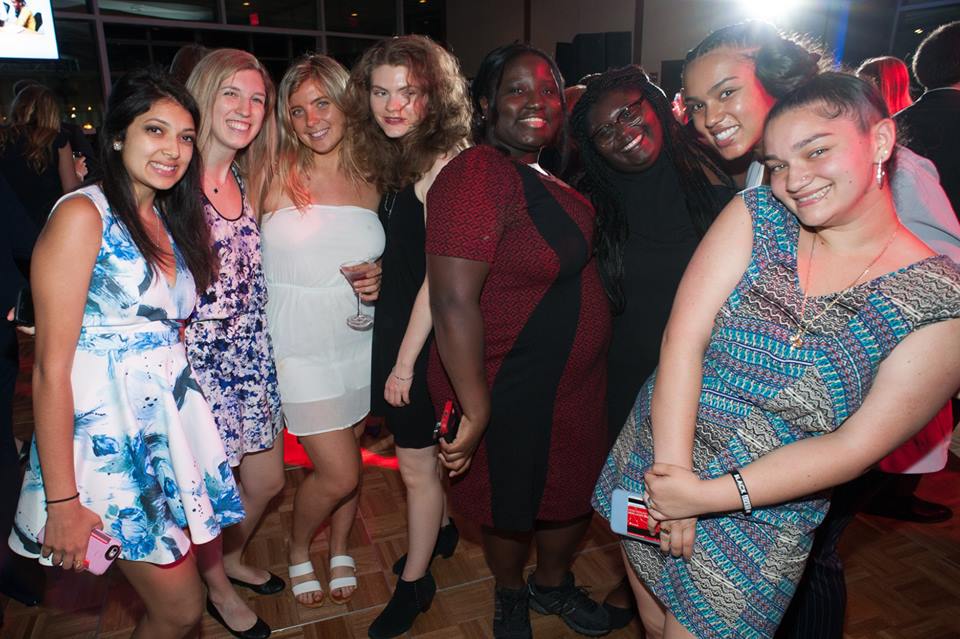
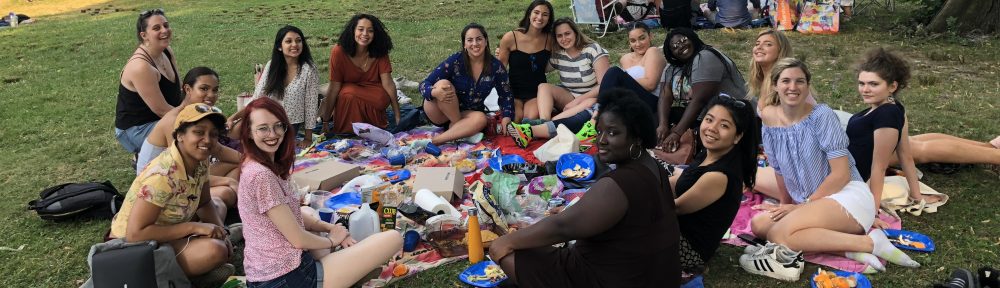
Looking at a picture of our Moxie group, it’s evident that each one of us comes from not only a different background, but a different part of Duke. One girl is a part of Duke Student Broadcasting. Another is part of an Indian dance group. Two girls are in Panhellenic sororities. One girl is a student-athlete. Some girls are pre-med, while others are studying the humanities. Despite all of these differences, the cohesion our group has is something indescribable.

During one reflection dinner, Ada and Shannan stated that they purposefully picked people who both fit the program, but would bring a new perspective to a group of people. They also chose people whose paths probably would not have crossed had it not been for the program. I can attest that this is both true and one of the things I am most grateful for from this program.

When I received the first email that Ada and Shannan hadn’t blocked us from seeing who else was included, I recognized only a few names from social media. Others I had never heard of in my two years at Duke. Now, I can say that I know each of the Moxies on a deeper level than we started.

We have bonded together at enrichment activities, reflection dinners, and seminar discussions. At points we have all felt like we understood what was being discussed, and at other points we have all felt more confused than when we started. From cooking dinner together to having a face mask night, we have created bonds that would not have been created had it not been for this program.

I also shouldn’t talk about the bonds created in this program without talking about the bonds both our group as a whole and as individuals have built with Ada and Shannan. Both of them have pushed us to grow further not only intellectually, but as human beings in society. They have both supported our opinions and played devil’s advocate for the purpose of growth. They have been present as teachers, mentors, and a listening ear, when needed.

At our last reflection dinner, Laura said that she would host a “reflection dinner” during first semester for everyone to get together again, Ada and Shannan included. If that doesn’t say something about our group dynamic this summer, then I’m not sure what else would.

Ain’t I a [Angry] Black Woman?


On June 14th, 2018, I attended the Human Rights Conference for Pride month which was a collaboration between NYC Pride and the SUNY (State University of New York) public school system. It was an enriching gathering of  “activists, artists, educators, journalslists, policymakers, students, and others engaged in LGBTQIA+ human rights around the world.” While I was there, I attended a seminar called “Being Brave Enough to Share Your Story”, presented by Joshunda Sanders, about the importance of elevating the personal-as-political narratives of queer women of color in the LGBTQIA+ Rights movement. Her presentation resonated with me in such a powerful way.

During her seminar, Sanders said that in our capitalistic society “Black women at rest (mentally or emotionally) aren’t considered to be doing enough to advance capitalism.” I was drawn back to a reading titled “Capitalism and Gay Identity” by John D’Emilio. D’Emilio analyzes how in capitalistic society there is essentially a fine line between autonomy and exploitation because people only have control and ownership over their labor. However, people must work to survive in our society, so selling labor becomes a forced circumstance where one is subjected to a diverse capacities of manipulation rather than a free choice. I believe that this line is especially fine for women of color and other marginalized identities due to compounded systems of oppressions. And, personally, I feel like every step I take to find myself, love, or career is a dance between being a token for someone else’s advancement and taking an opportunity to advance myself.

When I look back in history, I see that my “liberation” as a black woman has been an unintended and sometimes unwanted consequences of other social movements. For example, during the civil rights movement, the 14th amendment granted black men  the status and rights of citizenship,which include the right to vote. Similarly, during women’s rights movement, the 19th amendment intended to give white women the right to vote. I don’t believe people intended for those amendments to eventually give black women and other women of color the right to vote. I feel like when it came to the fights for rights, my rights a black woman–not just as a black person or as a woman–were not even a part of the conversations even though women of color contributed a lot of emotional, mental, and physical labor to advancing those social movements. As a results, my freedom and my discrimination is not visible in these movements because people are oblivious to the double burdens that come with being black and a woman as articulated in Sojourner Truth’s speech, Ain’t I a Woman?.

Furthermore, Sanders also said that “Black people don’t have time for writer’s block because there is too much to say.” She advised everyone to share without holding back for fear of backlash. I feel like I have been talking louder and louder to get people to listen, but I didn’t realized that they had me on “mute”. I didn’t realize they saw my scars as sacrifices and my burdens as blemishes to their movements. But, I am tired being expected to play the supporting role in the “White man’s, Black Man’s, White Woman’s, Privileged Person’s” movement. I have to come to learn that my revolution will not be funded, my revolution will not supported, my revolution will not be televised. I need to stop playing the role that world has wrote me. I need to stop waiting for recognition and support to raise my voice. I need to stand on my soapbox and my own platforms to raise it myself. I must continue to be brave enough to tell my story.

Being a Part of the Problem

Last year 82% of the world’s money was made by the top 1%. Gross, right? This is no coincidence, as the rich getting richer is not mutually exclusive with the poor getting poorer. Many of our Moxie discussions center around neoliberalism and it’s all-encompassing effects. A core idea I’ve taken away is that our global neoliberal economy serves as a catalyst for economic prosperity for those who already have wealth. For those who start with close to nothing, we so generously supply the rhetoric of the “American Dream”, near synonymous with the concept of “pulling yourself up by your bootstraps”.

This concept runs under the assumption that in our free market capitalist economy, all people have an equal opportunity to succeed. This can be reflected in the idea of the “homo-economocus”: that we as humans are capable of rational thought, so all are completely capable of free choice. It also operates under the assumption that all people have full information and options for the decisions they make. Under the logic that humans have both free choice and all available information, the market allows everyone equal opportunity to succeed, so poverty must be a result of a lack of effort. The result of having ideological roots in neoliberalism, which constructs a false equal playing field, while the country is founded in slavery, systemic racism, colonialism, and imperialism, is a neo-feudal economic order.

In order to allow the populations that have been so deeply marginalized throughout U.S. history, a massive overhaul of the systems in place is needed. More realistically, the country at least needs radical reform.  A key aspect of radical reform would be a re-distribution of wealth and political power. This means that those who profit off of our patriarchal, heteronormative, and capitalist economy would need to relinquish some of the tight grasp they hold on global economic and political power. In simple terms, rich, white people (especially cisgendered and heterosexual males) need to be willing to work towards a system that does not perpetually benefit them and marginalize those different from them. This is hard for many reasons, but I will explain two: living in a bubble and socialized greed.


And this is where this political rant relates to me, the 1%.

I can personally speak to the bubble and the socialized greed. I grew up on the North Shore of Chicago, a suburban area filled with some of the wealthiest towns in the county. For context, my high school, New Trier, was the basis and inspiration of the movie “Mean Girls”. A $500,000 house is considered small, and the town I lived in (Wilmette), with a shocking $117,526 per year median annual income, was called the “Wilmetto”, as it is considered poorer than the neighboring neighborhoods of the New Trier Township. When I was young, I naively thought that U.S. poverty looked like the smaller houses in my neighborhood. I didn’t know what it actually looked like on the South Side of Chicago, less than an hour away. You didn’t meet anyone openly struggling with financial issues or falling victim to systems of oppression. From the view in the bubble, these problems are easy to ignore. They can very easily become “not my problem”.

Moreover, thanks to free market competition and extensive privatization rooted in neoliberal ideology, the universal objective is to make as much money as possible, creating rampant greed. Under neoliberalism, your value and worth is defined by your current assets and your capacity to earn (thus promoting a whole cascade of evil “isms”). This perpetuates greed and the pattern of valuing one’s wealth over human welfare, and the belief that we are owed every dollar we were born into or given. As a person of privilege, the easy choice is to look the other way and continue to reap the benefits of a flawed system. I know that I did nothing to earn the economic situation I was born into and that the successes in my life have only been possible because of the opportunities I’ve been allotted.

It is necessary and powerful to come to these realizations, but it is not enough. In order to not only fight oppression but to not be a part of the problem, it requires using one’s privilege to help create change. I have constantly grappled with whether it is one’s moral responsibility to use that privilege to do good or if it’s okay to reap the benefits of your wealth. Personally, I feel a duty to use the privilege that I sit on to join the fight against systems of oppression. What I’ve struggled with is the knowledge that the jobs that result in me doing good, may not result in me enjoying the same comforts I’ve had growing up (this is where the greed comes in). My ideal self would be able to completely let go of the idea that happiness necessitates wealth, and fully embrace the knowledge that money is a sociallyconstructed means to happiness. However, I’m 20 years into deeply rooted capitalist socialization that trickles into nearly every aspect of my life.

At my core, I know I would feel an overwhelming guilt if I just sat on my privilege and continued to benefit from it without using it to better the world. I am thankful for my time at Girls for Gender Equity, with Moxie, and in New York to allow me the time and opportunities to see myself and the world around me from a critical and necessary lens.


Discomforting Deliberations

Discomfort

noun

  • a state of mental unease; worry or embarrassment.
  • lack of physical comfort.

This past week has been a whirlwind, to say the least.  First, the Moxies went to see Dance Nation, a coming-of-age play that made me so uncomfortable in some parts due to unique themes, seemingly gratuitous nudity, and  just a format I wasn’t used to, that I wanted to crawl out of my own skin.

Discomfort.And then I went to the hospital for the first time in my life at 3 AM, given one of the largest needle sizes of IV’s because of my incredibly low blood pressure.
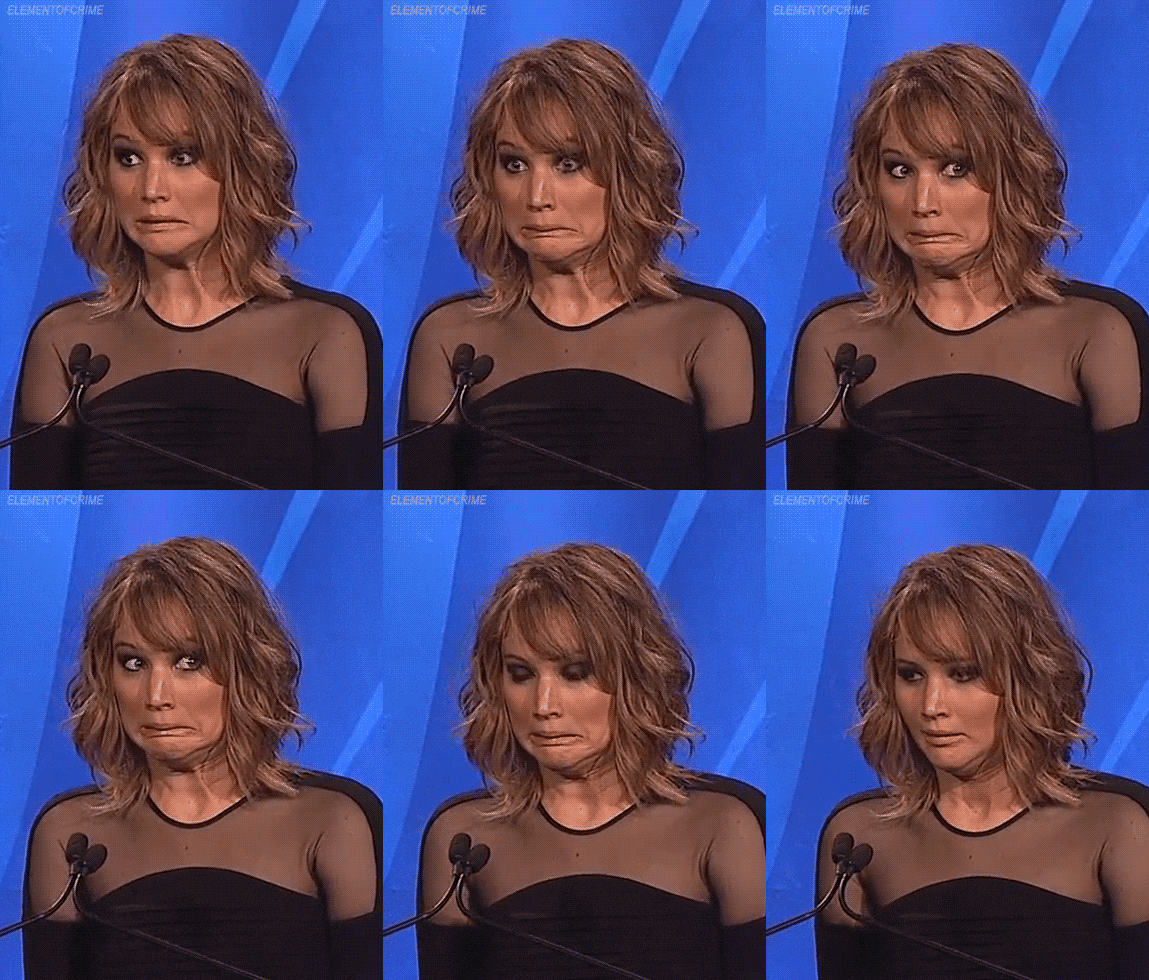

More Discomfort.

And the two days I spent there gave me a lot of time to think.  As I was given several IV’s and shots, countless medications for something as simple as a stomachache, I thought again back to the Women of Venezuelan Chaos documentary our group went to see the previous week.  The film portrayed one nurse who worked at a hospital where the patients had to bring their own needles, their own syringes, their own bed sheets.  Meanwhile, I was asked several times if I would like another blanket, when the first IV needle failed another was quickly right at hand, and all of the nurses were incredibly apologetic about the fact that I had to wait so long to get a bed, eventually not being able to be admitted due to the fact that the hospital was overpacked.

A Different Discomfort.

I’m not going to lie, I was definitely frustrated to have to lie waiting for over 24 hours, and most likely spend far longer than necessary in a small cot in the ER with only a curtain to separate me from the room full of patients of all ages, from babies crying and the chaos that I knew must have been happening on the other side.  But I wasn’t angry at all, and it was as if the nurses and doctors expected it of me…but what did I have to be angry about?  There was nothing that could be done about it, the hospital was just too crowded, the need exceeded the space.  Which got me thinking about the insufficiency of resources all over the world.   We see how people in Venezuela are in dire need of care and help and supplies, which certainly far exceeds the need here, at least for the most part.  But I don’t think we ever really think about how even here, in the U.S., the resources and space we have still aren’t often enough somehow.

And I’m not sure what the root of the problem is.  I know several of the patients who came into the ER while I was there were poor or homeless based on conversations I overheard, so perhaps it all goes back to this?  But how much more likely are the homeless to end up in the ER?  Certainly they face higher risks simply due to the lack of shelter and other supplies, but would that solve the problem?  Or is it just because we’re in New York City and everyone is packed into this tight space, so there’s no way everyone could be completely served? Which then makes me think back to a the Sweatshop Workers Tour of an old tenement house our group went on just a few days ago.  A mindbogglingly large number of families shared this tiny space, likely facing similar obstacles to adequate healthcare due to a lack of resources, limited access, and discrimination.  In one part of the tour that I distinctly remember, the guide spoke about how tuberculosis isn’t easy to recover from without medication and fresh air, which people living in the tenements certainly didn’t have.

I think a lot of the times so much is taken for granted, and I don’t necessarily feel guilty about it, but it does make you think.  Ever since I was in middle school and knew I wanted to go into the medical field, I planned on working in poorer countries to provide better access to healthcare for people in need–but I never really thought about all the implications of this work.  And there is such a need everywhere for better healthcare, better living conditions; honestly, I don’t know what is ethically or morally the right thing to do, and I have so many unanswered questions that I can’t form into a coherent thought.  All I know is that while I was in the hospital, I went through so many mixed emotions while I overheard conversations next to me, complaints about long wait times, people incessantly asking when they would be given X drug, or taken to X new place and then outraged when the nurse told them she wasn’t sure.  One person in particular stood out, constantly complaining about how she would be given much better care back home, talking about how she had to carefully watch over her expensive luggage, while right next door I overheard a conversation between a nurse and an elderly homeless man who needed help with getting insurance.  And I don’t know, it just made me really confused and shaken–and Discomforted.

Confusion.  I feel like ever since I started this program 4 weeks or so ago, I have just become more and more confused.  I have started to question things I’ve never thought about before, and rather than finding answers, I just find more questions, which makes me uncomfortable.  No, it’s discomfort.  I used to be so uncomfortable with discomfort that I avoided it at all costs, rarely bringing up controversial topics or sharing my opinions because I wanted to avoid that awful, awful thing Conflict.  Because it caused me discomfort.   But the more I am Discomforted, the more I see the value in being so. Discomfort makes you think critically in ways that are impossible otherwise.  And isn’t that what’s necessary for change, to come up with novel solutions, have productive discussions, put ideas into action?  Not much can be accomplished without a certain level of some sort of discomfort.   So I am going to take a deep breath, and welcome that old fear Discomfort.

On Solidarity, On World-Building

I have no recollection of when standing in solidarity with others became a priority of mine. I know for sure that I wasn’t always conscious of my own privileges in the world in relation to those of the people around me, but I can’t seem to put my finger on the aha! moment that pushed me to realize that my experiences in the world were not the only experiences in the world.

I mean, it sounds like a silly revelation that I should have realized years ago.

In academic studies, some scholars argue that this kind of theory of mind – the ability to recognize that other people also have their own beliefs, desires, emotions, and knowledge – is characteristic of the human species. In developmental psychology, Jean Piaget’s theory of cognitive development suggests that children are in an egocentric stage, where they cannot see a situation from another person’s point of view, from around two years old up until they are about seven years old.

So for something that is universally human and develops relatively early, it may have seemed silly that I had only realized this around high school. But it was a huge deal for me to be face-to-face with my own selfishness, and I became pretty hard on myself – maybe justly so, maybe unjustly so.

In my overcompensation for being self-absorbed, I brainwashed myself.

I can’t assume that people have experiences similar to mine.

The discrimination of other women of color are different from my experiences as an Asian American woman.

I have privileges as an Asian American woman that limit my understandings around the experiences of black and Latina women of color.

My privilege as a cis-gendered woman, for whose sexual orientation was never a target for discrimination, made my experiences distinct from their experiences.

Although I am also a woman of color, I cannot let myself think that my experiences are representative of all women of color. I cannot ever truly understand others because I do not have the same lived experiences as them.

I struggled with all of this. If I could not ever truly understand, then what was I to do? I felt paralyzed, incompetent. No matter how many classes I took to try and educate myself, to not burden others to educate me about their lived experiences of systematic oppression, it seemed like I could never know enough to really do anything and contribute to some meaningful change.

Also, I was scared. What if, in my ignorant and self-righteous effort to help, I was overstepping and hurting more than helping? What if, because I never experienced some specific situation first-hand, I could not speak or act on some injustice in a way that accurately represents the feelings and desires of the people who are most impacted?

I was so intent on trying to be the best ally I could. I was careful. I did my very best as if walking on eggshells.

But somewhere down the line, I realized that all my talk about my privilege, about wanting to be sensitive, about realizing the differences in people’s experiences… all of that led to a greater distance between me and the people who I so desperately wanted to help. But what help was I, when I was so worried about being problematic that I couldn’t even be in dialogue about the change that needed to happen?

~~

I had struggled so much and tortured myself over how to do this ally thing right. It has been years. Years. But in just these last four weeks, I have found myself inching towards a more sustainable model for effectively organizing for change that might not directly impact me.

At the end of my second week in New York, I shared my struggles with wrapping my head around allyship and solidarity. Specifically, I wanted to know how I could do my best work at NDWA as a college-educated Asian American woman who had very little exposure to the world of domestic workers.

Shannan, our site coordinator, gave a brilliant response.

At the time, however, I didn’t realize how impactful her words would be to me. I actually didn’t understand what she was trying to say at first; she had to reformulate her thoughts so us poor confused undergraduates could understand her point.

Once her words made more sense, I felt a lot of pushback.

It was so different from how I thought about the world. She talked about world building. She talked about how our identities might actually not matter. She wanted us to consider an alternative way of understanding ourselves and others beyond the method and language of categorical identities.

I thought:

Well, yes I know that people are more than the categorical labels that are used to identify them in the world. Yet so many of our experiences are shaped by these labels. These labels might not speak to the essence of a person, but are active in how others see us and treat us. So how can anyone suggest that these categorical identities don’t matter? How can I ignore the privileges that I hold because the world perceives me to be a certain way because I am an Asian American cisgender woman? If I don’t consider how these categories have privileged me, wouldn’t I just become an insensitive ally who oversteps when she doesn’t actually know anything?

There was a lot of pushback. However, I’m not one to verbally and publicly pushback, especially if I don’t feel prepared with a thorough and well-thought response. As a result, this was the end of our conversation. I didn’t think too hard about what Shannan had said.

Then what?

A week and some days passed. I made meaningful relationships with the women around me. During outreach sessions, nannies shared their grievances with me. I found myself able to maintain conversations about the exploitation that happens to different domestic workers, when I myself had limited exposure to the work.

Was I able to connect with these women in the same way that people who were, or had been nannies did?

Probably not.

But I was able to connect with them. We wanted the same things. We all wanted a world in which domestic workers weren’t exploited. We wanted employers, and the world more broadly, to recognize that their jobs were difficult and required a level of expertise. We wanted domestic workers to be seen as people who also deserve dignity and respect.

Did these women ever question what I was doing because I was Asian American? Did they ask for my credentials in domestic work before talking to me?

No and no.

We talked about the ways in which they and other nannies were exploited. I talked to nannies who had documentation and were working on the books and were fluent in English and had fair employers about how easy and horrible it was that undocumented migrant women with little fluency in English were taken advantage of – not being paid enough, not being treated well, working ridiculous hours, etc.

And then before I knew it, Shannan’s words made more sense.

“This is what she meant when she said that categorical identity labels might not actually matter. Oh.”


Almost Halfway :(

When I looked at the first email sent to everyone who had been accepted to this program, my first thought was: “Yikes”.  Here I am three years into Duke and I have never met any of these people or even heard their names in passing.  That can’t be a good sign.

I clearly couldn’t have been more wrong.  My 8 fellow Moxies and myself make up one of the most diverse groups of people I have ever been a part of.  We all come from very different backgrounds and each have distinct personalities, but somehow it works.

I spend late nights (for me anything after midnight) chatting with my roommate about different HBCUs and their associated fraternities and reputations.  This may not seem consequential to most people, but I did not know anything about the different subcultures that exist at different schools or the associated groups that people affiliate with for life.  Learning new jargon, phrases, and Instagram accounts that everyone already follows.  Hearing about MCG organizations at Duke and how they differ from my own experiences in Panhel.  These conversations make me take a step outside of my bubble and see different social spheres apart from my own.

This is just the tip of the iceberg though because the biggest benefit of this incredible group comes out when we discuss the readings or activities and see how people who all consider themselves feminists, allies, and open-minded people can have dramatically differing opinions.  For example, this week we talked about the efficacy of changing culture by making people aware of an identity.  Specifically whether the it is enough to “come-out” or to have everyone who identifies as LGBTQ+ to present their identity proudly so that everyone can see.  I believe that this affects change by making the identities real and tangible to people who want to reject them.  However, many people think that the idea of identities themselves limits the movement toward social equity.  I had never thought about the implications of the identities themselves on our society.

I am so grateful for this opportunity.  I don’t yet know the implications of the experience, but I know that I have 8 women who will support and, more importantly, challenge me to think critically moving forward.

Finding my group…

  • Comfort.

I love comfort.Truth is, we all do at Duke. At first, Duke is SO uncomfortable. O-week, everyone is going around asking the same thing: “What’s your name?” I think regardless of how that starts, everyone seems to seep into this pit of “similarity”. I love my friends. I love everything about them (lol yes that includes their messy tendencies). Something I came to understand is that friendships in Duke are very segregated in ways that I feel most of us are aware of i.e. by color, socioeconomic status, etc. Yes go ahead and gasp and look around like you had no idea, but the truth is most of us already know. Yes, I knew, but I wasn’t ashamed because comfort is something everyone should know. Comfort is an important part of mental well-being, especially somewhere like Duke.


Change.

Change has always been a demon in my opinion.

I never understood why I hated it SO MUCH. (I actually still do A LOT.) I finally figured out, sometime after moving for the first time, that my reason for hating change so much is because I hate discomfort even more. I think this is why while at Duke, I picked a community of people who caused me as much comfort as possible.


My Girls.

Realization. Or at least something along those lines. For most of my life, I’ve stayed in the same house, in the same city, with the same friends, going to the same places. Most could say my life was just very routine. As I spoke about earlier, I hate change, so I felt no need to do anything different. It wasn’t until Sophomore Fall that I got to the realization that I needed different surroundings. I didn’t understand how important it was to have yourself surrounded by different ideas and personalities. For the most part, I actively sought out people who were different from me i.e. those whose backgrounds weren’t necessarily the same or who looked the same as me. It worked lol! I met some amazing people who were very different from me. I broke out of my small bubble, right? Wrong. I still knew I was only myself truly around those who looked like me. I still knew I would only talk about my true thoughts and feelings with those who thought like me. Somehow after all that effort, I’d still keep myself in my little tunnel of comfort.


MOXIE

Bloop. That’s literally my first word about Moxie because everything that I thought to be true suddenly was changed. I became a Moxie during a really hard time in my life i.e. Organic Chemistry 2. I never expected myself to be sharing things, very personal things, with strangers who I didn’t know very well at all, except Destiny. It was so scary. Out of my comfort zone. Everything I had hated in my life. Then we somehow got to NYC,another change that I hated just as much at first. Slowly these people I’d just met became those I told some of my deepest secrets to. I’ve gotten to know some strong, beautiful, vibrant women who are completely different than me, and I’m comfortable. I feel like throughout this entire experience I’ve changed something that I’ve been so avoidant of. I guess what I have to say is change isn’t that bad, diverse friend groups are amazing, and these women are changing my world.

“Hire Him, He’s Got Great Legs”

What is necessary for social change? Why are we inherently drawn to solving symptoms while we resist embracing the ideas and action to truly catalyze structural transformation?

This is the question that has been trailing me throughout this week. We dissected and observed the LGBTQ+ movement from a new historical vantage point (that at first I was very uncomfortable with… but was just the kind of radical, unique perspective that is necessary to change the way we perceive a movement). We contemplated the Venezuelan crisis after watching WOMEN OF THE VENEZUELAN CHAOS (which touched my heart and made me strikingly more aware of a problem I had skimmed through in the news maybe once). And as we partook in these activities, I reflected on the ways we approach our grandiose goal of bettering society and what is necessary to actually make that change reality. 

We can procure rights for women so that when we are discriminated against we have the choice of legal recourse… but how do we change the minds of those who suppress us? How do we empower women to be more confident about defending themselves from those who attempt to hold us down?

It seems that some combination of the two is necessary between the transformation of ideas and furnishing necessary public services, but where do we strike this balance?

With this question occupying me since the weekend, I sat down with the helpline coordinator at Legal Momentum, Mireille Martineau, on Monday. Mireille provides legal advice for women who call in having experienced everything from employment discrimination to domestic violence to campus sexual assault. She talked to me about her past experience working on urban community-based issues–affordable housing development, disaster recovery after Hurricane Sandy in 2012, and now her work at LM. Her easy, open personality and vast depth of experience on all facets of social work urged me to ask her the question still lingering in the back of my mind.

I asked her what she thought was the proper balance between non-profits working on the ground with those adversely affected by our current governing systems and the organizations that are attempting to change the laws or systems that bind communities in appalling and unjust ways. She told me, “it’s very important to provide the necessary aid to those suffering… but bureaucracy prevents us from having any real effect, which gets very frustrating.” That’s why, she says, she enjoys working at organizations who ultimate goal is to change the laws that would repair bureaucratic flaws and ensure more steady change.

Her insights are very meaningful, but the picture still feels incomplete to me… how do I truly view non-profits as actors in social change?

Right now, I conceptualize the work that NPOs do on women’s rights over a continuous spectrum. On the left, some work one-on-one and handle provision of important social goods and services; on the right are organizations that are about conceptualizing new ideas of what our society should look like that would ensure women’s rights as a social norm. Legal Momentum falls towards the right end, although it performs elements of both kinds of work. I feel like it is necessary to have cohesive action in both types of organizations because interacting with the public is what changes hearts and minds and the way society actually chooses to act… while focusing on bigger, structural issues is important to creating the space for that society to emerge. People in Venezuela need urgent assistance with food, medical supplies, and protection from crime… but this has to go hand in hand with governmental change, otherwise the resources provided for aid will be too few, too late. The LGBTQ+ movement is right for wanting to access the rights of marriage and all civil and political rights granted to heterosexual citizens of the United States… but this has to go hand in hand with transforming how we view family structures and with embracing the true idea of sexual liberation. 

Right above my desk at work I can see an old picture that rests against the wall, produced in the 1970s. It reminds that these questions and thoughts are crucial to achieving equality for all genders, all sexualities, all identities. It is a jarring and very funny, but deeply thought-provoking image. Here it is:

Ms. Magazine, NOW public service announcement, July 1972.

In my mind, this picture represents what social change would look like; if the world we knew was flipped on its head. Not a world where we judge and hire men based on how attractive they are, but rather a world where it’s absolutely ridiculous to think of assessing a woman based on her appearance. I’m looking forward to that day, but even more so looking forward to working towards that ultimate transformation.