Women’s Rights: The silent victim of the pandemic

This week, I actually wanted to digress a little bit from my work at Choices Women’s Medical Center and talk about something that’s been bugging the heck out of me.

When the COVID-19 pandemic struck, school was cancelled nationwide. At an individual level, the choices many families made to cope with the shift makes sense economically. What do children need? Taking care of. What do older people (grandparents) need? Taking care of. What do patients fallen ill with the virus need? Taking care of. Care. And, all this care—unpaid emotional labor—WILL fall most heavily on women because of the current structure of society. But, according to Clare Wenham, an assistant professor of Global-health policy in London, it’s not just about social norms. It’s also about practicality: “Who is paid less? Who has the flexibility?”.
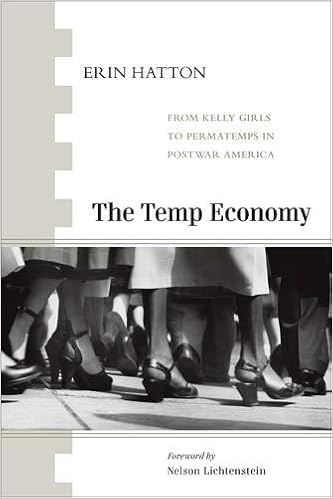
It all dates back to a structure created as early as the 1950s—something which Erin Hatton talks about in her book, The Temp Economy. Hatton describes how temp work strengthened gender stereotypes. Because temp work is paid too little to be considered a living wage, women were further established as a secondary earner. Thus, the dominant image of temp work promoted the image of the male “breadwinner”, further confining women in the domestic sphere. Additionally, by defining women as only “secondary earners”, employers justified paying women lower wages.

What is sad is that, according to the British government, 40% of employed women still only work part-time, compared to only 13% of men. The disparity that Hatton described from the 1950s STILL exists. Women are STILL considered socially to be secondary earners.

Unpaid Domestic Labour And The Invisibilisation Of Women’s ...

But even if women leave their jobs to go home, will they be appreciated for their sacrifice? The answer is NO, all thanks to the historic undervaluation of domestic labor. Arlie Russel Hochschild analyzed the wages of care workers such as nurses, babysitters, and other care facilities in 2002, describing how “the unpaid work of raising a child revealed the abidingly low value of care work generally—and further lowered it”. Hochschild suggests that because care work was not paid for most of human history, it lost its value.

Let’s apply this analysis to the pandemic. Because women are more likely to be the lower earners, their jobs are naturally considered a lower priority when disruptions come along. If Hochschild’s analysis is correct, it means that as women during the pandemic are forced to quit their jobs and lose their ability to earn money, the classification of their “caring work” as “nonwork” and themselves as “dependent” in their relationships with their husbands will grow stronger.
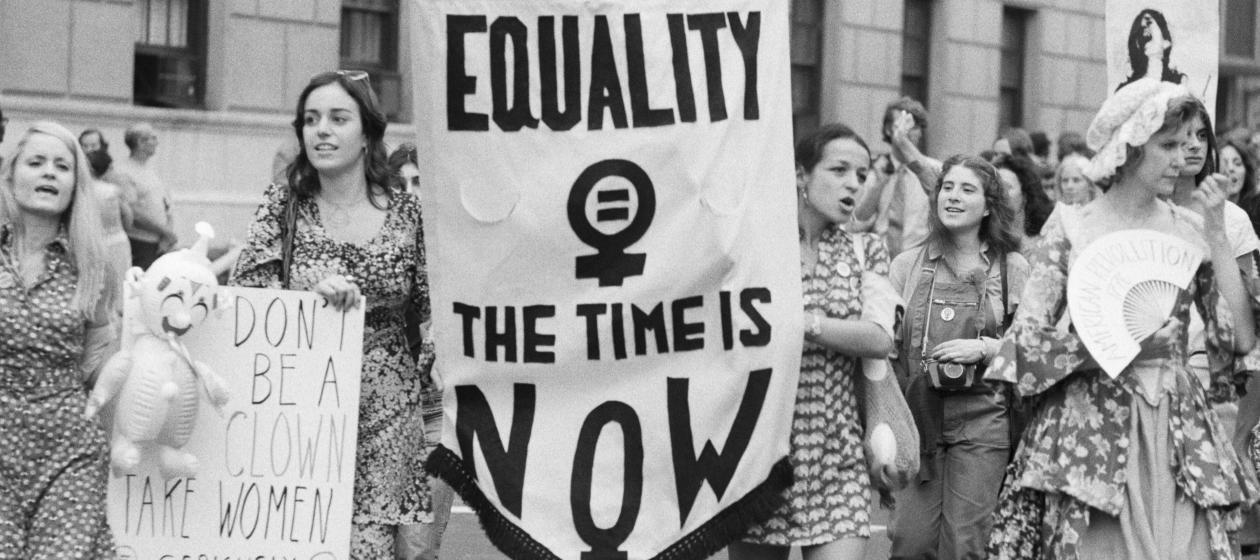
American Civil Rights for women: A Women’s Rights... | Sutori

Thus, the pandemic is going to reinforce prehistoric, dinosaur-age societal roles. And this particular disruption could last months, rather than weeks. Some women’s lifetime earnings will never recover. Some fathers will undoubtedly step up, but that won’t be universal. Women’s independence WILL be a silent victim of the pandemic. 
A new world

Am I a feminist? I’m not really sure. The word in my mind, unfortunately, has a negative connotation. I hear feminist, and I see images of third wave feminism – movements like #freethenipple, the idea that being in a relationship is anti-female, and women being told not to wear a hijab because it’s oppressive. These feminist objectives work to disenfranchise a large population of women. Many females at even liberal colleges and universities feel uncomfortable when faced with these highly left-leaning feminist ideals. It can be argued that women who are uncomfortable with these movements are only so because their upbringing and environment deeply ingrains notions that girls should act a certain way. 

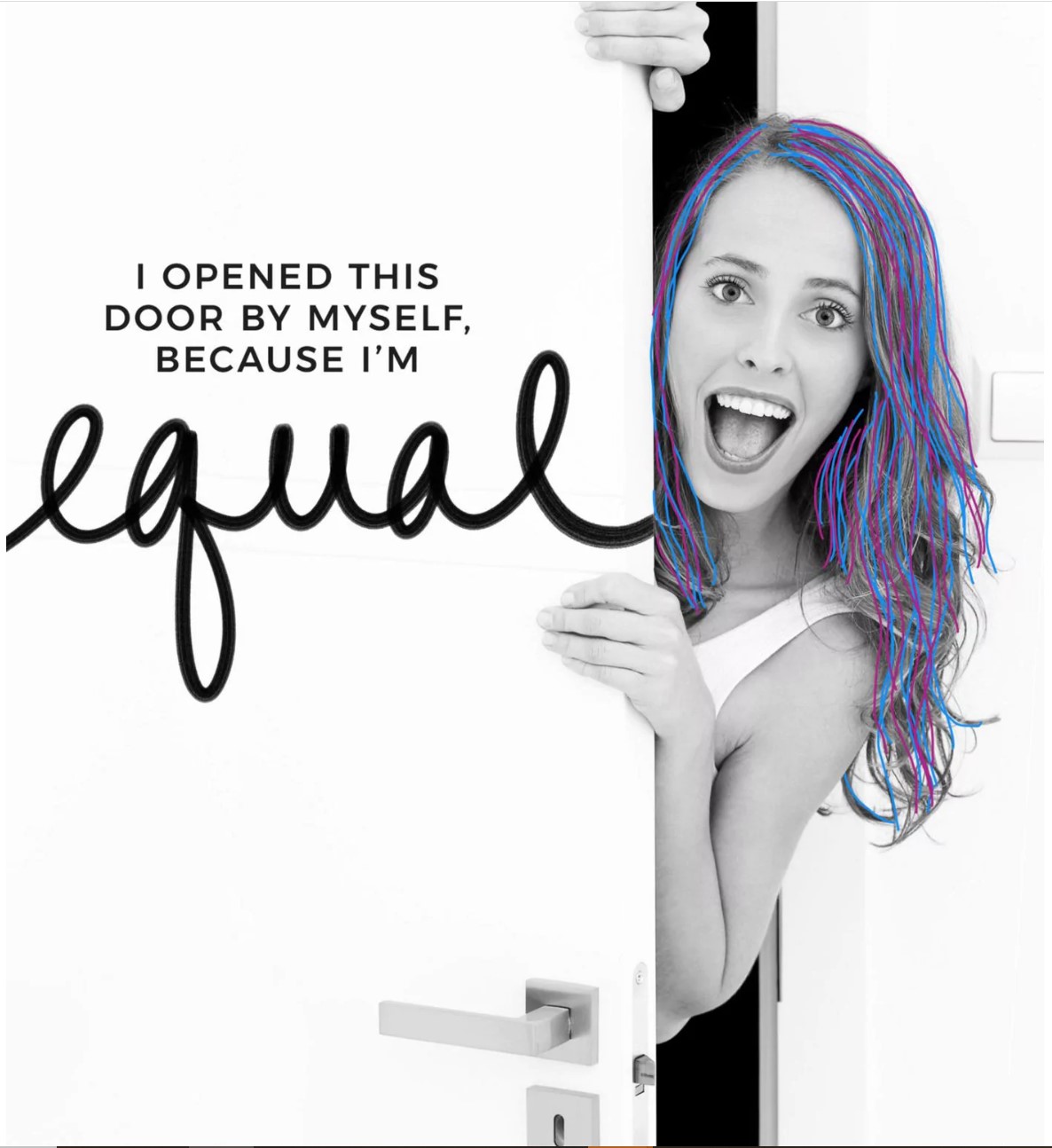
On the other hand, a movement that serves to free women from a patriarchal society ought to be one that a majority of the female population can support. Examples include equality focused rights, such as the right to vote, abolishment of the wage gap, gender violence termination, and issues of self-esteem (such as if a girl feels more afraid to speak up with boys in the room because she feels inferior/unequal). If a woman is okay with a man holding open a door for her, this etiquette shouldn’t be an issue. Some feminists might criticize her for allowing a man to help her, but if the woman in question feels no loss of power, she shouldn’t be told that the right way to act is to open the door herself. 

From
Rachel Hatzipanagos
on TheLily.com

None of this is to say that I don’t believe in equality, in the fair and equal treatment of men and women. A woman can’t be denied a job because of her gender. She shouldn’t feel unsafe in leaving the house after dark because of her gender. I hate that in India, being outdoors alone at night as a female is deadly, and in many rural districts, widows are still burned at the pyre along with her dead husband. I am a woman. I want women to be treated with the same respect and dignity that men don’t even have to bat an eyelash to receive. However, some of the current ways of achieving this respect are only making the movement harder to support. Who knows, though? This summer might change a lot of my opinions. I hope it does. I know there are inspirational, passionate, and intelligent women behind the current feminist movement. Gaining a better grasp of the logic behind certain individual fights under the push for feminism might better help me get an understanding of why feminism has evolved to where it is today.

I’m working with Sanctuary for Families this summer, a non-profit directed at primarily reducing gender violence and helping survivors of domestic violence. I don’t know too much about the organization yet, but from my short first impressions, every single member that I talked to are some of the most passionate, down-to-earth, kind, and helpful people I have ever met. I love asking them questions about how things work and why they work that way, and every question I ask gets at least a half hour detailed response. The teams I’m working with never get tired of answering. They genuinely care about the work they do, the organization they work for, and passing on crucial knowledge to a later generation. I might be wrong, but I can’t see this as being the case for an intern at a for-profit company. If the intern asks too many questions, I feel like the supervisor might try to start speeding up replies and finishing up their job because they aren’t paid to be a teacher.

This kind of care can be expected of non-profits (although, my experience is super limited, I just rationally deduced that in my head). The employees are not working at a non-profit for the sake of money. They could probably care less about their monthly paycheck. It seems like the work they do, in these large non-profits with more administrational duties, is pretty similar to the work they would do in the corporate sphere, but, with the nature of the non-profit, they likely earn much less. This difference is interesting because a lot of times, America is characterized as this cutthroat, capitalist, profit-seeking, individualist country. But if you dig a little deeper, people like the Sanctuary staff probably could not care less about their own profits. Their sole purpose, joy, and contentment from life comes from genuinely helping other people, even if they aren’t directly involved. They know their work, whether fundraising or communications, further down the line will help someone fleeing an abusive relationship.

That is so beautiful.

The non-profit sphere astounds me. Altruism is something that, in my life, I have been very scarcely exposed to. If someone was helping their community, it was for volunteer hours that they could log and report to get into a top college. However, genuinely helping just for the sake of helping, with no personal benefit in mind, besides the satisfaction of living a fulfilled life in the service of others is (honestly, I am embarrassed to say this) so foreign, but so darn refreshing. We live in a world filled with other people. What is the point of just living for yourself and making the most money possible? Making someone’s life a little less difficult has so much more meaning.

“Me too!”–A Cry out Against the Patriarchy

Link

“Me too”– Ever since movie mogul Harvey Weinstein was accused of sexual assault, those two simple words have become a rallying cry. All together—women, men, and everyone in between—used it to share personal stories of sexual harassment and assault: stories that few previously believed or chose to share due to societal stigma against victims of sexual violence. The hashtag burned all over twitter after Alyssa Milano called out to other victims so that “we might give people a sense of the magnitude of the problem.” But the movement didn’t really start with Alyssa Milano. It started 10 years ago with Tarana Burke, a feminist activist against sexual assault. An interview with Ms. Burke reveals her story:

“For the next several minutes this child [I met at my camp] … struggled to tell me about her ‘stepdaddy’ or rather her mother’s boyfriend who was doing all sorts of monstrous things to her developing body. … I couldn’t help her release her shame, or impress upon her that nothing that happened to her was her fault. I could not find the strength to say out loud the words that were ringing in my head over and over again as she tried to tell me what she had endured. … I was horrified…I watched her walk away from me as she tried to recapture her secrets and tuck them back into their hiding place. I watched her put her mask back on and go back into the world like she was all alone and I couldn’t even bring myself to whisper … me too” (Tarana Burke, “#MeToo: An activist, a little girl and the heartbreaking origin of ‘Me too’”).

#MeToo movement: These 7 facts show its impact - Vox

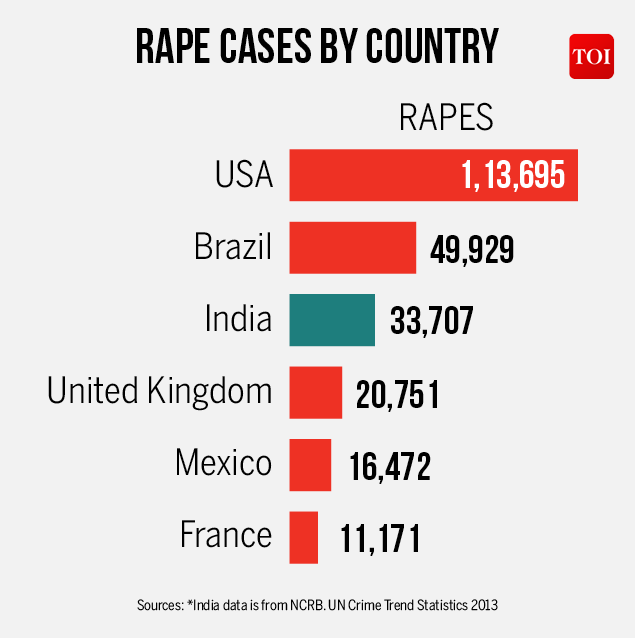
Burke’s interview with CNN was released along with shocking statistics—one in every three women in the United States has been sexually assaulted and one in every five report complete or attempted rape, while 1 in 71 men have been raped (“National Institute Intimate Partner and Sexual Violence Survey: 2010 Summary Report”).

Countries with the most rape cases | India News - Times of ...

Psychologist Dr. Noam Shpancer provides some “insight” on these statistics: in popular media “the male sex drive was considered so explosive and animalistic as to render men unable to control themselves when stimulated… Men are considered dominant to a woman’s submissive… This justifies men’s efforts to control… how [women] dress” as certain clothing is said to invite sexual advances (Noam Shpancer). But why? Why is it that women are “naturally submissive” in bed? Why do certain outfits indicate that women “want rape”? Why must women conceal their sexual desires where men seemingly fling their wang around freely? Why are only girls who had a lot of sexual activity referred to as sluts, where boys who “got with lots of girls” are praised?

Frustrated with these dichotomies, I began working at the Teen Link Crisis Response call-center, training for the Durham Crisis Response Center hospital team for victims of sexual assault and domestic abuse, and volunteering to teach young teens about sexual assault and reproductive health with Orange County Rape Crisis Center. As a Gender Studies minor, I took GSF classes like the course “Work, Sex, and Power” and “The Subject Embodied”, to deepen my understanding of historical context, ethics, and social justice issues. Through these lenses, I formed my identity as a feminist.

My feminism is about supporting, uplifting, and empowering others. It’s is about learning that all people don’t experience societal standards in the same way. It’s about listening and understanding that society treats women of different races, sizes, gender identities, physical abilities differently and being mindful of that. Working at OCRCC, Teen Link, and DCRC has made me aware that many people cannot easily access resources related to their reproductive and mental health. This awareness motivated me to give back to gender violence survivors, women who have been deprived of their right to their own bodies through blocked access to abortion, and families/workers who have trouble accessing the resources that I take for granted.

Choices Women's Medical Center

That is why I will be working at Choices Women’s Medical Center this summer. I plan to do mostly social media work, including writing blog posts and newsletters for Choices as well as upkeeping their website, Instagram, Facebook, and Twitter accounts. Through these media platforms, I hope to not only have deep Pro-Choice conversations with the employees of Choices but also to learn more about how modern organizations continue to fight our war against the patriarchy (not to mention… I am a HUGE Merle Hoffman fan!).

So, why am I interested? Because I want to engage in more rigorous discussions on feminist frameworks. I want to uncover answers to the questions that plague me. I want to keep seeking social justice against the patriarchy. And, I want to continue to make empowering other women a priority.

Big name, bigger voice

Hi, my name is Ladasia and I’m a rising senior studying Public Policy and Global Health. I identify as a Black Woman, sister, daughter, feminist, mental health advocate and Christian. My identity definitely shapes my walk through life and my goals. I grew up as one of the girls with the name teachers could never pronounce (I don’t think it’s that difficult) and learning not to take up space because of feeling that being black and having a “black sounding” name already drew too much attention. This experience meant never correcting people or allowing them to shorten me and my name. Learning to feel confident in taking space and using my voice to speak out against the social injustices I seen since my childhood is my life-long goal.

This summer I am working with Legal Momentum, a nonprofit organization for the legal education and advocacy of women’s rights. I’m specifically working on a project for their National Judicial Education Program where I will update a teen dating violence curriculum. I’m really excited because this information will be provided to judges and made accessible online for all. Working on this project will allow me to promote advocacy and awareness at a large-scale. This effort is important to me and my plan to dedicate my life to increasing outcomes of justice and equality for underserved communities, especially low-income, people of color.

Going into this internship I have questioned how the process of research translates to policy and what roles are needed to see policy change in matters of social justice. I am grateful to be learning about policy and research through my courses in school, but I believe real world insight is unmatchable. My biggest concern is about my capabilities since I don’t have experience working in social justice and this project is extremely important. But, I am learning that I cannot fear being a part of amazing projects when given the opportunity.

This summer I hope to gain insight into the work of nonprofit organizations and law environments promoting social justice. I also hope to gain some experience in social justice so I can better determine what type of graduate program to pursue.  I know what I want to spend my professional career doing broadly but I need to narrow it down soon. I am excited to learn with Legal Momentum.


Reflecting on the Moment

The evening of May 29th I sat in my living room with my mom, watching CNN as a Black Lives Matter protest became violent in downtown Atlanta. I watched as Atlanta landmarks began to crumble. The CNN building was crowded with protestors met by police as cars around Centennial Olympic Park were set ablaze. Just seven miles away from the chaos, I was sheltered at home with my parents and my brother. 

Just a year ago…graduating from Atlanta Girls’ School in our suffragette-esque white dresses (I’m on the far right)

I did not grow up in Atlanta, but moved here at the beginning of high school where I attended a local, private all girls’ school. I was incredibly fortunate to have had the experience of single gender education. For one, my school was very small (only 35 people in my graduating class!) and it gave me a close knit and welcoming community to join after moving to Georgia. But it also allowed me to break out of my shell. I was given the opportunity to join student government, lead clubs, and teach classes, all initiatives I would not have had the confidence to undertake had I attended a larger co-ed school. I was also introduced to new areas of social justice, and I became more interested in issues surrounding girls’ education and women’s healthcare.

My positive experiences at an all girls’ school are ultimately what inspired me to apply to the DukeEngage New York program and to work more in depth with women’s issues. My educational upbringing seems especially relevant to the work that I will be doing this summer at The Lower Eastside Girls Club (LEGC) of NY. I am very excited to work with an organization that sees the power in all women’s education and continues to provide support for their students during the current covid-19 crisis.

However, given the circumstances of the country, my excitement is met with deep reflection. The protests in Atlanta and many other cities around the nation brought the tragic realities of police brutality, unconscious bias, and systemic racism into the spotlight. Like many others, I am coming to terms with the fact that I reaped benefits from a system that oppresses the Black community. Even though I am not white, I have great privilege in my family’s socioeconomic class, the primarily white communities in which I grew up, and the education I was afforded.

I am taking this time of unrest as an opportunity to educate myself so that I can become a better informed citizen and so that I can better understand a large part of the student community I will be working with at LEGC. Some resources I’ve found particularly eye-opening in the past couple of weeks are: Hasan Minhaj’s call to the Asian community on Patriot Act, Ta-Nehisi Coates’s Between the World and Me, Roxane Gay’s Remember, No One Is Coming to Save Us, and Stacey Abrams’s opinion piece in the New York Times about the importance of voting.

While education is not the ultimate solution to the nation’s deep rooted issues, it certainly is one pathway towards empowerment. Over the next eight weeks I hope to fully immerse myself in LEGC’s mission to connect girls to successful futures, using discussions of current events to guide my work. 

Once a Moxie…

One week after the completion of the Moxie program I’m sitting here, wondering if this past summer was a dream. It’s not so much that my experience in New York was fantastical, but it felt like an entirely different world from the one I’m exposed to on a regular basis.

As I’ve gotten back into my routine at home, I’ve had conversations with friends and family about all that I encountered and learned on my trip. And having these conversations made me realize, how little I, and the people in my life, reflect on social issues from the unique perspective of the Moxie program. I’ve been sending my Dad nonstop articles on universal basic income and finding research on increased wages for workers funded by money spent on stock buybacks. I find my opinion of the news I read colored in a different way than it was prior to my eight weeks working for Legal Momentum. I go immediately to read news about Supreme Court decisions now, and have been looking at current events from a perspective of the impact they have on women’s’ rights more particularly.

At the same time, I find myself being more passive day to day in a way we couldn’t be in New York. The 9-to-5 schedule is something I not only got accustomed to but began to enjoy thoroughly. On top of that, the talks we went to, the films we watched, the weekly discussions we had and personal talks with each other made me live life in a reflective manner that pushed me. Working at Legal Momentum allowed me to focus my desire to do something to improve my surrounding community. The Moxie program supported that work and made me think critically about every step I was taking. I’m somewhat nervous that I will start to lose that as I move on to the next stages in life from here. But as I study abroad this coming semester in Paris and engage in a new culture, I want to not only be fascinated by history but be critical of everything that I encounter. And I want to do this when I come back to Duke, as well.

I know that I will keep in touch with my fellow Moxies (and honorary Moxie, my dear friend/mentor Lena Barsky) for long after this summer. I was happily surprised just last Thursday with a video call from Lena, who, along with the other office interns, wanted to say hi and update me on everything happening at Legal Momentum. It’s grant season — so there’s a lot of stress and hard work happening there. The Moxies have been discussing when we’re going to have our first dinner back at Duke at the end of August. It’s because of these things that I know this past summer in New York was in fact real, and the lessons of how to approach life as I move forward will stay with me even as details fade away and I continue to learn new information and experience alternative perspectives.

Thank you so much to Ada and Shannan for facilitating and enriching my life in such an impactful, life-altering way. Once a Moxie, always a Moxie. 

Unapologetic Moxie

2 months is quite a while away from home, but as soon as we hit the halfway point, the Moxie program flew by. Before I knew it, we wrote our last reading reflection, had our last seminar, went to our last enrichment activity, and it was my last official day at GGE.

I will admit that, as Moxie came to a close, I was itching to finally go home. I was sort of over the “New York rush” and was definitely fed up with the polluted, congested air making my skin break out. By the 6th week, I was ready to relax, see my parents, and eat home-cooked food.

But, now that I am home, I am realizing that my experience with Moxie was a special one that can’t be duplicated anywhere else or with anyone else. Since I’ve been back in Boston, I went straight back to working at my old summer camp. I’ve heard young people call their peers “gay” a billion times as if it were an insult. I’ve heard the boys say, “the girls should leave the pool 10 minutes earlier than us because girls take forever in the bathroom.” I’ve even heard campers say that they once wanted to be construction workers until they realized those were “boy jobs.” It has taken a lot in me to hold my tongue. But, I am in a conflicted position where, as a camp counselor, I can’t openly share my views with the young people. I can’t teach them that they shouldn’t use people’s identities as teasing mechanisms or that they don’t have to limit themselves to societal standards and gender binaries because who knows what their families support at home. It is a sensitive line that I can’t really cross.

However, Moxies don’t hold back. We constantly questioned theories and always challenged societal norms. It wasn’t until I returned to my small reality that I realized the Moxie program gave me the privilege of being around driven, change seekers who were always open to hearing different opinions about the world we live in. There were no boundaries. There were no lines.  I had the freedom to discuss stigmas and political tension. I was free to be curious. Being able to talk about women’s rights without a worry in the world of who is around is an opportunity that I will cherish forever.

Maybe my summer camp will, one day, add social justice classes to the schedule instead of devoting summers to solely sports and solving mysteries of mythical monsters designed to entertain the children. Maybe they will, one day, discipline campers through restorative justice practices rather than writing incident reports. It’s amazing to see that last summer, I didn’t see anything wrong with the way my camp ran. Ever since Moxie, however, my eyes have been unlocked to always seek change and improvements, for the better, no matter how perfect I thought it was before.

Feeling Thankful

Overall this program expanded my worldview immensely.  I did not understand the extent of white privilege in terms of how pervasive it is within all of society, in every realm.  It rocked my world daily.  I went to bed every night shook.

In my last blog post I talked about being more secure in my views and holding stronger opinions without doubting their value.  Now, after leaving the program, I feel that I have the tools to stand up and share them.  It is very scary for me to share what may be controversial opinions, but people are exceptionally receptive. I also feel less worried that other people may disagree with me.

This program matters not only for the confidence it has given me, but more importantly because it has made me hypercritical of institutions which I used to take for granted because they did not harm me in any way.  I plan to hold onto this heightened awareness as long as possible, especially as I move into the medical field.  This foundation will hopefully keep me aware of the potential hazards, such as provider bias, that could prevent me from being the best physician I can be.

When I return to Duke, I plan to use the lessons I learned on this program to work toward bettering the culture on campus to be more equitable and conscientious. As Director of Programming for Panhellenic, I want to use information I learned this summer to shape our Panhellenic semester.  Specifically, I plan to work with one of our community partners, Legal Momentum, to bring back education material to combat the predatory culture that plagues many Greek events.

Finally, I want to thank everyone in my program for helping me to change my outlook. Especially, thank you to Choices for allowing me to work so closely with the women we served and throughout the clinic.  Most importantly, thank you Ada and Shannan for making this the most incredible summer.

Embracing Uncharted Waters

It’s been an entire week since we said our goodbyes and left NYC for each of our homes, some of us back to similarly bustling cities, and some–like me–back to a much different territory.  And like when I arrived, the culture shock has been just as shocking…but not in quite the same way.

When I first arrived in the city, I was taken aback by the constant stimulation of all senses; it truly is the city that never sleeps.  And don’t get me started on figuring out the New York City subway system….

But the biggest change from my normal, every-day life came on with much more subtlety, and as much of a growing experience “cooking” most of my meals was–aka, eating peanut butter straight from the jar with a spoon for dinner–this, also, was not it.  It wasn’t until I came home that I realized how big of an impact being a part of the Moxie project has had on my life.  The first couple of days, my overwhelming feeling was sadness; this summer I have felt my brain being stretched and twisted to a level that I am consciously aware of, something that I’ve never experienced before.  Not only this, but I have met a group of people who I never would have interacted with otherwise, but have pushed me to think about important topics in ways I had never considered.  And the relationships I have formed with everyone in my group, as well as some of the people at my internship at Sanctuary for Families, are deeper and more real than I ever expected–or in many cases, experienced–before.

To revisit one of my previous posts, something that has defined this summer from talking with the other Moxies is an acceptance and welcoming of discomfort.  I have learned that discomfort is necessary for the kinds of conversations that will get things done, enact the change that we so desperately need.   The discussions we’ve had, whether in seminar or spontaneously in the middle of the night, have been some of the most in-depth, transformative, respectful, and, yes, discomforting, I have ever been a part of.  And I mean that in the best of ways.  We are all so different, and that’s what makes our discussions productive and interesting.  This summer, not only do I feel like I have made a tangible impact in people’s lives at my internship, but I also have become more sure of my own voice and independence.  I have found a place to dwell in discomfort….but what will that mean for the future?  

Future.

The future has always terrified me.  During the last week of being in NYC, I had a surprising number of conversations about what’s important in life and not getting bogged down by not knowing exactly where your life is headed.  When I came into college, I thought I knew exactly what I wanted to do with my life…but I’m not sure how much that goal actually matches what I am passionate about, which this summer has helped me to see.  While I am more uncertain than ever of what is to come, I am also the most content and sure than I have felt my entire life.

But the future is important for another reason as well: how can I use what I have learned this summer in the future?  One topic in particular that stood out in every one of the discussions was the issue with the hierarchical systems that spill over into every aspect of society and government.  Yes, we always talk about problems with unequal treatment in, say, the finance world, where everything is about networking and who you know.  But something I came to realize this summer, even speaking with some of my coworkers, is that these systems exist even within the nonprofits, the last place you would expect.  And I recently discovered from one of my friends that–surprise, surprise–the same is true in the media industry; the prettier women get better jobs, often within sales, which is just so problematic on so many levels. 

How can we even begin to address these widespread problems at the very center of our societal mindset? 

That was always the question this summer.  But maybe we don’t need to have all the answers right now.  Working for the change that is necessary doesn’t have to look like some big massive movement that solves every issue in one go, and for another matter, couldn’t.   Thinking about going back to school and what will happen, how I can continue to think about the issues we’ve discussed all summer worries me. So much life was packed into that short 8 weeks, and I am not about to waste it.  I am determined to find a way to stay involved, stay aware, and stay connected, whatever that may look like. And stay open minded about where life could lead because I am less sure about the future than I have ever been, but also the most ok with not knowing. 


Culture Shock in a Familiar City

Culture shock. 

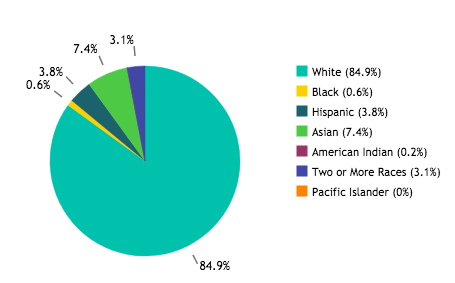
That is not something you expect to experience doing a domestic DukeEngage program. Especially not in a city your mom works in and that you visit every year. Despite the familiarity of the city, the Moxie program and Girls for Gender Equity (GGE) immersed me in environments so different than the ones that I know. The Moxie program has been the most diverse program I have ever been a part of.  I was surrounded by a diversity of race, income, family backgrounds, perspectives, and more. While Duke is fairly diverse, it’s social scene tends to be racially fractured. I am also on the rowing team, and this is an expensive sport that tends to only be available in high income areas, which can lend a lack of racial and economic diversity. Furthermore, my high school had a very serious lack of diversity (see below).

High school was comfortable, being surrounded by people just like myself. People rarely had to check themselves or check their privilege, because they were surrounded my equal levels of it. The way my parents raised me, having had come from low-income families themselves, I was aware of my privilege and that it was no coincidence that those who I lived around and went to school with looked and acted just like me. By my junior year, thanks to my American Studies class, amazing teachers, and the the book The New Jim Crowe, I had a fairly heightened social consciousness compared to those around me. In college, my political identity and activism exploded come Trump’s election, and at that point I considered myself to be “woke”. “Woke” is a political term that refers to a perceived awareness of issues concerning social justice and racial justice that has become widely used since the beginning of the Black Lives Matter movement.


But how can I be actually woke if you’re a white, straight, and privileged person who has been surrounded by people just like myself my whole life? I study issues of race, gender, sexuality, and class endlessly. I’m constantly having conversations about these issues, but often without the people who these issues are affecting. So my knowledge is overwhelmingly theoretical and academic. However, compared to a lot of others with the same white, privileged, and straight identities, I tend have a more heightened social consciousness and be more woke. Because of this, I’ve never had to check myself.

The Moxie program and Girls for Gender Equity both gave me the opportunity, for the first time, to have discussions about social justice issues with a diverse group of people. This aspect more than anything else, has led to the most learning and personal growth.  Finally, I have had to check myself.

One day at GGE, I was watching a trial against NYPD and its gang surveillance database. Parents came to the trial to share stories of the children they’d lost to this abuse of power, racism, and severe police brutality. Soon, I was crying and I turned to a fellow Moxie, to talk about it. I was startled by her response, “You shouldn’t cry, that doesn’t do anything. These are real peoples lives and realities.” Objectively, I knew my tears didn’t do anything to fix the problem. But, I knew she was saying something much deeper than that one sentence. That by crying about it, I was making it about me; the focus was being removed from the injustice to the black community to the empathy and emotions of the white woman. This interaction was coupled with our Moxie discussion concerning the role of empathy. We discussed how to advocate for people’s rights and needs, they are elevated as tokens of pain, which we will feel bad for, and if we’re privileged we’ll get a pat on the back for caring. From this, I took away an awareness of how my social activism and empathy for marginalized populations can be self-serving and how to stay away from this. Never should conversations about race be dominated by a white woman, and never should a white woman’s tear’s be weaponized to silence people of color.

During my last day at GGE, I met with my supervisor, Brittany, to wrap things up for the summer. We discussed the race dynamic, given that I was one of the very few white people at the office. She told me that my whiteness and privilege definitely stood out in the office and that is/was a very unique dynamic to have a white privileged intern under an almost all black staff. She asked how I felt being a minority in the office. First, I acknowledged the difference between being a black versus white minority and the privileges and disadvantages that those may bring. But even despite this, there was a constant heightened awareness of my identity, how I presented myself, and how I took up space. We agreed that this was an important experience for my self-awareness.

(Here’s me and Brittany-the best supervisor in the world-being cute!)

Processed with VSCO with c9 preset

If I plan on pursuing social justice in my future, it’s absolutely necessary that I am able to check my privilege, be aware of the space I take up, and how I talk about the issues. While I know that I have a ways to go, I am endlessly grateful for the Moxie program and GGE for having taught me so much.

And an unrelated side note to my fellow Moxies, I love you all with my whole heart and wouldn’t have wanted to share this experience with anyone else.

Thank you to GGE, Ada, Shannan, my fellow Moxies, and DukeEngage for allowing me to have such an incredible experience.