Summary of Meeting of Diversity & Equity in Environmental Programs
Fall 2017
Prepared by Nicolette L. Cagle on November 22, 2017
Executive Summary
On November 17, 2017, NSOE hosted the Chapel Hill-Durham-Beaufort Diversity & Equity in Environmental Programs (DEEP) Meeting. The purpose of the DEEP Meeting was to facilitate the development and growth of environmental and STEM-based diversity and inclusion programs in the Chapel Hill-Durham-Beaufort Community.
The meeting included 31 participants, representing 29 organizations from Durham, Chapel Hill, and Beaufort, NC. These organizations included universities, environmental organizations, diversity-focused organizations, and STEM educators.
As a result of DEEP, we developed a common terminology with which local organizations framed issues of diversity and the environment; laid the ground for local environmental pipeline/pathway organizations to work collaboratively to maximize efforts; gave prominence to critical data illustrating strengths and weakness in local environmental pipeline/pathway efforts (including section of the pipeline addressed and resources); highlighted the commonalities among organizations in regard to emphasis and importance of diversity in environmental fields; recognized and supported various environmental pipeline program organizations and initiatives; and ensured that lessons learned were lessons shared so local environmental pipeline programs can replicate successful projects.
Based on the results of the meeting, we have identified four potential next steps: 1) hold another DEEP meeting within the next 6 to 12 months; 2) develop a web-based environmental pipeline and pathway program directory; 3) deliver a network and landscape analysis to the DEEP community; 4) offer diversity training to the DEEP community.
[Please note that the overall results of the pre-meeting data collection effort are also presented in this report.]
Purpose
On November 17, 2017, NSOE hosted the Chapel Hill-Durham-Beaufort Diversity & Equity in Environmental Programs (DEEP) Meeting. The purpose of the DEEP Meeting was to facilitate the development and growth of environmental and STEM-based diversity and inclusion programs in the Chapel Hill-Durham-Beaufort Community.
In this meeting, we emphasized environmental or science, technology, engineering, and mathematics (STEM) pipelines. Environmental and STEM pipeline programs seek to increase the representation of particular groups (e.g., under-represented minorities, women) in environmental and STEM fields.
Overview of Meeting Participants
While the meeting emphasized environmentally- and STEM-focused programs, we did not limit participation to those programs. Instead, we found three groups represented by DEEP Meeting participants:
- Those working locally on diversity and inclusion initiatives and pipelines with a variety of age groups (i.e., pre-K to adults).
- Those working locally on environment and conservation initiatives.
- Those working both in diversity & inclusion and environment & STEM arenas.
The meeting included 31 participants, representing 29 organizations from Durham, Chapel Hill, and Beaufort, NC (see Supplemental Table 1). These organizations included universities (e.g., Duke University, University of North Carolina – Chapel Hill, and North Carolina Central University), environmental non-profits (e.g., Triangle Land Conservancy, Eno River Association), diversity and equity focused non-profits organizations (Durham P.R.O.U.D., East Durham Children’s Alliance), environmental or STEM pipeline or pathway programs (e.g., BOOST, GALS) and Durham Public Schools.
Significant Meeting Outcomes
The DEEP meeting spurred a number of important outcomes for the environmental pipeline/pathway program community. As a result of DEEP, we:
- Developed a common terminology with which local organizations framed issues of diversity and the environment;
- Laid the ground for local environmental pipeline/pathway organizations to work collaboratively to maximize efforts;
- Gave prominence to critical data illustrating strengths and weakness in local environmental pipeline/pathway efforts (including section of the pipeline addressed and resources);
- Highlighted the commonalities among organizations in regard to emphasis and importance of diversity in environmental fields;
- Recognized and supported various environmental pipeline program organizations and initiatives; and
- Ensured that lessons learned were lessons shared so local environmental pipeline programs can replicate successful projects.
Summary of Meeting Discussions
Goals of DEEP Meeting Participants. At the beginning of the meeting, the DEEP meeting participants were asked to identify their own meeting goals. Meeting participants sought to:
- Understand the challenges that organizations face
- Consider new approaches to overcoming challenges and barriers
- Develop long-term program continuity and leadership
- Create partnerships that provide resource support
- Brainstorm ideas on how to increase environment/STEM proficiency in students
- Identify appropriate measures of success for programs
- Promote the need for environment/STEM pipelines to the community
- Connect existing programs to under-served communities
- Create a community of organizations
Best Practices. During the DEEP Meeting, participants were grouped with others that worked with similar age groups. They were asked to discuss best practices for environmental/STEM pipeline and pathway programs. Those best practices, organized into four categories, are presented below.
Relevance & Interest
- Identify and engage the audiences’ and students’ interests
- Engage in issues that are relevant to the audience
- Develop real world applications
Cultural Awareness
- Listen carefully to the community that you are serving
- Beware of making assumptions about a group’s needs
- Be aware of and sensitive to cultural identities
- Develop hyper-local knowledge of culture
- Include cultural histories and connections in program content
- Prepare staff, educator and mentors with training in diversity, equity, and inclusion
Building Programs
- Design programs to overcome specific barriers
- Consider building programs from a “strengths-based” perspective
- Build up from your base of current resources
- Replicate or modify programs that have demonstrated success
- Leverage the connections and partnerships of other organizations
Human Relationships
- Create opportunities for peer mentoring
- Call on alumni to be champions and leaders
- Involve families when working with children
- Share children/student experience with families (e.g., science night, family night)
- Create diverse teams of staff, educators, and mentors
Ideas for Synergies. During the DEEP Meeting, participants were assigned to groups that allowed them to interact with organizations working with different age groups or doing different types of work. During this break-out session, participants were asked to consider best practices for developing synergies, partnerships, and collaborations that would allow organizations to meet their goals and extend their reach. Meeting participants identified the following best practices for developing synergies:
- Work together to ensure less duplication
- Find the right people to work with at large institutions and organizations
- Identify gaps in outreach
- Think in terms of partnership and synergy instead of competition
- Consider other avenues for outreach (e.g., afterschool programs)
- Identify potential advocates and allies
- Use network to create training opportunities for staff and educators
- Allow relationships to build slowly and develop long-term trust
- Connect to schools, including specialists, teachers, and school counselors
- Develop relationships with organizations that work with the previous or next age group
- Spread out to different communities
Moving Forward in K-12 Diversity Programming
During the DEEP Meeting, participants also identified potential action items to further develop local pipeline and pathway programs in the environment and other STEM fields. Participants looked for leadership in:
- Developing a network analysis to see how local organizations are connected,
- Conducting a landscape analysis to identify age groups and communities that are not being served,
- Creating a centralized list of community resources in environment/STEM & diversity,
- Providing participants with a means to meet, share, and exchange ideas regularly, and
- Identifying and/or creating cultural competency training opportunities for environment & STEM providers.
Proposed Next Steps
Based on the results of the meeting, we have identified four potential next steps: 1) hold another DEEP meeting within the next 6 to 12 months; 2) develop a web-based environmental pipeline and pathway program directory; 3) deliver a network and landscape analysis to the DEEP community; 4) offer diversity training to the DEEP community. Those ideas are explored in more detail below.
- DEEP 2 – Developing Collaborations. As a next step, we propose a DEEP 2 meeting in approximately 6 months. The objective of DEEP 2 would be to create teams to work along the environmental education pipeline through a collaborative project. To do this, we would first use a survey to 1) identify organizations interested in participating in a collaborative project workshop and 2) acquire data about the programs that could be used to create viable teams. Then, we would use another survey that would allow organizations to rank potential collaborators that operate in a different segment of the pipeline. The segments of the pipeline that would be addressed include: pre-K, elementary, middle school, high school, and family programs.
- Develop an Environment Pipeline Directory. We recommend that NSOE, in collaboration with community partners, create a web-based environmental pipeline and pathway program directory or portal. This directory would allow organizations to register their activities and connect with other organizations in their area. In addition, the directory could be used as a repository for activities, a means to compile best practices, and a rich data source for NSOE-led publications. A similar portal has been developed for law-focused pipeline programs, it can be found here:
https://www.americanbar.org/groups/diversity/diversity_pipeline/resources/pipeline_diversity_directory.html
- Develop a Network & Landscape Analysis. A third step is for NSOE to use our resources, in collaboration with community partners, to meet the need of meeting participants for a network and landscape analysis. NSOE will explore possible models (e.g., Masters Projects, independent studies) to complete this work on a 2 to 3 year timeline.
- Offer Diversity Training to the DEEP Community. To meet the needs of the DEEP community, we propose to offer 1-2 trainings in diversity (e.g., diversity and inclusion in environmental fields, creating inclusive classrooms, implicit bias training) this Spring.
Pre-Meeting Data Summary
Prior to the DEEP Meeting, data was collected on 35 local organizations that work in the environment, STEM, and/or diversity. Important results emerging from this data include that majority of organizations working in this arena target 12 to 18 year-olds, and emphasize race, socioeconomic, and gender diversity.
Pre-Meeting Data Collection
Between May and September 2017, NSOE collected data on possible DEEP Meeting participants. We contacted 35 organizations in Chapel Hill-Durham-Beaufort (see Supplement 1) and requested that they fill out survey detailing the following attributes of their organizations:
- location;
- age groups targeted;
- number served per year;
- diversity goal(s);
- type(s) of diversity targeted;
- number of full time, part time and volunteer staff;
- length of program;
- whether programs included overnight experiences;
- additional mentoring, or reunions;
- primary academic content of program;
- type of environmental content in program,
- types of scientific content in program;
- secondary content;
- type of activities;
- college and careers as program elements;
- pedagogical practices employed;
- pipelines the program directly connects to; and
- measures of success.
Pre-Meeting Data Results
All (100%) organizations contacted responded to the pre-meeting survey. The majority (63%) of respondents worked primarily in Durham, but participants also worked in Beaufort and Chapel Hill. Additionally, some of participants worked across the Triangle, the state, or the country.
In addition, the majority (77% and 71% respectively) of participants identified their primary content area as science or the environment. Other primary content areas reported by participants included: technology (34%), engineering (34%), social science (34%), mathematics (26%) and humanities (23%).
Also, the majority of participants (70-80%) reported working with early and middle adolescents, although participants reported working with a range of age groups, from infancy to older adults (see Figure 1).
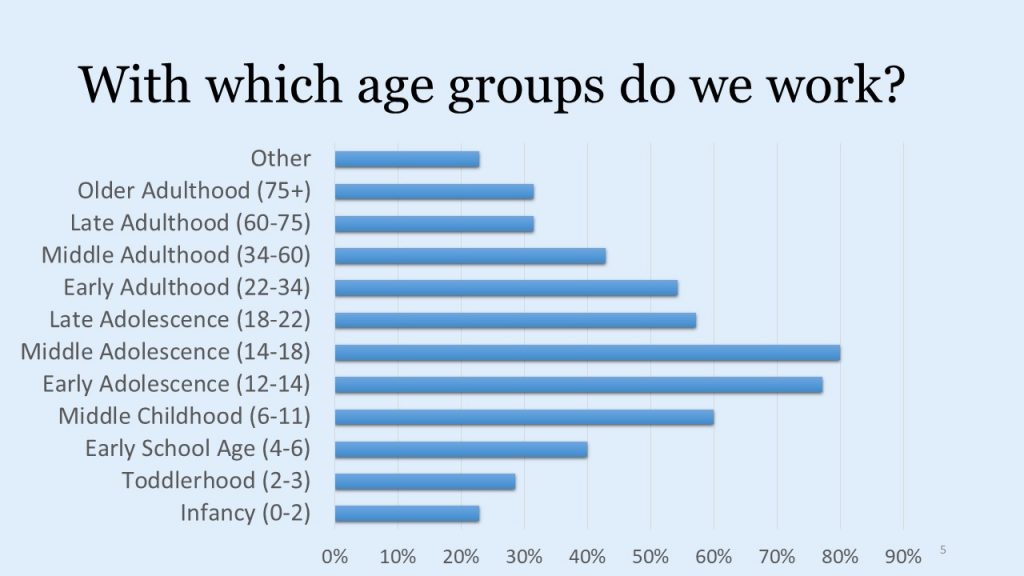
Figure 1. Percent of organizations working with particular age groups.
In addition, 2/3rds of the reporting organizations described enhancing diversity or representation or equity as an explicit goal. Of those 2/3rds, over half of organizations reported emphasizing racial diversity, with socioeconomic (49%) and gender (43%) diversity being reported as diversity targets as well (Figure 2).
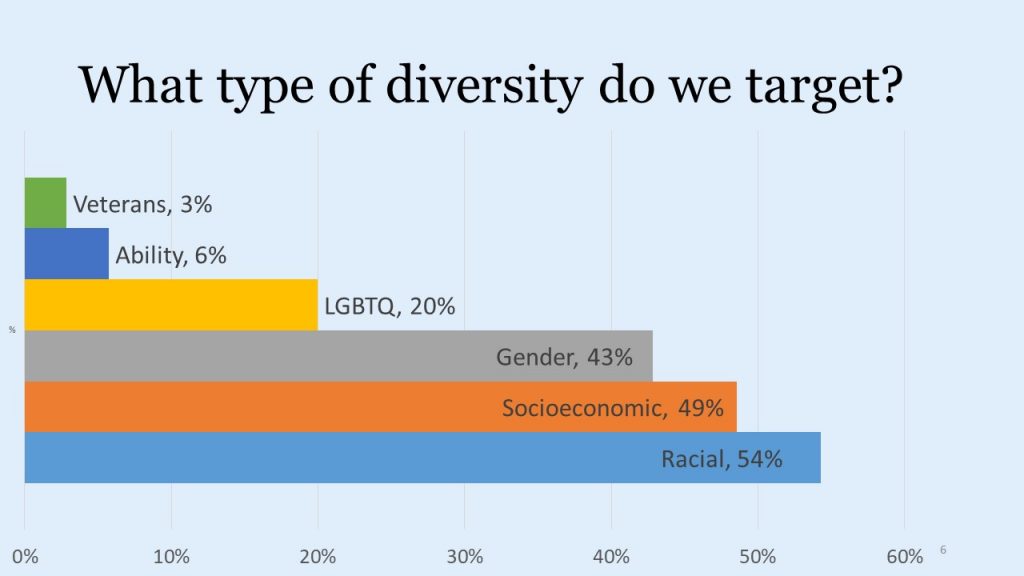
Figure 2. Types of diversity being targeted, as reported by the 66% of respondents that described enhancing diversity as an explicit organizational or programmatic goal.
Also, about 1/3rd of participants explicitly considered themselves a diversity pipeline program, defined as “programs at all levels of education intended to target, enroll, and support to graduation certain students, usually underrepresented students including minority, low income, and women, with the goal of increasing their representation in certain fields.” Of that 1/3rd, only 50% (5) of organizations report connecting directly to other pipelines.
Each year, these 35 organizations serve thousands of individuals (see Figure 3). Individuals are being served in a variety of ways, from one-day events to year-round programs; some programs include additional mentoring and reunions, and other programs (about 30% ) include an overnight component.

Figure 3. Percent of respondents associated with the number of individuals they serve annually.
Most organizations are serving their audiences with very limited staff. The majority (>50%) of our organizations have 0-3 full time staff members and 0-3 part time staff members (Figures 4 and 5).

Figure 4/5. Percent of organizations associated with the number of full time staff members working for the program or organization, and percent of organizations associated with the number of part time staff members working for the program or organization.
Organizations define success in a variety of ways (Figure 6). Many organizations emphasized increasing or reinforcing capacities, and ensuring success particularly among students. These capacities may be relate to the outdoors, or work or school. Nearly half of organizations emphasized the development of students’ socio-emotional capacities; academic and workforce capacities were emphasized by a smaller fraction of programs (approximately 1/5th each). Environmental awareness was also mentioned as a goal, though reported by even fewer organizations.
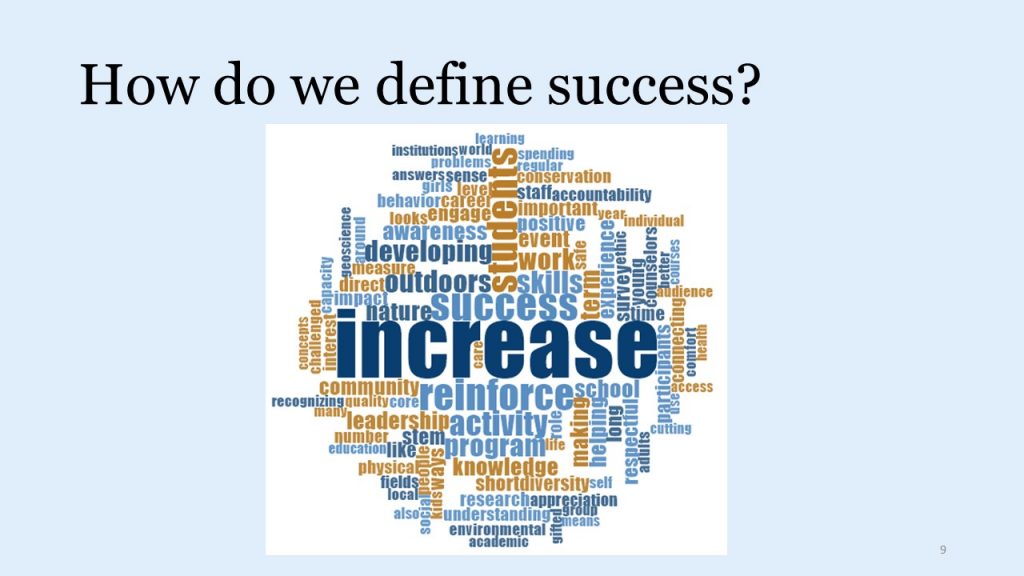
Figure 6. Word size is proportional to the frequency that the idea appeared in participant responses to the question about defining success.
Pre-meeting data collection also allowed me to develop charts to help NSOE faculty and staff match up efforts with appropriate organizations (see Appendix 2). These charts are divided by region (Chapel Hill, Durham, Beaufort, or Raleigh/Statewide) and whether or not the organization is associated with NSOE. The charts further depict the age groups each organizations works with and the number of total participants in those programs.
Supplement 1. Organizations contacted and responding to DEEP Meeting pre-survey.
- BOOST
- Conservation Trust for North Carolina
- Duke Superfund Research Center Community Engagement Core
- Duke Talent Identification Program (Duke TIP)
- Duke University Marine Lab (DUML)
- DUML Alliance of LGBTQIAA
- DUML’s Inclusivity Initiative
- Durham PROUD Program
- O. Wilson Biodiversity Foundation
- Emily Krzyzewski Center
- Eno River Association
- Environmental Science Summer Program at Duke
- FEMMES (Females Engaging More in Math, Engineering, and Science)
- Girls Exploring Science & Technology (GEST)
- Girls on outdoor Adventure for Leadership and Science (GALS)
- IDEA 2.0 Geoscience Intership Program
- iWalk the Eno and the Eno Environmental Experience
- Morehead Planetarium and Science Center
- Nicholas PhD Advisory Council (NPAC)
- DUML Ocean Filmmaking Camp
- Office of the Duke Forest
- Orange County Partnership for Young Children
- Park Institute of America
- Piedmont Wildlife Center
- Project Uplift
- DUML Research Experience for Undergraduates
- Schoolhouse of Wonder
- SEEDS
- Student Association of Wetland Scientist
- Summer Accelerator at North Carolina School of Science and Math
- The Scientific Research and Education Network (SciREN)
- Transplanting Traditions Community Farm
- Triangle Land Conservancy
- Trillium Sustainability Fellows
- Young Scholars Summer Research Institute




 The DEEP Collaborative at Bennett College, Greensboro, NC
 This trip allowed the DEEP Collaborative to apply the context of history and race in the United States directly to issues of environmental justice and being to consider the implications of this for our work in environmental fields.