
 The United States is facing a biomedical workforce crisis exacerbated by a steady decrease in the percentage of physicians engaged in research, including urology and nephrology (uronephrology). The current percentage of physicians engaged in research has fallen to approximately 1.5% today, a significant decline from the peak of around 4.5% in the 1980s. Meanwhile, chronic kidney disease and end-stage kidney disease represent a substantial medical and economic burden in the United States, with annual management costs estimated at $120 billion. The Duke Paired Undergraduate Mentoring Program (PUMP) in Uronephrology works to address the biomedical workforce crisis by exposing undergraduate students to research skill-building and mentored summer research.
History and Impact
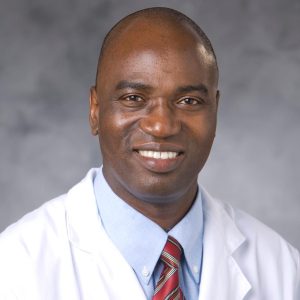
The PUMP program began in 2023 with an NIH R25 grant from the National Institute of Diabetes and Digestive and Kidney Diseases (NIDDK). The R25 was awarded to Dr. Rasheed Gbadegesin, the Wilburt C. Davison Distinguished Professor of Pediatrics.
PUMP pairs undergraduate students with a mentorship team comprised of a junior mentor (a trainee in an M.D. and/or Ph.D. track) and a senior mentor (Principal Investigator). Undergraduates collaborate with their mentorship team on a research project specifically designed for the mentee. Then, the Duke Office of Physician-Scientist Development supports students throughout an 8-week summer experience that includes clinical shadowing and professional development. Student professional development workshops focus on practical topics such as reading scientific papers, research ethics, and scientific communication, including guidance on delivering presentations.
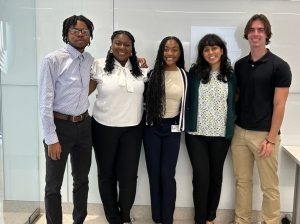
Over the summer, PUMP prepares undergraduates for post-graduate training and entry into uronephrology research careers. The reach of the program does not end there. PUMP alumni continue to participate in virtual professional development activities a year after completing the program and receive guidance on applying to graduate or medical school, career insights into pathways in clinical and/or laboratory-based research, and an overview of the pros and cons of taking a gap year.
Moreover, PUMP provides critical opportunities for biomedical research trainees and principal investigators to learn to mentor students effectively, enhancing their ability to mentor future student research projects. With this approach, PUMP addresses the biomedical workforce crisis by not only training students but also equipping mentors with valuable leadership skills to continue training future students.
Thus far, PUMP has mentored 15 sophomores, juniors, and seniors across three cohorts, with exceptional outcomes. In a paired pre-test and post-test survey evaluation, PUMP graduates responded more positively at the end of the program to prompts like:
- I possess a basic understanding of the research literature/ laboratory techniques in this area.
- I am able to give an oral research presentation.
- I have come to think of myself as a ‘scientist’.
These results are very encouraging, particularly the increase in identity as a scientist, as such identification is predictive of long-term behavior and persistence in STEM research careers. Between its first and second program cycles, PUMP saw a 400% increase in applications, underscoring the significant value of programs like PUMP in enhancing the biomedical workforce.
Student Experience
PUMP is dedicated to delivering an exceptional experience for undergraduate participants. This begins with understanding why participants want to become physician-scientists. According to program alumni testimonials, many participants are pursuing the physician-scientist career path to treat diseases and disorders with novel, research-based practices to improve patient outcomes. Others are passionate about addressing kidney disease in underprivileged communities and motivated to investigate the intersection of culture, medicine, and research. One student shared a desire to enact change through health policy research to transform how medical interventions are delivered and accessed.
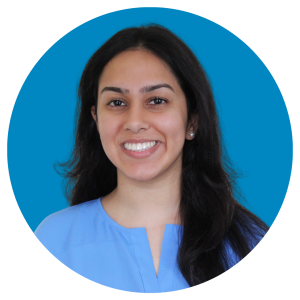
Annika Singh of Georgia Institute of Technology spoke of her experience with PUMP, stating, “The program wonderfully integrates a clinical research experience with professional development opportunities for those looking to pursue an MD, PhD, or MD/PhD. The program provided me with clarity as to my future career. Although I was sure about my desire to become a physician, I am now also sure about my decision to be a scientist.”
Many students applied to PUMP to gain insight into the clinical duties of a physician-scientist and to shadow clinicians to learn more about treatment for various forms of kidney disease. Gaining research experience was a major priority for other applicants aiming to immerse themselves in laboratory research and test new pharmacological interventions to treat disease. Others applied because of a family member affected by a disease or an interest in addressing infections that are often not openly discussed or appropriately addressed.
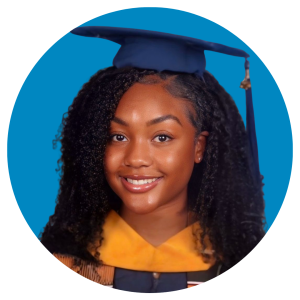
Kelechi Anusiem of Howard University encourages students to apply to PUMP even if they have not previously worked in a research laboratory. “It’s OK if you have no experience in research, and it’s OK if you’re unsure which direction you want to go in,” she says. “This program gave me the opportunity to explore more about my interests within the medical field. The support you receive from the staff, the connections and network you build along the way, and the growth you will have as an individual is unparalleled.”
PUMP undergraduates learn the basic skills necessary to become physician-scientists, which include laboratory research methods, critical thinking, scientific literature analysis, data analysis and visualization, and scientific communication. Some students go a step further to develop more unique, specialized skillsets. One student was highly interested in computational models and leveraged their PUMP experience to learn R and Python for data analysis and modeling. Another was passionate about community engagement and worked to implement practical clinical trial design with community members prior to trial initiation to improve recruitment and retention.
Conference Persists with Local Collaboration
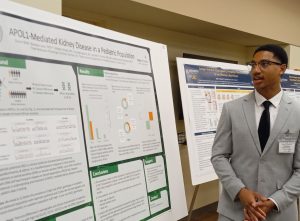
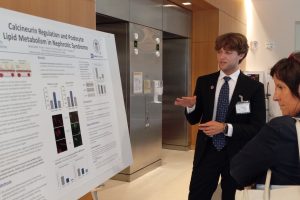
In July of 2025, Duke PUMP partnered with Wake Forest University and the University of North Carolina at Chapel Hill (UNC-CH) to sponsor a meeting to gather NIDDK-sponsored undergraduate students and faculty for a one-day research symposium on the campus of UNC-CH. Participating students from many NIDDK-funded institutions had the opportunity to present their research achievements and network with peers and distinguished faculty.
The NIDDK R25 Symposium was a great success, with at least ninety-seven in-person attendees from around the country. Fifty students presented their research through either a poster or an oral presentation. The rest of the event focused on various facets of uronephrology career development and included a plenary lecture, near-peer group discussions, group breakouts, a poster session, a career panel, and rapid-fire student presentations, with ample opportunity for students to network.
Looking Forward: Becoming a PUMP Participant
In the few years since its inception, the Duke PUMP program has had a significant impact on the careers of future uronephrology physician-scientists and research mentors. Today, PUMP’s resources and mentoring opportunities continue to address the biomedical workforce crisis and help undergraduate students actualize their career goals. The program and its outcomes remain a powerful demonstration of a clear need for more summer biomedical research experience programs.
To learn more, share this opportunity, or apply to the Duke PUMP program, visit https://medschool.duke.edu/research/research-support/research-support-offices/office-physician-scientist-development/opsd-2. The application deadline for the Summer 2026 cohort is February 8, 2026. Student participants earn a $7,000 salary for the 8-week program.
