
 Duke Ignite has had a tremendous impact on Science, Technology, Engineering, and Mathematics (STEM) learners in global and local communities for the past ten years. The core of Ignite is to challenge students to implement a human-centered approach to design and build solutions aligned with the United Nations Sustainable Development Goals of Affordable and Clean Energy, Clean Water and Sanitation, and Good Health and Well-being. Ignite is made possible by dedicated staff and undergraduate trainers and generous funding provided by the Burroughs Wellcome Fund and Bass Connections. The Bass Connections team evaluates and optimizes Ignite, thereby continuing to serve student participants.
History and Global Impact
Ignite began with a partnership with Duke Engage at the Duke Biomedical Engineering Center for Global Women’s Health Technologies to deliver affordable, clean energy to global communities. Duke undergraduates were paired with local students interested in learning about design and engineering to meet community needs in Kenya, India, Guatemala, and Peru. These initiatives were successful through collaborations with partners who had already established networks and trust within the local community.
In a large Kenyan fishing community, the program created a profound impact through the design of a gyroscope-powered light. This ingenious device harnesses the kinetic energy of boats moving on the waves, using locally sourced recycled materials. The solution empowered local fishermen to replace hazardous, oil-burning lanterns with a safer, sustainable light source for night fishing, directly supporting and securing their livelihoods.
The Clean Water portion of Ignite was launched by Duke undergraduates who were driven to address the community’s need for clean water around Lake Atitlan, a body of water in Guatemala that is considered sacred by the local community. The Clean Water team raised awareness and explored engineering solutions to address water issues in the region by working with a few thousand students in the local area. A sustaining impact of Ignite is that the initiatives are still run by local community partners in each country.
Adjusting to Changing Community Needs
 Ignite was poised to send Duke undergraduates abroad once again to address community needs when Dr. Megan Madonna, Assistant Research Professor in the Department of Biomedical Engineering, became the Director of Ignite in 2020. However, the global COVID-19 pandemic did not allow for those plans to come to fruition. Instead, the Ignite team pivoted to address the need for “Good Health and Well-being” during the pandemic. In part, Ignite undergraduates and staff both in North Carolina and Guatemala promoted health by partnering with Sesame Street to develop COVID-related curricula for Spanish speakers. The partnership with Sesame Street to address community needs abroad led Ignite to collaborate with the Durham Museum of Life and Sciences to adapt its COVID-related curricula for Spanish-speaking audiences in Durham.
This new partnership with the education team at the Museum of Life and Science led to the creation of a new pathway program. The Ignite Learners program was established in 2021 to equip Durham-area middle school students with the engineering skills to solve real-world issues. The Learners program is now an 8-week curriculum with cohorts of 60 to 75 students and has a curriculum for three of the United Nations Sustainable Development Goals. Learners in the program build flashlights to address the need for clean energy, water filters to ensure clean water, and microscopes to support clean water testing, as well as blood pulse oximeters to support good health. A goal of the program has been to serve the local Durham community, and Ignite is pleased that the 2026 Learners cohort will consist entirely of Durham Public Schools students. One middle schooler spoke of professional development through the Ignite program, stating, “I feel like [Ignite] taught me how to use a more professional way of doing it, which is the design process. So I’m gonna say that I learned a lot about science […] and how to overcome challenges.”
Continuing the Pathway Program Experience
 The Learners program was so successful that many of the former participants wanted to continue exploring an engineering career through Ignite. Fortunately, Ignite received a no-cost extension on its grant from the Burroughs Wellcome Fund, which enabled the piloting of the Ignite Makers program for high school student teams to work with Duke undergraduates. Now, Makers runs for eight months, with cohorts of 20 to 30 students, to identify a problem affecting the local Durham community, brainstorm solutions, prototype designs, and test them. Current Makers projects include water-quality monitoring systems for the Eno River and devices that help adults with tremors regain fine motor skills. Ignite Program Coordinator, Ella Brissett, said, “I have seen that students who started with nearly no engineering experience are now describing what they’re going to design to their trainers and detailing how their 3D model will achieve the project goal, so I have seen the students grow and become more confident in just a few months.”
Among the many innovations born of the Makers program is a greywater recycling system developed by high school students Josie Barber and Mason Sufnarski. Their project—which employs an organic filter to treat wastewater from dishes and laundry for hydroponic gardening—has been recognized by the EPA, Jacobs, and USAID. Both now undergraduates at Duke, they remain involved as Ignite trainers, continuing the pathway they helped shape.
The realization that students may want to continue with their project after one year with Makers led to the creation of the Duke Ignite Entrepreneurs program, supported by Josie and Mason, to help Ignite Makers’ projects move further towards implementation and adoption through focus areas including marketing, intellectual property, and networking. One high school student spoke to their drive to impact communities, stating, “What motivated me the most was knowing that I was working on something that could actually help people. Even when the process got frustrating, thinking about the impact the solution could have kept me going.”
Human Centered Design
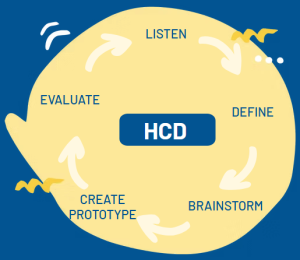 Duke Ignite puts human-centered design (HCD) at the forefront of all its projects, aiming to build trust in communities facing complex challenges. Traditional design programs use engineering design, but the process does not always consider the end user. Ignite reframes the traditional approach with humility, considering who you are designing with, rather than designing for. The Learners and Makers program participants interview local community members facing issues and incorporate information from primary sources, such as the Clean Water Guide and the County Health Report, into their design process. The HCD approach focuses on deeply understanding users’ real-world needs and behaviors to create solutions that fit seamlessly into their lives. This ensures the final product is not only useful but also sustainable, encouraging long-term adoption. One Ignite trainer spoke to the importance of this approach, stating, “My time with Ignite has built my belief that developing innovative medical technologies requires empowering future students to pursue science, to tackle issues plaguing medicine with diverse perspectives, and to generate innovations that are not only technically sound, but also socially relevant.”
Presenting Designs at Duke Day
Ignite hosts an annual Duke Day where all program participants present about the community needs to  be addressed and their design process. The showcase features a wide range of designs, with participants presenting to family members, friends, Duke students, and a panel comprising staff and faculty from Duke and the NC Museum of Life and Science. Duke Day also serves as an opportunity to recognize the 25 to 35 undergraduate trainers for their efforts in the programs. Mark your calendar for Duke Day 2026: March 22nd, 10 AM–3 PM in the Fitzpatrick Center (FCIEMAS). The day will include a tour of Duke’s campus guided by undergraduate Ignite trainers.
Getting Involved
Duke Ignite operates on a core philosophy of human-centered design and participant-led growth. By putting students first, the program adapts to challenges and opportunities alike—from the unprecedented circumstances of a pandemic to the organic development of three new pathway programs born from participant needs. The result is a dynamic, ever-evolving model for empowerment.
To learn more about the Ignite program, visit https://www.gwht-ignite-learning.com. Want to empower the next generation of innovators? Ignite welcomes Duke undergraduate trainers from all academic backgrounds. No engineering experience is necessary—just a passion for mentorship and human-centered design. Discover how your unique perspective can contribute to Ignite’s community-focused mission.
