Category: Uncategorized (Page 4 of 73)

Reflecting on COP29 and the Path Ahead

As COP29 in Baku came to a close this past weekend, and as I, like many others, reflect on our time there, I have mixed emotions. It was incredible to be in rooms and meetings where key discussions and moments of progress occurred. It was inspiring to witness the passion and commitment of so many diverse voices and groups working toward climate solutions around the world. Yet, the final results coming out of COP29 have left some advocates with a sense of disappointment and confusion. It’s understandable, that as our world inches closer and closer to going over the 1.5°C limit, our minds grapple with the feeling of both optimism and pessimism. 

The vast, ambitious, and transformative changes and finance deals that many had hoped for, did not occur at the level at which was needed. The lack of a clear commitment to climate finance and the slow pace of negotiations were notable points of frustration for both observers and negotiators alike. There is a sense of disappointment around the New Collective Quantified Goal (NCQG) for climate finance, which has left developing countries still waiting for increased support to help mitigate and adapt to climate change. These major negotiation topics of COP29 all feel like missed opportunities, and perhaps there truly is a disconnect between the urgency we feel and the pace of global negotiations.

Regardless, COP29’s outcomes don’t mean that all hope is lost. COP29 may not have produced all the progressive results many had hoped for, but the process itself of these negotiations is still vital. Every COP is a part of a larger effort to create meaningful agreements. Even outside of negotiation room doors, the networking and building of new coalitions are still crucial steps toward lasting change and action. I believe incremental progress is more important than we realize. 

The challenges seen at COP29 underscore the need for renewed commitment to climate action. It’s a reminder that action toward combating climate change cannot succeed without acknowledging and addressing the needs of those most affected by the crisis. Moving forward, our climate action must be coupled with social and economic justice. 

Despite the setbacks, COP29 still gave me opportunities for hope and provided a unique forum for addressing global climate challenges. COP29 celebrated the first submissions of Biennial Transparency Reports under the Paris Agreements, beginning a brand new chapter of global climate transparency. A coalition for health-climate action was formed at COP29, which will foster increased movement to health-resilient climate policies. COP29 provided lessons in the increasing empowerment of grassroots movements and local leadership, the importance of technological innovation and collaboration, and why we hold governments accountable. No matter the frustration from the COP29 results, individuals, organizations, governments, and the private sector coming together is never a waste of time. We now know what work lies ahead of us. The next COP, the next round of negotiations, and the next movement are each an opportunity to turn our disappointment and frustration into action. Moving forward, we are unified in knowing that the future of climate action is one of ambition and results.
Salam from Baku: the stadium is set for a 196-countries battle

Hello directly from COP29 in Baku, Azerbaijan!

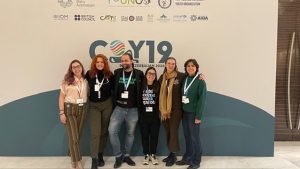
Whenever I told people I was going to Azerbaijan they would make a funny surprise face and check if they were listening right. I also have never imagined being in Azerbaijan before. My journey here started almost a week before COP started because I attended COY19, the Global Conference of Youth on Climate by YOUNGO (the official Children and Youth constituency inside the UNFCCC).

Every year before COP, COY happens in the same country as the UN Climate Conference and is a space for young people to meet and plan for the next two weeks of advocacy and so much work. So I had almost one week to adapt to Baku: the cold streets, the “salams”, the groceries in Azerbaijani, and the unfamiliar faces with caring and familiar smiles.

Before even COP started, I found people who felt like family early on.

Every night, we would leave the COY venue to have dinner and discover which restaurant had the best-fried eggplant (if you ever go there, please try this!). I also had the chance to meet the team I was going to work with in person as part of the client component of this class one day before COP in a much more informal environment. I am a volunteer for the negotiations team of the WWF International. After that, I also attended my first CAN (Climate Action Network) alignment meeting which was a nice reminder of the things we achieved last year in COP and the the things we wanted to achieve.

Different from most of my peers, this is not my first COP. But this is the COP I am most prepared to be here. I attended COP28 in Dubai as well and this was my first experience in this space. I had a really significant experience last year and I bring so much of it to this year. I learned to navigate this space in a huge venue with at least double the number of participants we have this year.

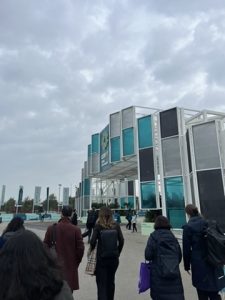
My first impressions of COP29 were regarding the venue. The entrance was not different from what I had already seen last year, excluding the fact that we could hear some traditional music from Azerbaijan at the entrance and we were greeted by kind young volunteers. But as you step into the security, you realize we are in the middle of a vast, cold, empty stadium with a strong whiff of petrol. The tents are built in a way that you can see sunlight in a few spots, but mostly you enjoy artificial lighting in a closed shoe box. And most importantly to note, the action spaces were too small and too limited. Actions were the most important aspect of my experience last year and this broke my heart to see. I wonder if this was built for this purpose: to impede big civil society actions to happen. Is it even safe for civil society to protest inside this venue? I don’t know.

But even without sunlight, the overly hot heating, and the limited action zones, we are all here listening, acting, observing. We will fight despite the limitations because there is no other option.


Keep tuned for more blog posts from us in the next few days and some updates directly from Baku stadium featuring 196-country climate scrum during the Biggest Game of the season!


Salam!

Vanessa

Still Miles to Go!

As I write this on the plane on my flight from Frankfurt back to Durham, I’m reflecting on the whirlwind that was COP29 in Baku, Azerbaijan. It was a mix of inspiring ideas, urgent discussions, and the familiar frustrations that come with global negotiations. While there were moments of progress, it’s clear that much work remains to ensure equitable and effective climate action. In this blog, I’ll talk about the main highlights of COP29, including climate finance, ideas from the pavilions, and the importance of including gender in climate action.

Climate Finance

One of the central issues at COP29 has been climate finance. After widespread rejection of an initial $250 billion-a-year proposal, a late-night meeting among wealthier nations led to a revised $300 billion-a-year target by 2035. While this marks progress, it remains far short of the $1.3 trillion per year that vulnerable nations say they need to address the climate crisis.

What’s troubling is that many of the poorer countries most affected by climate change were not in the room during these critical discussions. As one negotiator put it from the Politico article that our classmate Felicia kindly shared with us, “This isn’t only about money—it’s about survival.” This phrase really stuck with me! The process left questions unanswered: Will the funding come as grants or loans? How can it avoid adding to the debt burden of developing nations? And how can it reach those on the frontlines who need it most?

Pavilions

Amid these tense negotiations, the pavilions offered a completely different energy. They were spaces of innovation and collaboration, showcasing solutions that could transform how we address the climate crisis.

One standout session I attended was a World Bank panel on climate solutions in agrifood systems. It focused on the potential of agriculture to become a force for environmental healing while ensuring food security. The discussion highlighted nature-based solutions, sustainable irrigation, and the need to shift subsidies toward low-emission foods. What struck me most was the idea that agrifood systems could be redesigned to achieve net-zero emissions by 2050—an ambitious but achievable goal with the right investments and political will.

The Gender Lens

One of the most powerful moments for me at COP29 was the “UN Women: Gender and Climate: Synergies and challenges” press conference.

According to the speaker, it was evident that gender had not been a priority for this year’s presidency, but thanks to relentless advocacy from feminist groups, she shared the good news that it was brought to the table in the second week of negotiations.

The speaker passionately outlined how the care economy—largely invisible and disproportionately shouldered by women—is central to resilience in the face of climate shocks. For the first time, at the time of the conference as the speaker was mentioning, the draft text included references to the care economy and informal sectors, but she also noted that ambition remains far from what is needed. She continued to say that the inclusion of this language feels like a small step forward, but there’s still a long way to go toward ensuring gender-responsive climate action.

What stuck with me the most was the staggering imbalance of power at COP29 that the speaker mentioned: fossil fuel lobbyists outnumbered the delegations of the 10 most vulnerable countries by a ratio of more than 1073 to 10. This imbalance undermines the credibility of the negotiations and highlights the systemic barriers faced by those who are most affected by the climate crisis. The speaker went on to say that the links between fossil fuel extraction and gender-based violence, particularly against Indigenous women, are undeniable, yet these issues are too often sidelined in climate discussions.


This blog is just the second chapter of my reflections on COP29, and I know I’ll have more to write as I process everything I’ve experienced and continue following the outcomes of the negotiations. While there is much to criticize, there is also much to fight for! The solutions are within reach, but the gap between what is discussed in the pavilions and what is agreed upon in the negotiation rooms must be bridged!

COP29 Mid-Second Week Update: Disneyland for Climate Change and the Intricacies of Negotiation

As COP29 moves into its second week, the surreal world of climate negotiations has proven to be both fascinating and disillusioning. If you’ve ever been to Disneyland and observed the fervor of adults collecting pins, you’ll understand the unexpected dynamics of this climate conference. Pavilion pins have become the unofficial currency of COP29, their acquisition a game of connections, timing, and persistence. This lighthearted but competitive phenomenon encapsulates the layers of exclusivity and camaraderie that define the broader negotiations taking place here in Baku.

The Pavilion Pin Craze
The scramble for pavilion pins is nothing short of a spectacle. The Sustainable Development Goals (SDG) pin, for instance, vanishes by 9 a.m. each day, and whispers about secret stashes circulate among attendees like urban legends. Some pavilions tuck their pins away in mysterious back rooms, accessible only to VIPs. While it might seem trivial, the pin frenzy reflects a deeper truth: at COP29, networking and visibility are as critical as the technical aspects of negotiation. Everyone is vying for a piece of representation, whether through symbolic pins or substantive policy wins.

The Reality of COP29: Finance Takes Center Stage
Dubbed the “Finance COP,” COP29 has a heavy focus on the economic mechanisms underpinning global climate action, from loss and damage funding to new collective quantified goals (NCQGs) for climate finance. For someone with little interest in finance, this emphasis has been both overwhelming and frustrating. Key deadlines for resolving issues like loss and damage funding and setting NCQGs have come and gone without resolution. These delays highlight the challenges of aligning priorities among developed and developing nations, a dynamic that continues to stall meaningful progress.
Despite this financial focus, grassroots and community-based solutions shine as beacons of hope. Pavilion panels showcase a wealth of scientific innovations and local efforts to combat climate change, even as formal negotiations falter. These grassroots movements remind us that real climate action often happens outside the conference rooms, driven by people who refuse to wait for bureaucratic consensus.

Health at the Forefront
For me, following health-related discussions has provided a much-needed focus amid the maze of technical jargon and policy debates. The intersection of health and climate is gaining traction as a critical topic, with panelists emphasizing the urgent need to address climate-related health risks. From heat-related illnesses to the spread of vector-borne diseases, the health impacts of climate change are immediate and tangible, making this area of discussion particularly impactful.
These panels have also underscored the disproportionate burden faced by vulnerable populations, where the lack of infrastructure and resources exacerbates health crises. While the overarching negotiations feel stalled, these focused dialogues offer a glimpse of what meaningful collaboration could achieve.

Pavilion Panels: A Source of Optimism
The pavilions at COP29 are where optimism thrives. They bring together scientists, community leaders, and activists to share innovative projects and success stories. From renewable energy pilots in remote areas to climate-resilient agriculture initiatives, these presentations are a stark contrast to the gridlock of the formal talks. They’re also a reminder of the power of collective action at the grassroots level—a sharp contrast to the exclusivity of pin collecting and high-level negotiations.

The Stalemate: Loss and Damage and NCQGs
One of the most frustrating aspects of COP29 has been the lack of progress on critical issues like loss and damage funding. Developing nations, which are disproportionately affected by climate change, continue to push for financial mechanisms that ensure accountability and equitable support. Meanwhile, developed nations wrestle with balancing their domestic priorities against global responsibilities. The NCQGs—a framework for future climate finance commitments—are another contentious topic, with nations unable to agree on numbers, timelines, or accountability measures.
These delays have cast a shadow over the conference, raising questions about the efficacy of the COP process. If these critical issues remain unresolved, the credibility of future climate summits could be at risk.

Reflections: Beyond the Negotiations
COP29 has been an eye-opening experience, far removed from the idealized vision I had before arriving. It’s a space where high-stakes negotiations coexist with the absurdities of pin-collecting and pavilion chatter. Yet beneath the chaos, there is a persistent undercurrent of hope and determination. Whether through the resilience of grassroots movements or the urgency of health-focused discussions, the fight against climate change continues, even when the formal process seems paralyzed.
As the second week unfolds, the question remains: will COP29 deliver the breakthroughs needed to meet our climate goals, or will it serve as yet another reminder of the complexities and limitations of global diplomacy? Only time will tell, but for now, the Disneyland of climate negotiations remains as colorful and convoluted as ever.

Reflections on My First COP: Insights, Challenges, and the Road Ahead

For the remainder of my time in Baku, I mainly explored the country pavilions, networked with attendees, and listened to various panels to gain insights and build connections.

On November 16, I attended a session at the World Bank’s pavilion on Measuring Climate Risks for Smarter Adaptation and Mitigation Solutions, hosted by the IMF. The experts emphasized the critical role of data and highlighted ongoing efforts to make data more accessible. To better measure climate risks, they identified three key strategies:

  1. Capacity Building: Enhancing skills and resources for data analysis and interpretation.
  2. Improving Data Quantity and Quality: This includes initiatives like building the Climate Change Indicators Dashboards.
  3. Using Advanced Statistics and Methodologies: For example, the Data Gaps Initiative.

The IMF also stressed the importance of collaboration with international organizations and insights from diverse experts. However, they acknowledged significant challenges, such as limited access to data, understanding country-specific needs, and barriers like inadequate technology in regions such as Mozambique. To address these, the IMF and partner institutions are conducting research at the country level and generating tailored reports.

Later, I attended Singapore’s session titled Trust & Transparency in a World on Fire. On February 28, 2024, Singapore announced plans to implement mandatory climate-related disclosure (CRD) requirements for listed and large non-listed companies in alignment with the International Sustainability Standards Board (ISSB) standards, starting as early as 2025. This initiative aims to guide companies in setting clear sustainability goals by providing useful tools, emphasizing the importance of mobilizing capital, and establishing climate transition plans. To build capacity, experts discussed plans to assess company priorities, offer training materials, and foster collaboration among institutions to explore technological solutions for various challenges.

In the afternoon, I serendipitously stopped by the Chinese pavilion, where the speaker was discussing the Carbon Generalized System of Preferences (CGSP)—a topic closely aligned with my research interests. CGSP is a framework that uses monetary and non-monetary incentives to encourage sustainable behaviors. The professor highlighted their collaboration with the Quzhou Branch of the People’s Bank of China to establish “bank carbon accounts” for individuals. Their organization is working on implementing standards to quantify and measure carbon emissions while involving diverse stakeholders, including banks and NGOs, to enhance the project’s sustainability. After the talk, I had the opportunity to network with the professor, gaining valuable insights into CGSP.

The week at COP flew by, and I regret not having more time to explore the conference and Baku. I hope to attend another COP in the future. When I left, many critical topics—such as the New Collective Quantified Goal (NCQG) and the loss and damage fund—were still under negotiation. I hope future COPs will focus on more genuine, practical high-level negotiations rather than reiterating old discussions and diverting from urgent agendas.

While my first COP has ended, the pursuit of climate action continues.

« Older posts Newer posts »