
Invited Lecturers and Panelists
Lecturers are listed approximately in program order.
 Di Fang Duke University Week 1 |
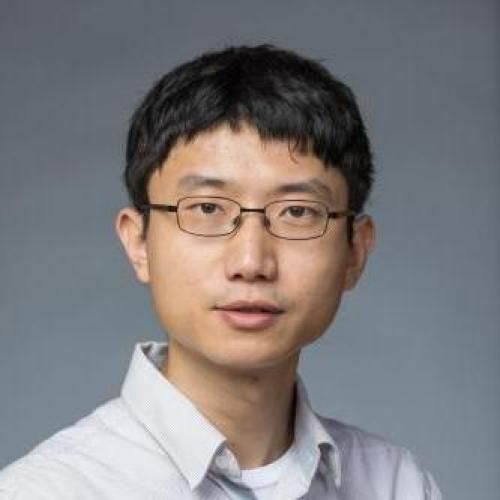 Yu Tong Duke University Week 1 |
 Daniel Nino Xanadu Week 1 · PennyLane demo |
 Chao Yang Lawrence Berkeley National Laboratory Week 1 |
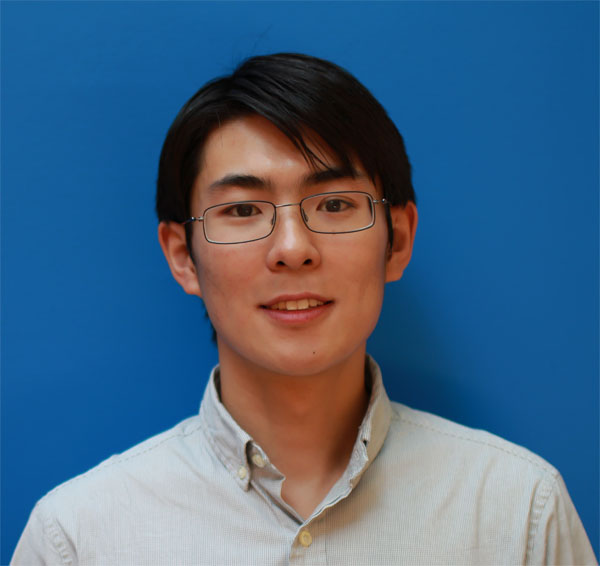 Lin Lin California Institute of Technology Week 2 |
 Sam McArdle Nvidia Week 2 |
 Robert Calderbank Duke University Week 2 |
 Sandeep Sharma California Institute of Technology Week 2 |
 Huanqian Loh Duke University Week 2 |
 Hamed Mohammadbagherpoor IBM Quantum Week 2 Industry Panelist |
 Rachel Noek Duke Quantum Center Week 2 Industry Panelist |
Detailed Program Topics
The following topics are tentative and may be adjusted slightly as the program develops. The summer school will feature a carefully coordinated invited lecture series, paired with hands-on exercises and group discussion time. Week 1 will cover quantum fundamentals and core techniques in quantum computing, with no prior background in quantum computing assumed. The modern techniques portion of Week 1 will begin to introduce advanced research tools and perspectives. Week 2 will focus on a range of advanced research topics in fault-tolerant quantum algorithms, with applications across scientific and computational problems. The final day will offer complementary perspectives, including quantum error correction, quantum hardware, and quantum chemistry on classical computers.
Summer school materials, including lecture recordings, slides, notes, exercises, solutions, coding materials, and other resources, are provided solely for participants’ personal educational use and must not be redistributed, reproduced, shared, uploaded, or posted elsewhere. Those interested in using any of these materials for teaching purposes should contact the relevant lecturer directly to obtain consent.
Week 1: Quantum Computing Foundations and Core Algorithmic Techniques
Day 1: Quantum Basics
Lecturer: Di Fang
- Lecture 1: History and motivation of quantum computing; quantum states; qubits; quantum gates. recording
- Lecture 2: Quantum gates; the no-cloning theorem in a simple setting; universal gate sets; quantum circuits; quantum measurements. recording
- Lecture 3: Partial measurements; quantum teleportation; the SWAP test; basic algorithm analysis. recording
- Lecture 4: Quantum computing versus classical computing; quantum advantage; garbage, uncomputation, and oracle access; the no-cloning theorem in general form. recording
Poster Session: The networking lunch will be accompanied by poster presentations. See the list of presenters here.
Day 2: Foundational Techniques
- Lecture 1: Phase kickback, QFT on Boolean cubes, the Deutsch–Jozsa algorithm, and the Bernstein–Vazirani algorithm, Grover Search. recording
Lecturer: Di Fang - Lecture 2: Quantum Phase Estimation I: phase kickback, controlled-U, QFT, QPE circuit and computations. recording
Lecturer: Yu Tong - Tutorial Session 1: Introduction to PennyLane, with examples including the SWAP test and the Hadamard test. Pennylane resources
Lecturer: Daniel Nino - Hands-on Theory Exercise 1: The Hadamard test; DFT and QFT; step-by-step calculation of the QFT circuit.
Worksheet and Solutions
Day 3: Foundational Techniques, continued
- Lecture 3: Quantum Phase Estimation II: QPE analysis, viewpoint as a projection, when input state is not an eigenstate, but a superposition. recording
Lecturer: Yu Tong - Lecture 4: Hamiltonian simulation and Trotterization. recording (For a detailed walkthrough of the proof of commutator scaling, please see the additional exercise on Trotterization: Worksheet and Solutions)
Lecturer: Di Fang
For additional material on time-independent Hamiltonian simulation (including QSVT-based methods) and time-dependent Hamiltonian simulation (including interaction picture), please see Di Fang’s slides and lecture videos from the 2023 IPAM tutorials.
- Tutorial Session 2: Hamiltonian simulation in PennyLane. Pennylane resources
Lecturer: Daniel Nino
- Group Discussion: Group Formation and Topic Selection. See here for more details.
Day 4: Modern Techniques
- Lecture 1: Block-encoding: definitions, interpretations, and key properties; linear combination of unitaries (LCU) in a simple setting. recording
Lecturer: Di Fang
- Lecture 2: LCU in the general setting; generalized matrix functions; quantum signal processing (QSP) and quantum singular value transformation (QSVT) as a black box; Hamiltonian simulation via QSVT, Oblivious Amplitude Amplification (OAA). recording
Lecturer: Di Fang - Tutorial Session 3: LCU examples and basic resource estimation in PennyLane. Pennylane resources
Lecturer: Daniel Nino - Hands-on Theory Exercise 2: Step-by-step calculation of LCU circuits; oblivious amplitude amplification without QSVT; singular value decomposition and generalized matrix functions; OAA in SVD form. Worksheet and Solutions
For an excellent reference on block-encoding, see Lin Lin’s lecture notes.
Day 5: Modern Techniques, continued
- Lecture 3: Circuit construction of the block encoding of structured matrices. recording
Lecturer: Chao Yang - Lecture 4: Dive into the QSVT subroutine: quantum singular value transformation, amplitude amplification. recording
Lecturer: Yu Tong
- Duke Quantum Center Lab Tour: Bus will depart from Duke Reclamation Pond promptly at 1:40 p.m. Please arrive a few minutes early. DQC Lab Tour Schedule. We thank the Duke Quantum Center students, postdocs, and faculty members who will lead the lab tours. The lab tour is coordinated by Margo Ginsberg, and a list of DQC volunteers is here.
Week 2: Invited Lectures and Special Topics
- Keynote on Quantum Algorithms and Quantum Advantage Overview. slides
Lecturer: Lin Lin - Quantum Linear System Algorithms. recording
Lecturer: Yu Tong - End-to-End Quantum Applications I & II. recording1 recording2
Lecturer: Sam McArdle - Quantum Learning Theory I & II. recording1 recording2 slides
Lecturer: Yu Tong - Keynote on Quantum Error Correction and Cellular Phones
Lecturer: Robert Calderbank - Quantum Chemistry on Classical Computers: Quantum Monte Carlo Methods
Lecturer: Sandeep Sharma
- Quantum Hardware: An AMO experimentalist approach to quantum computing and quantum simulation
Lecturer: Huanqian Loh
Panel Discussions
- Panel: Pathways from Mathematics to Quantum Information Science
Panelists: Robert Calderbank, Lin Lin, Yu Tong; Moderator: Di Fang
This panel features mathematicians who entered quantum information science at different stages of their careers. Panelists will share their experiences and advice with students and early-career researchers considering similar directions. - Panel: Quantum Industry and Industrial Opportunities
Panelists: Sam McArdle (Nvidia), Hamed Mohammadbagherpoor (IBM), Rachel Noek (Duke Quantum Center; formerly IonQ); Moderator: Di Fang
This panel features researchers with quantum industry experience. It aims to give participants a broader perspective on career paths, industrial opportunities, and the interface between academic training and the quantum industry.
PennyLane demo resources.
The PennyLane tutorial sessions in Week 1 will be accompanied by a resource page prepared by the Daniel Nino (Research Engagement Lead at Xanadu), including links and downloadable materials for the demos.
PennyLane demo resources. It requires a (free) PennyLane account to access.
Complementary tutorial video resources
Due to time constraints, the summer school cannot cover all related topics in detail. Participants who would like additional tutorials or complementary perspectives may find the IPAM 2023 Tutorials on Mathematical and Computational Challenges in Quantum Computing (part of IPAM 2023 long program) useful. The tutorial series includes additional material on:
– quantum algorithms for dynamics simulation, including Hamiltonian simulation, time-dependent simulation, and differential equations;
– the Heisenberg limit and early fault-tolerant quantum algorithms;
– quantum linear algebra and quantum linear system algorithms;
– quantum error correction;
– classical shadows in quantum learning
– superconducting hardware perspectives.
Group Discussions and Final Reports
Networking and group discussion sessions are scheduled throughout the summer school. Please see the schedule page for the scheduled slots. For instructions on the group discussions and final presentations, as well as the expected deliverables, please see the instruction pdf in this folder. Shared spreadsheet for the Group list and each group’s breakout room.
Participants who took part in the group discussion activity worked in ten teams to explore topics of shared interest in quantum computing. Each team gave a final presentation and prepared a written report synthesizing the group’s findings.
Together, these reports form a collection of topics explored by our summer school community. We sincerely thank everyone who contributed their time, ideas, discussions, and teamwork to this collective effort!
2026 Summer School Group Project Collection: Final Reports
| Group | Topic | Team Name |
|---|---|---|
| 1 | Quantum Linear System Solvers | Ready Player One |
| 2 | Quantum Signal Processing | The Signal Ps |
| 3 | Quantum Learning Theory and Hamiltonian Learning | League of Extremely Ambitious Researchers and Ne’er-do-wells |
| 4 | Hamiltonian Simulation | 7-body Interactors |
| 5 | Quantum Algorithms for Differential Equations | HYPERION |
| 6 | Efficient Block Encoding and Applications | Team Subrouteam |
| 7 | QLDPC Code, Surface Code and Decoding | qLDPC-SURFACE CODE ⊆ QEC |
| 8 | Clifford Hierarchy | Quantum Existential Crisis (QEC) |
| 9 | Quantum-Accelerated Monte Carlo | The Quantastic σ |
| 10 | Topological Quantum Computation | Topo Chicos |
Summer School Awards
Best Team Presentation Award:
Group 1 — Ready Player One (listed alphabetically by last name)
Harshit Bhatt, Riley Chen, Jon Forstater, Leia Greenberg, Xiaobo Liu, Reshma Sabnam, Bonan Sun, Divyesh Vaghasiya, and Liu Zhang.
Outstanding Musician Award:
Adam Byrne, Jon Forstater, and Soumyadeep Sarma (listed alphabetically by last name).
Poster Presentation
A poster session is scheduled during the Day 1 networking lunch on Monday, July 27. This session aims to provide an opportunity for participants to share posters on their mathematical and computational research, which does not need to be on quantum computing. The goal is to help participants learn about each other’s research interests and encourage conversations during the networking lunch. The posters will remain on display in the first-floor lounge area throughout the summer school. The list of poster presenters is below.
| Presenter | Institution | Poster Title |
|---|---|---|
| Muhammad Abid | University of Tennessee, Knoxville | Quantum SEDONet: Spectral-Embedded Deep Operator Networks for Partial Differential Equations |
| Sujeet Bhalerao | University of Illinois Urbana-Champaign | Privacy-Utility Tradeoffs in Quantum Information Processing |
| Harshit Bhatt | North Carolina State University | Adaptive Matrix-Free Hierarchical Approximation for Large-Scale Operators |
| Jonathan Forstater | University of California, Davis | E(3)-Equivariant Fragment-based Graph Neural Networks for Biomolecules |
| Leia Greenberg | Tel Aviv University | Higher order reduced rank regression |
| Ka Lok Lam | University of California, Santa Barbara | Probabilistic representation and Monte Carlo method for nonlinear Dirac equations |
| Xiaobo Liu | Max Planck Institute | Mixed-precision algorithms for Sylvester equations |
| Jishnu Mahmud | University of Tennessee, Knoxville | Moment-Structured Block Encodings of Periodic Finite-Difference Operators |
| Tate Middleton | University of Colorado Boulder | MRF MAP Inference on Bose Hubbard Machines |
| Volya Okrut | Duke University | Optimized quantum algorithm for simulating the Schwinger effect |
| Amy Qiao | Massachusetts Institute of Technology | Predicting Barren Plateaus in Variational Quantum Algorithms |
| Reshma Sabnam | University of Houston | Abstract Group Recovery from Orbit-Generated Gram Matrices |
| Soumyadeep Sarma | University of Maryland | Semidefinite Programming for understanding the limitations of Lindblad Equations |
| Bonan Sun | Max Planck Institute | Efficient Krylov methods for linear response in plane-wave electronic structure calculations |
| Jia Wang | University of Illinois Urbana-Champaign | Generalized Poincaré Inequality for Quantum Markov Semigroups |
| Linfeng Wei | Texas Tech University | Higher-order Cumulants of Entanglement Entropy |
| Jiaqi Zhang | Duke University | Discrete Superconvergence for Quantum Magnus Algorithms of Unbounded Hamiltonian Simulation |
| Liu Zhang | Princeton University | Generalized Method of Moments for Heteroscedastic Low-rank Gaussian Mixtures |
Helpful References and Resources for Quantum Computing
Many leading researchers have made their lecture notes on quantum computing available on their webpages. The following is a non-exhaustive list of potentially useful resources by prominent researchers from different disciplines:
- M. Nielsen and I. Chuang, Quantum Computation and Quantum Information, Cambridge University Press.
- Lecture Notes on Quantum Algorithms for Scientific Computations by Lin Lin (Caltech, Mathematics).
- Lecture Notes on Quantum Algorithms by Andrew Childs (University of Maryland, Computer Science).
- Lecture Notes on Quantum Computation by Peter Shor (MIT, Mathematics).
- Lecture Notes on Quantum Computation by Umesh Vazirani (UC Berkeley, Computer Science).
- Lecture Notes on Quantum Computation by John Preskill (Caltech, Physics).
- Lecture Notes on Quantum Computation by Ryan O’Donnell (CMU, Computer Science).
