
Universal Hard Hat Accessory to Accommodate Afro Hair Types and Head Wraps
Abstract
The fit of standard hard hats often fails to accommodate workers with afro-textured hair, head wraps, or other cultural and religious hair coverings, creating barriers to comfort, safety, and workplace inclusion. This limitation disproportionately affects women and individuals from diverse backgrounds, contributing to potential safety risks and social inequities. Historical stigmatization of Black hairstyles and the lack of standardized protective solutions for cultural and religious hair coverings underscore the need for inclusive personal protective equipment (PPE). To address these challenges, we developed a universal hard hat accessory designed to improve fit and stability for afro-textured hair and head wraps, thereby enhancing comfort and safety for all users. Preliminary testing was conducted using MSA Advance Vented Hard Hats and Jumbo MSA Cap Style Hard Hats on modified headforms with afro wigs, following select guidelines of the ISEA/ANSI Z89.1 standard. Results suggest that the accessory can improve helmet fit and reduce off-center force transmission, although limitations in test equipment and protocol prevent definitive safety certification. This work highlights the importance of inclusive PPE design and demonstrates a practical, low-cost method for prototyping and evaluating helmet adaptations prior to formal certification. Future studies with certified equipment and diverse participant populations are needed to validate performance and optimize design for broad workplace implementation.
Introduction
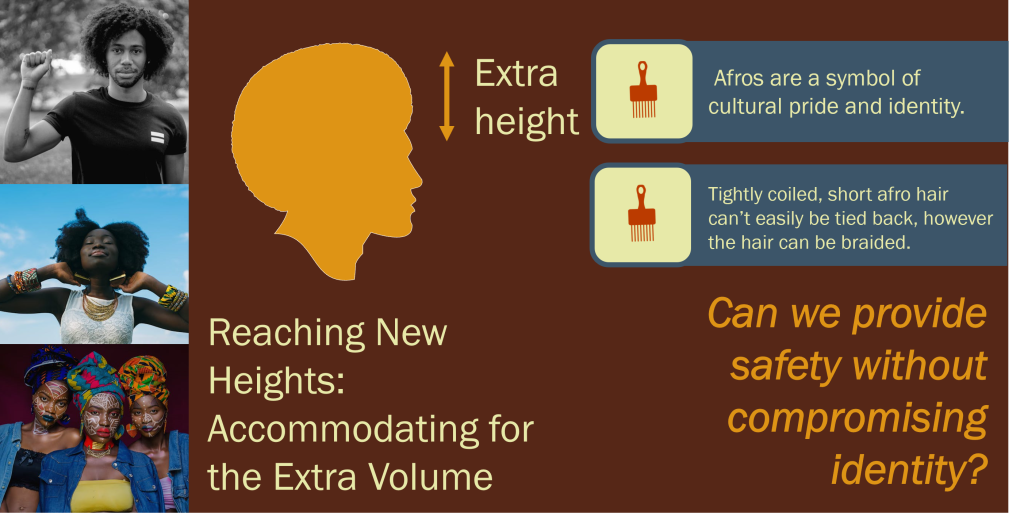
Our workforce is continuously diversifying, yet standard personal protective equipment (PPE) has not been designed with this diversity in mind. People with afro-textured hair, head wraps, and other cultural or religious hair coverings often face barriers when using standard helmets and safety gear. Women, in particular, frequently encounter poorly fitting PPE that can compromise safety and participation.
Historically, Black hair in sport has been stigmatized, raising concerns related to safety, discrimination, and human rights, as well as the risk of physical, emotional, and social harm [4]. Hairstyles such as afros, locs, twists, and bantu knots, while easy to maintain, can conflict with helmet use or hair-covering requirements, limiting safe participation [4]. Addressing these challenges can reduce harm, promote inclusion, and improve access and engagement for Black athletes [4].
Helmet and PPE regulations vary across activities and jurisdictions when accommodating cultural and religious head coverings [10]. For example, in Canada, Sikh men wearing turbans are exempt from motorcycle helmet laws in provinces such as Alberta, British Columbia, Manitoba, and Ontario; however, this exemption does not apply on construction sites [10]. Similarly, several Australian states exempt turban-wearing Sikhs from mandatory bicycle helmet laws but still require helmets when riding motorcycles [10].
Muslim women working in workshops also face challenges because no standardized safety hijab exists that is compatible with PPE [5]. Laboratory safety concerns include flammability and entanglement risks [8]. Recent design innovations, such as hijabs with adjustable snap closures, aim to reduce these hazards while supporting inclusivity and preventing exclusion from scientific and engineering fields [8].
Poorly fitting PPE can result in serious injuries or fatalities. For example, respirators that fail to seal, oversized clothing that causes tripping, and gloves that fail to protect against chemicals illustrate the risks of ill-fitting gear [6]. Focus groups with 23 female construction workers in New York City revealed that many were unable to access properly fitting PPE on-site, often purchasing their own equipment at personal expense [6]. Participants reported issues such as oversized safety glasses, which left gaps and failed to protect against sparks and debris [6].
Proper fit and secure retention are critical for helmet effectiveness. Research evaluating dynamic stability in bicycle helmets showed that custom liners created from 3D scans improved fit and retention compared to commercially available helmets, enhancing frontal and lateral roll-off performance [7]. While promising, these solutions require further testing with larger, more diverse populations [7].
This context highlights the need for innovative, inclusive PPE solutions. To address these gaps, we developed a universal hard hat accessory designed to accommodate afro hair types and head wraps, improving comfort, fit, and safety for all workers.
Problem Statement
Can we develop an accessory that improves the fit of standard hard hats for individuals with afro-textured hair and headwraps, thereby enhancing comfort, stability, and overall worker safety?
Functional Goal
- Design an accessory compatible with standard hard hats that accommodates diverse hair types and head coverings.
- Evaluate safety, stability, and durability under real-world working conditions.
- Compare performance against unmodified hard hats.
- Improve user fit, comfort, and usability.
- Minimize production cost to ensure affordability and scalability.
Educational Goal
This project provides hands-on experience in mechanical design, human centered engineering, and product testing. Relevant undergraduate courses that support this work may include:
- Mechanical Design & CAD – for creating and modeling the accessory. (EGR201L, Mechanics of Solids)
- Materials Science – for selecting durable, lightweight, and safe materials. (EGR201L, Mechanics of Solids)
- Ergonomics & Human-Centered Design – for understanding head shapes, hair types, and user comfort. (EGR101L, Engineering Design and Communication)
- Manufacturing Processes – for prototyping and evaluating scalable production methods.
- Circuit Design – for creating and coding circuits for experimental testing of the accessory. (EGR224L, Electrical Fundamentals of Mechatronics)
Research Goal
- How does hair type or head covering affect standard hard hat fit and stability?
- Can a universal accessory improve fit and safety for a diverse user population?
- How does the accessory affect helmet stability, retention, and user comfort under typical working conditions?
- What materials and designs maximize safety, durability, and cost-efficiency?
Contributions:
- Provide an inclusive PPE solution that addresses gaps in current hard hat design.
- Establish design guidelines for accommodating diverse hair types and head coverings in safety equipment.
Potential Market Value
The market potential for an inclusive hard hat accessory is substantial, driven by the dual pressures of rapid industrialization and the high costs of workplace injuries. In the U.S. alone, workplace injuries and illnesses cost businesses approximately USD 170 billion annually, with even minor head injuries exceeding USD 100,000 and moderate to severe injuries reaching up to USD 3 million [9]. Hard hats dominate the global safety helmets market, accounting for 87.6% of sales, with polyethylene models favored for their affordability and effectiveness [9]. Europe currently leads the regional market, with France at the forefront, while the construction industry represents the largest end user segment at 42.9% [9]. Emerging technological advancements, including wireless communication and health-monitoring sensors, continue to drive demand for enhanced safety solutions [9]. By offering a universal accessory that improves fit, comfort, and protection for afro hair types and headwraps, this innovation not only addresses an underserved demographic but also taps into a multi-billion-dollar global market, presenting significant commercial and societal impact.
Project Mind Map
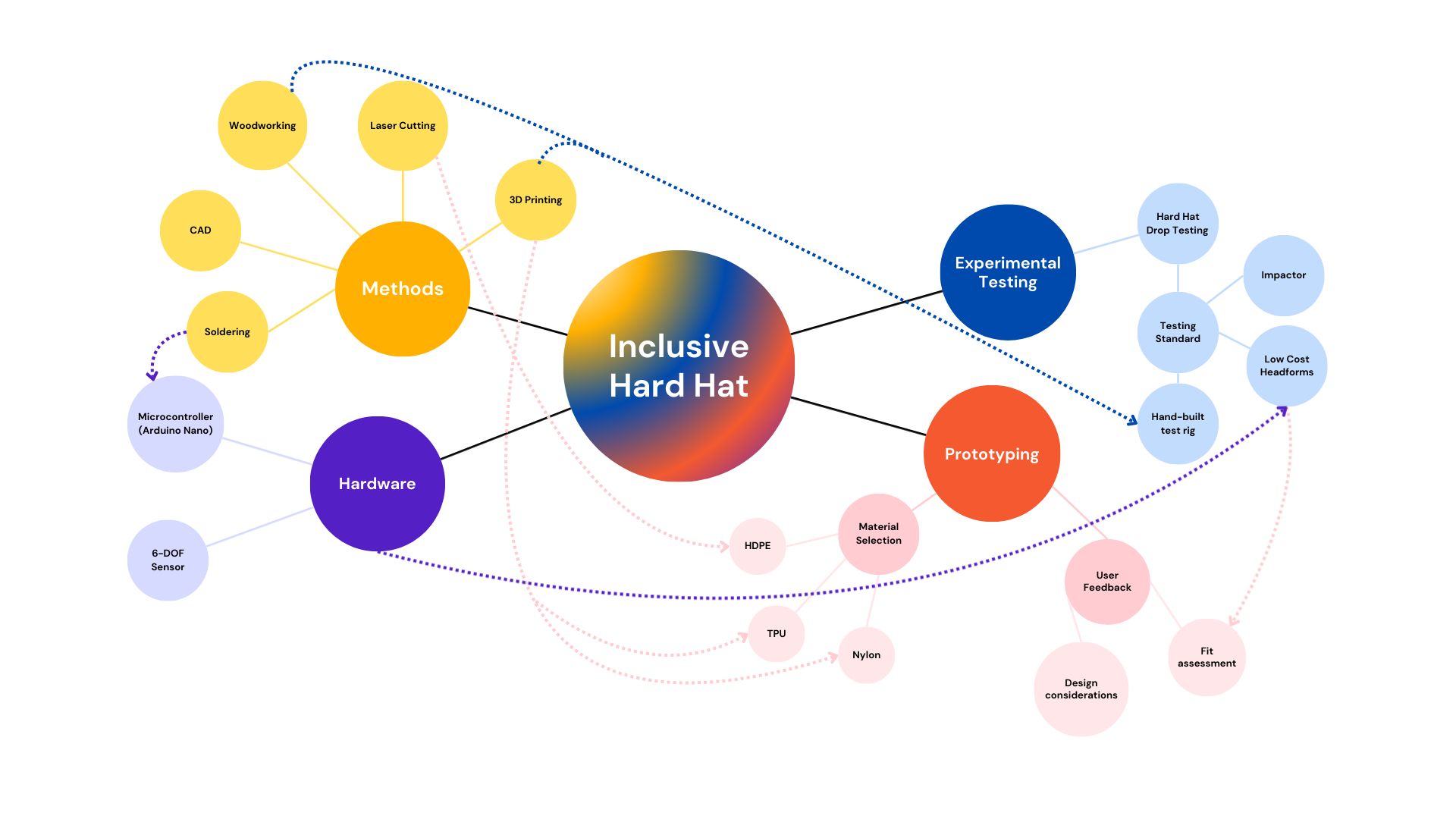
A focused visual guide that organizes thinking and reveals the project’s structure.
-

- Project Mind Map
Design Alternatives
As demonstrated by the video above, we know that only increasing the circumference of the hard hat does not change the poor fit and retention of the hard hat. Although a chin strap may partially mitigate this issue, it would not fully resolve the poor fit of the hard hat. Any materials used in the product must be able to withstand prolonged UV exposure, high temperatures, or chemicals. The material must be strong enough for daily use and typical wear and tear. Conductive materials like metal cannot be used due to electrical hazards for technicians and people who work with machinery. The product should be easy to use to allow quick adjustments in the field. The design should be easy to manufacture and the materials low-cost. As shown in the photograph of the plastic fasteners, multiple fastening options were evaluated. Although the C-clamp and plastic screw designs were also considered, and could be fabricated via 3D printing, plastic snap closures were ultimately selected due to their ease of use and reliable attachment.
-

- Design alternative table

-

- Plastic fasteners

Design Alternative 1 (Score: 8.5/10)

The machine-sewn satin bonnet accessory is designed to comfortably encase afro-textured hair while simultaneously maintaining proper hard hat positioning. Plastic snap closures are installed on the hard hat’s brow pad, which is typically constructed of fabric. The corresponding snap components are attached to the satin bonnet accessory, enabling secure integration with the hard hat. This design has the potential to be developed as an open-source product through the creation and distribution of a standardized sewing pattern.
Design Alternative 2 (Score: 9.4/10)

The flexible adjustment system is fabricated from a thin high-density polyethylene (HDPE) sheet. The ratchet knob and internal plastic spring are manufactured from nylon to provide high damage resistance. Due to the absence of publicly available 3D models of hard hat suspension or headband systems, expired patents US7000262B2 and US4942628A were referenced to sketch a simplified ratcheting mechanism. These patents offered insight into alternative design approaches without necessitating the purchase of multiple hard hat models. Plastic snap closures are installed on the hard hat’s brow pad, which is typically constructed of fabric. The corresponding snap components are fused to the flexible accessory, enabling secure attachment. The depicted design alternative may be used with headwraps.
Chosen Solution (Score: 9.55/10)

The flexible pin-lock adjustment system is fabricated entirely from a thin high-density polyethylene (HDPE) sheet. Polyethylene was selected due to its cost-effectiveness and reliable protective performance. In 2024, it accounted for 65.7% of the global safety helmet market, particularly within budget-sensitive sectors such as construction and manufacturing [9]. Plastic snap closures are installed on the hard hat’s brow pad, which is typically constructed of fabric, while the corresponding snap components are fused to the flexible accessory to enable secure attachment. The depicted chosen design may also be adapted for use with headwraps.

Bill of Materials
The table summarizes the purchased components used in the final prototype. Additional materials were acquired through the Wilkinson Garage Lab and personal resources.

Project Breakdown

-

- Jumbo hard hat smallest setting and largest setting

-

- Hard hat accessory

-

- Laser cutting in Pratt Student Shop

-

- Gluing HDPE together

Design
The dimensions of the hard hat accessory were established by measuring the suspension and adjustment system of standard MSA Advance vented hard hats with six-point ratchet suspensions, supplemented by iterative fitting to accommodate afro-textured hair.
3D Modeling
The model was created in FreeCAD, an open-source CAD software.
Manufacturing
Initial prototypes were constructed from kraft paper to verify the dimensions of the design. The final model was fabricated in the Pratt Student Shop using a moisture-resistant HDPE sheet (12″ × 48″ × 1/16″) and laser cutting. As shown in the photographs, the laser-cut parts required post-processing, as the cutter could not fully penetrate the plastic without causing burn marks. To optimize material usage, SVG files of the 3D model sketches were exported and arranged compactly for cutting. Raised features of the prototype were cut separately and glued onto the base as depicted. Upon fitting to the headforms, the initial assembly proved larger than required; the plastic was subsequently trimmed and reassembled using hot glue to achieve a snug fit.
-
- Tour of Injury Biomechanics Lab

-

- Filling holes in Blender

-

- Origin at center of mass

-

- Filled and sealed the Type II head

-

- Full Body Finite Element Model

-

- Parts for head and neck

-

- Material list

-
- Material list

-

- Files imported in FreeCAD

-

- Position of accelerometer in FE model

-
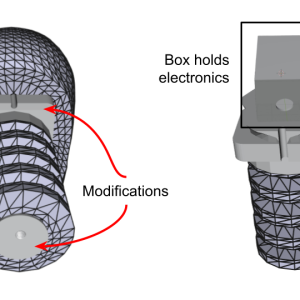
- Changes made to Type III Hybrid 50th Male

-

- Doubled the weight

-

- Assembling the Type III Model

-

- Plastic Replicas of the Humanetics Hybrid Type II and Type III 50th Male

-
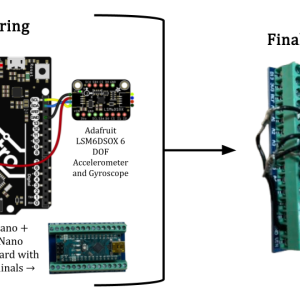
- Circuit Schematic

3D Modeling and Manufacturing for Type II
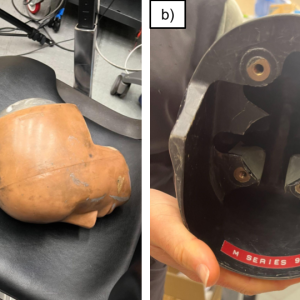
Humanetics is a leading and widely recognized manufacturer in its specialized field, holding a dominant position as the world’s largest producer of crash test dummies. Accordingly, two different Humanetics headforms were replicated for this study. A low-polygon model of the Humanetics Hybrid Type II 50th Percentile Male was obtained from Thingiverse (https://www.thingiverse.com/thing:5254001) which is a two part model. The headform model was redesigned to be filled with play sand to achieve the ISEA Z89.1 – American National Standard for Industrial Head Protection weight requirement of 8 lbs. To accommodate the sand, the headform was completely hollowed. A closed box was incorporated into the bottom of the headform to securely house the electronic components and prevent contact with the sand. This box was positioned atop a tall honeycomb structure, which allowed sand to propagate evenly throughout the headform. The height of the honeycomb structure was adjusted by checking the combined center of mass of all components using Blender’s “Origin to Center of Mass” tool, ensuring that the electrical components remained centered within the model. The two-part model, including the electronics box lid, was 3D printed in PLA. Cable entry holes were sealed with hot glue to prevent sand migration, and a 3D pen with black PLA was used to securely join the top and bottom sections of the headform.
3D Modeling and Manufacturing for Type III
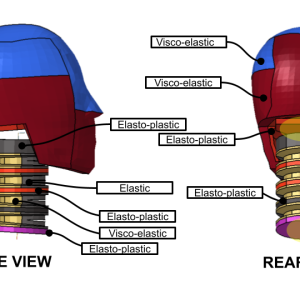
Additionally, a detailed finite element (FE) model of the Humanetics Hybrid Type III 50th Percentile Male was downloaded through OpenRADIOSS and accessed through a free trial of Altair HyperMesh, allowing for examination of material properties and export of the 3D geometry using the HyperMesh pre-processor. Simulation models of the Humanetics headforms are also available in LS-DYNA, PAM-CRASH, and RADIOSS for licensed users.
Steps
- Download the Hybrid_III_50TH_0000.rad file from this GitHub repository: https://github.com/OpenRadioss/ModelExchange/tree/main/Safety
- Open the File using Altair HyperMesh where you will see the full body FE model.
- Select and delete the components until you only see the head and neck.
- For one component, go to “Select Material” and you will see the full material list. Take note of the material types for the components of interest.
- Determine what materials you’ll use. Here are my choices: TPU for visco-elastic, PLA for elastic, and ABS for elasto-plastic.
Preexisting models were modified in the areas highlighted in yellow in the material overview figure using FreeCAD and Blender. A closed box was incorporated into the headform to securely house the electronic components. The location of the box was determined based on the position of the accelerometer, as shown in the figure. Additionally, a threaded hole was added to the bottom of the neck to allow the head forms to be fastened to a metal bolt on the test rig.
The majority of components were assembled using fast-setting epoxy. The lid of the electronics holder box was secured with hot glue. To increase the weight of the model, the ABS neck disks were partially infilled with a gyroscope pattern. A small hole was created in each disk to allow sand to be evenly distributed while maintaining the structural integrity of the part. The holes were then sealed with ABS disks of the same size, bonded in place with superglue. This modification effectively doubled the weight of the neck disks, as shown in the figure.
Electrical Components
22 AWG black PVC-insulated electrical wires and screw-type relay terminals were used with Arduino Nano modules. The components were soldered together to prevent disconnections during drop testing.
The sensor first collects a short stationary sample of N readings to perform calibration. The average acceleration along each axis is computed, resulting in a calibrated gravity vector (g_x, g_y, g_z). For all subsequent trials, this vector is subtracted from the measured acceleration on each axis rather than using the magnitude of acceleration minus gravity. This corrects for orientation-dependent errors and prevents negative force readings caused by incorrect sensor orientation.
Absolute force is then calculated as the product of the known mass of the dropped weight and the net acceleration derived from the calibrated measurements. During each trial, the sensor continuously records gyroscope, acceleration, and temperature data until the trial is manually stopped.
To improve signal quality, a low-pass filter is applied to the acceleration data on each axis (filtAx, filtAy, filtAz) to reduce high-frequency noise.
Code Repository: https://github.com/makaezimora/Duke-Capstone—Data-Capture
-

- Test rig

-

- Dimensions of test rig

-
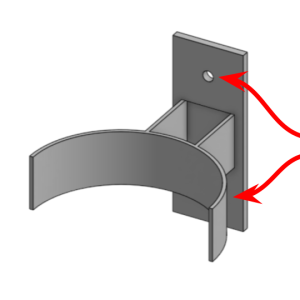
- Tube Holder for Test Rig

The test rig was constructed using power tools and lumber according to the dimensions shown in the figure. A 5-foot-long plastic tube was incorporated to meet the 5-foot drop height requirement specified by ISEA Z89.1 [17]. A plastic tube holder was 3D-modeled to secure the tube in place, with additional stabilization provided by hot glue.
Experimental Results & Discussion
-

- Hard Hat Testing Order

-

- Testing area

-

- Trial 1.1 Force vs Time

-

- Trial 1.2 Force vs Time

-
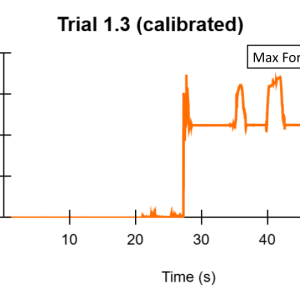
- Trial 1.3 Force vs Time

-
- Trial 2.1 Force vs Time

-

- Type III neck snapped off
Standard MSA Advance Vented Hard Hats with 6 Point Ratchet Suspensions and Jumbo MSA Cap Style Hard Hats with Fas-Trac Suspensions were tested. Tests were only run once on each hard hat.
The testing followed some of the guidelines of ISEA/ANSI Z89.1 – International Safety Equipment Association or American National Standard for Industrial Head Protection. According to the standard, the headform used for testing (Section 7.1.2) shall be the “ISEA standard headform,” size 7 [17]. The headform should be made of low-resonance magnesium K-1A or aluminum and have a mass of 3.64 kg ± 0.45 kg (8 lb ± 1 lb) [17]. A metal impactor was used in accordance with the standard’s requirements. An official metal headform was not used. However, one of the headforms employed met the 8 lb weight requirement. The impactor was dropped from a height of 5 ft, positioned towards the center of the hard hat. As a result, the measurements cannot be applied to decisions regarding safety.
According to ISEA Z89.1, under the tested conditions, the headform shall not experience a transmitted force exceeding 4,450 N.
- Trial 1.1: Sensor calibration was not performed for this trial. Video observations indicate that the hard hat bounced off the headform as the weight impacted it, suggesting off-center force transmission.
- Trial 1.2: Sensor calibration was included at the start of the trial. The maximum force recorded was 64.6 N, however this value may not fully represent the trial due to the data for the full trial not being recorded.
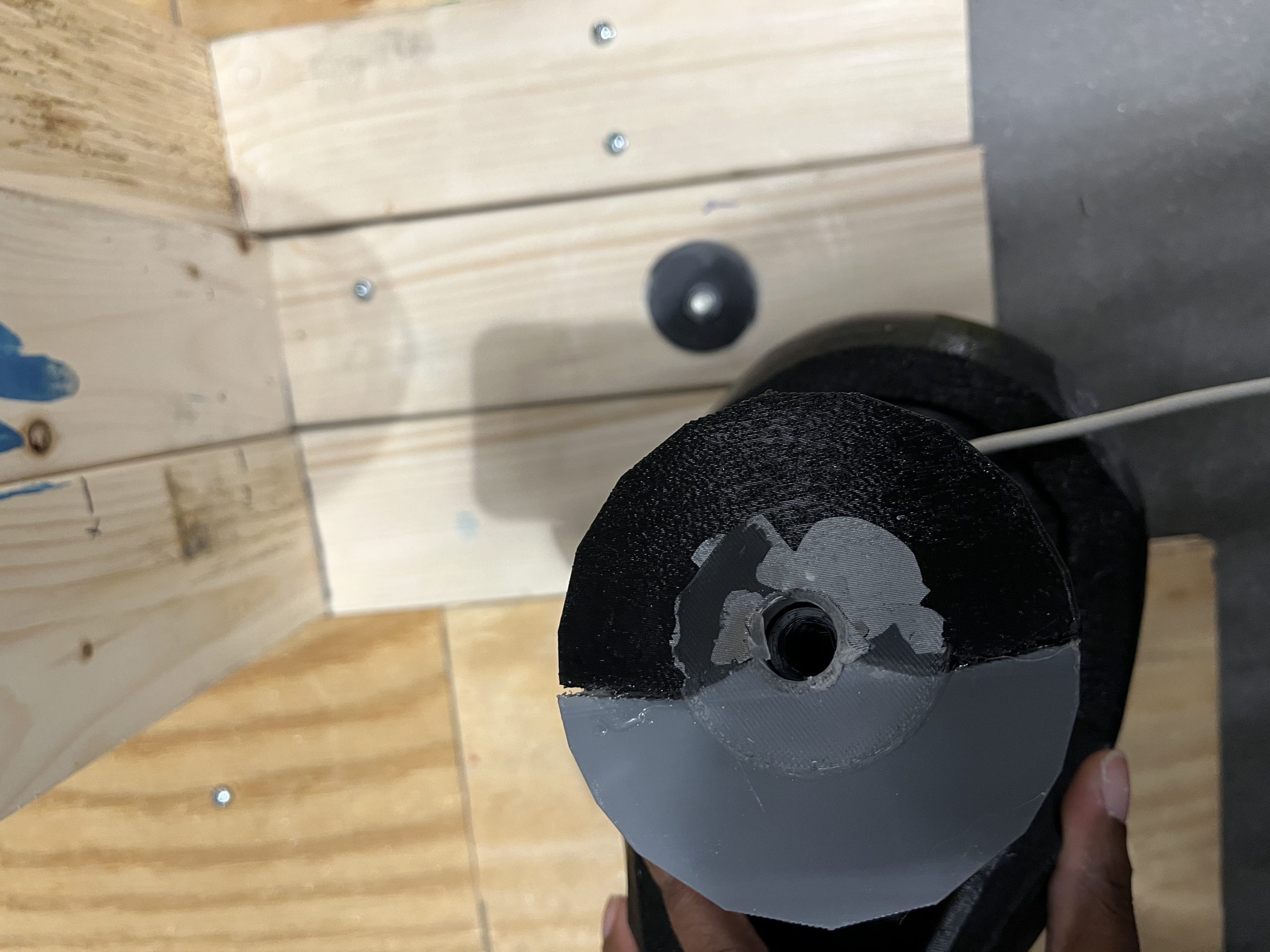
- Trial 1.3: The neck of the Type III model failed at the bolt junction, indicating either improper adhesive application or a weak bond. This model is generally intended for front or side impacts rather than the tested impact direction. The maximum force recorded was 34.6 N, but the trial is considered invalid because the headform broke.
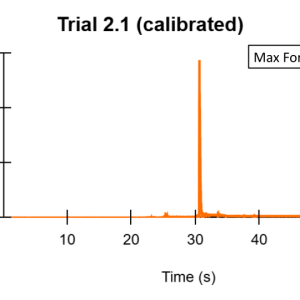
- Trial 2.1: No issues were observed. The maximum force recorded was 57.2 N. This indicates that the jumbo hard hat, without attachments, meets the standard when placed on the afro-wig 8 lb headform. The afro wig showed improved headform fit compared to my real hair, likely due to its lower density and looser curl pattern, which reduced fit-related inconsistencies.
Head injury is a critical area of research, and adherence to established standards and procedures is essential to ensure reliable results and protect human safety. The ISEA Z89.1–2014 standard for industrial head protection defines impact requirements for Type I and Type II helmets. Type I helmets are tested only for impacts to the apex of the helmet using penetration and force transmission tests [3]. While industrial helmets are an important measure for preventing head injuries, current standards primarily specify minimum performance criteria rather than fully realistic injury scenarios [3].
Both helmet design and headform surface conditions significantly influence rotational impact mitigation [2]. Hair and nylon stockings can act as shear layers between the headform and helmet, reducing angular kinematics, although stockings are less effective than hair [2]. Accurately representing the scalp in headforms is essential for experimental and numerical testing of head impacts [12]. For example, during Trial 2.1, the jumbo hard hat placed on an 8 lb afro-wig headform recorded a maximum force of 57.2 N, demonstrating that the helmet met the standard and that the headform fit influenced force transmission. In contrast, Trial 1.1, which lacked sensor calibration, showed the hard hat bouncing off the headform, suggesting off-center force transmission or sliding during impact.
Participant hair properties, including curl type, hairstyle, and style tightness, have been shown to have minimal effect on the static coefficient of friction (COF) at high applied normal forces. Biological sex similarly does not influence head-helmet interface friction [11]. However, these findings are limited to tests against EPS foam rather than comfort lining materials and under normal forces and strain rates far below real-world impact conditions. The maximum applied force in those studies was 80 ± 34 N, much lower than the approximately 5 kN observed in bicycle impacts, and the 3-second test duration far exceeds the typical 10 ms duration of real-world impacts [11]. Safely studying human participants under realistic impact conditions remains a major challenge [11].
Future Work
I made meaningful progress toward many of my project goals during the fall semester, however there are still several opportunities for this project to improve and expand. The following are things that I was unable to implement but would like to pursue moving forward.
- Vacuum seal compressive hair cap
- A makeshift vacuum seal bag created by attaching a 3D-printed vacuum seal to an extra-large, thick plastic shower cap. The shower cap used was the Esha Girl Extra Long Waterproof Shower Cap, with dimensions of 22.3″ × 9″. I have already 3D-printed the vacuum seal using PLA and TPU materials, using the files found here (https://www.printables.com/model/605674-diy-vacuum-bag-v724). The seal would be glued onto the shower cap to create a functional vacuum bag for experimental purposes.
- Redoing testing with proper equipment
- My low-cost test setup provides a practical alternative for predicting helmet behavior prior to official testing, particularly when access to certified testing equipment is limited. Once more refined and effective prototypes are developed, they can be evaluated using an official test setup to validate performance under standardized conditions.
Team

References
- Azlan, S. ., Nur Fitrah Najiha Muhamad Dzahir, Mustafa El Bakri, H., & Mahmood, S. (2024). Safety Helmet Fit Assessment Using 3D Scanning and Helmet Fit Index (HFI). International Journal of Integrated Engineering, 16(6), 172-181. https://penerbit.uthm.edu.my/ojs/index.php/ijie/article/view/18902
- Bonin, S. J., DeMarco, A. L., & Siegmund, G. P. (2022). The Effect of MIPS, Headform Condition, and Impact Orientation on Headform Kinematics Across a Range of Impact Speeds During Oblique Bicycle Helmet Impacts. Annals of biomedical engineering, 50(7), 860–870. https://doi.org/10.1007/s10439-022-02961-w
- Bottlang, M., DiGiacomo, G., Tsai, S., & Madey, S. (2022). Effect of helmet design on impact performance of industrial safety helmets. Heliyon, 8(8). https://doi.org/10.1016/j.heliyon.2022.e09962
- Joseph, J., Pennock, K., & Brown, S. (2025). Black Hair Is a Safe Sport Issue!: Black Aesthetics, Access, Inclusion, and Resistance. Sociology of Sport Journal, 42(2), 190-198. https://doi.org/10.1123/ssj.2023-0204
- Nizaora, D., Cahyadi, D., Soeprapto, E. F., Ahmad, R., Jepriani, S., & Rinda, R. S. P. (2021, 2021–04–26T21:20:38.000Z). Safety Hijab Design for Engineering Practical Usage Among Students by Kansei Engineering Method. https://doi.org/10.2991/assehr.k.210424.031
- Onyebeke, L.C., Papazaharias, D.M., Freund, A., Dropkin, J., McCann, M., Sanchez, S.H., Hashim, D., Meyer, J.D., Lucchini, R.G. and Zuckerman, N.C. (2016), Access to properly fitting personal protective equipment for female construction workers. Am. J. Ind. Med., 59: 1032-1040. https://doi.org/10.1002/ajim.22624
- Pang, T. Y., Babalija, J., Perret-Ellena, T., Lo, T. S. T., Mustafa, H., & Subic, A. (2015). User Centred Design Customisation of Bicycle Helmets Liner for Improved Dynamic Stability and Fit. Procedia Engineering, 112, 85–91. https://doi.org/https://doi.org/10.1016/j.proeng.2015.07.180
- Plackett, B. (2020). Adapting Hijabs for Lab Safety. ACS Chemical Health & Safety, 27(4), 202–203. https://doi.org/10.1021/acs.chas.0c00068
- Safety Helmet Market Size, Share | Industry Report 2020-2027. (n.d.). Grand View Research.
- Spennemann D. H. R. (2021). Turbans vs. Helmets: A Systematic Narrative Review of the Literature on Head Injuries and Impact Loci of Cranial Trauma in Several Recreational Outdoor Sports. Sports (Basel, Switzerland), 9(12), 172. https://doi.org/10.3390/sports9120172
- Stark, N.EP., Clark, C. & Rowson, S. Human Head and Helmet Interface Friction Coefficients with Biological Sex and Hair Property Comparisons. Ann Biomed Eng 52, 2717–2725 (2024). https://doi.org/10.1007/s10439-023-03332-9
- Trotta, A., Zouzias, D., De Bruyne, G., & Ní Annaidh, A. (2018). The Importance of the Scalp in Head Impact Kinematics. Annals of biomedical engineering, 46(6), 831–840. https://doi.org/10.1007/s10439-018-2003-0
- Weaver, A., III, Kemp, J., Ojiambo, W. & Simmons, A. (2024, Aug.). From hard hats to helmets: The history and future of head protection. Professional Safety, 69(8), 34-43.
- Altair Engineering, Inc. (2024). Altair HyperMesh (2024) [Computer software]. https://www.altair.com/hypermesh.
- Altair Engineering, Inc. (2024). HyperWorks (2024). Altair Engineering, Inc. https://altairhyperworks.com/.
- OpenRadioss. (2025). Hybrid_III_50TH_0000.rad [Data File]. GitHub. https://github.com/OpenRadioss/ModelExchange/tree/main/Safety.
- American National Standards Institute/International Safety Equipment Association. (2014). ANSI/ISEA Z89.1-2014 (R2019): American National Standard for Industrial Head Protection
