
Faculty and scholars at research universities in social science and humanities departments will serve as the conveners of the forum, drawing on their strong cross-disciplinary ties in economics, business, sociology, Asian studies, and related areas.
 Prasenjit Duara Oscar L. Tang Family Distinguished Professor of East Asian Studies, History; Director, Asian/Pacific Studies Institute
Prasenjit Duara was born and educated in India and received his PhD in Chinese history from Harvard University. He was previously Professor and Chair of the Department of History and Chair of the Committee on Chinese Studies at the University of Chicago (1991-2008). Subsequently, he became Raffles Professor of Humanities and Director, Asia Research Institute at National University of Singapore (2008-2015).
In 1988, he published Culture, Power and the State: Rural North China, 1900-1942 (Stanford Univ Press) which won the Fairbank Prize of the AHA and the Levenson Prize of the AAS, USA. Among his other books are Rescuing History from the Nation (U Chicago 1995), Sovereignty and Authenticity: Manchukuo and the East Asian Modern (Rowman 2003) and most recently, The Crisis of Global Modernity: Asian Traditions and a Sustainable Future (Cambridge 2014). He has edited Decolonization: Now and Then (Routledge, 2004) and co-edited A Companion to Global Historical Thought with Viren Murthy and Andrew Sartori (John Wiley, 2014). His work has been widely translated into Chinese, Japanese, Korean and the European languages.
He has a strong interest in environmental humanities and has organized a conference on environmental justice and sustainable citizenship in Asia, as well as workshops on the hydrologic cycle and historical societies, rivers and historical time, rivers in the Anthropocene, the management of water power in post-war East Asia, and trans-species listening and the rights of nature.
Prasenjit Duaraminimize profileOscar L. Tang Family Distinguished Professor of East Asian Studies, History; Director, Asian/Pacific Studies Institute
 Jieun Cho Assistant Professor of Japanese Studies
Jieun Cho is a cultural anthropologist of contemporary Japan and an Assistant Professor in the Department of Japanese Studies at the Chinese University of Hong Kong (CUHK). She received her Ph.D. in Cultural Anthropology from Duke University. Her research focuses on how people live through environmental uncertainty as it intersects with social, material, and bodily precarity. Her current book project examines how families and communities care for biologically vulnerable children in risky environments and reimagine what it means to make life in the wake of the 2011 Fukushima Daiichi nuclear disaster. Before joining CUHK, she was a Postdoctoral Associate in Asian Climate and Environments at Duke University. Prior to academia, she worked in the IT and energy industries in Korea and Japan.
Jieun Chominimize profileAssistant Professor of Japanese Studies
 Ting Hui Lau Assistant Professor of Anthropology, National University of Singapore
Ting Hui Lau is a sociocultural anthropologist. She received her BA in Land Economy from the University of Cambridge in 2009 with a specialisation in customary land tenure and Indigenous land rights. She completed her PhD at Cornell University in August 2020 and started an appointment at Yale-NUS College in January 2021. Lau hails from a small timber town in Sarawak, East Malaysia. Prior to pursuing postgraduate studies, she worked at the Food and Agriculture Organization of the United Nations in Rome.
Lau’s work focuses on cultural loss and endurance among Indigenous communities. Her book in progress, Wounds of Progress: Colonialism, Loss, and Endurance in Southwestern China, builds on over a decade of engagement with Indigenous Lisu subsistence farmers in the Nu River Valley on the China-Myanmar border. Investigating the Lisu’s struggle against the deracinating effects of Chinese development, she examines the everyday ways Lisu continues to persist, endure, and regenerate in this context of cultural loss. She reveals how intimate acts of caring, drinking alcohol, or storytelling can serve as remembrances. Through these practices, Lisu holds on to their ways of life, builds community, and refuses erasure. Building on her first book project, Lau’s continuing research agenda investigates the anthropology of accidents and natural disasters, Lisu diaspora, and Indigenous survival in the context of Asian colonialisms.
Ting Hui Lauminimize profileAssistant Professor of Anthropology, National University of Singapore
 Christian Lentz Associate Professor of Geography
Christian Lentz is a human geographer and interpretive social scientist interested broadly in Southeast Asia’s politics, societies, and environments. His research brings classic themes of social inquiry such as nationalism, state formation, and agrarian political economy into dialog with ideas of place, territory, and cultural difference, including racial and ethnic formations. His prize-winning book Contested Territory: Dien Bien Phu and the Making of Northwest Vietnam (New Haven: Yale University Press, 2019) focuses on a borderlands region and the processes through which its peoples and places were made Vietnamese, sometimes against their will.
His current research connects decolonization in Vietnam to Indonesia by examining their trilateral relationship from independence, through the Bandung era, and into the Cold War. Another project draws on research conducted in Sumba, Indonesia in 1997 and 2000 to restudy social adaptation to the El Nino Southern Oscillation and its environmental outcomes. By engaging students on these themes and a range of topics—from revolutionary struggle in Vietnam to social change in North Carolina, from growing coffee in Indonesia to drinking it at Starbucks—his teaching aims to make the foreign familiar and the familiar strange again.
Christian Lentzminimize profileAssociate Professor of Geography
 Ralph Litzinger Associate Professor of Cultural Anthropology
Ralph Litzinger’s early research focused on ethnicity, nationalism, and post-socialism in China. He has published articles on nationality theory in China, memory work, and ethnic politics in the post-Cold War global order, on gender and film, photography, and popular culture. Other Chinas: the Yao and the Politics of National Belonging (Duke University Press, 2000) was the first major ethnographic study to examine the work and writing of minority intellectuals in the imagining of post-socialist futures.
More recently, his research has focused on activism and advocacy work around the environment, labor, migrant education. He published essays on the transnational and media dimensions of anti-dam protest in southwest China; on global environmental NGOs and the privatization of nature; on self-immolation among Tibetans; on transnational activism directed at Apple and the companies that source its supply chain; and on the emerging field of global media ecologies.
Ralph Litzingerminimize profileAssociate Professor of Cultural Anthropology
 Suh-Hyun Park Research Professor, Research Center on the Commons and Sustainable Society, Jeju National University
Suh-Hyun Park, a research professor at the Research Center on the Commons and Sustainable Society, majored in philosophy at Korea University and obtained his doctorate in philosophy at Seoul National University. He has been researching the commons from an Autonomist-Marxist perspective.
He is a co-translator of Reflection on Empire by Antonio Negri, while his journal articles include “Alternative Production of Knowledge Commons in Korean Academic Society” and “Alternative Sharing of Knowledge Commons in Korean Academic Society.”
Suh-Hyun Parkminimize profileResearch Professor, Research Center on the Commons and Sustainable Society, Jeju National University
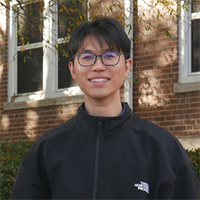 Xingming Wang Postdoctoral Associate, APSI
Xingming Wang received his Ph.D. in Comparative Literature from Rutgers University, specializing in China, Sinophone studies, and Environmental Humanities.
His dissertation, titled “Coal Attachment: Cultures of Fossil Fuels in Modern China,” investigates the literary and cinematic representations of coal and coal industries from the late Qing to the post-socialist era. The project traces shifting “structures of feeling” toward coal in modern China, revealing how Chinese intellectuals project their anxieties and aspirations onto this environmental object as they navigate historical upheavals and answer the calls of nation-building, revolutionary movements, and environmental justice.
As a postdoctoral researcher, Xingming seeks to advance dialogues and collaborations on climate change, with a particular focus on the strategic position and potential of Asia in facilitating the global clean energy transition.
Xingming Wangminimize profilePostdoctoral Associate, APSI
 Junjie Zhang Professor, Environmental Sciences & Policy Division, Nicholas School of the Environment
Junjie Zhang is a professor in the Nicholas School of the Environment at Duke University and Director of the Initiative for Sustainable Investment at Duke Kunshan University. He founded and directed Duke Kunshan’s Environmental Research Center and International Master of Environmental Policy Program. Before that, he was an associate professor in the School of Global Policy and Strategy at the University of California, San Diego. He was also a Volkswagen Visiting Chair in Sustainability in Schwarzman College at Tsinghua University.
His recent research focuses on empirical issues in energy transition, climate change, and green finance. He has received funding from reputable sources, including the U.S. National Science Foundation, the U.S. National Oceanic and Atmospheric Administration, China National Natural Science Foundation, China’s Ministry of Ecology and Environment, China Council for International Cooperation on Environment and Development, the Energy Foundation, the World Bank, and Asian Development Bank. He holds a B.S. from the Renmin University of China, a B.S. and an M.S. from Tsinghua University, and a Ph.D. from Duke University.
Junjie Zhangminimize profileProfessor, Environmental Sciences & Policy Division, Nicholas School of the Environment
