
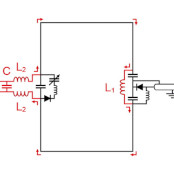
iPRES
We developed a novel iPRES coil design that allows RF and DC currents to flow on the same coil elements, enabling MRI and localized B0 shimming with a single integrated RF/shim coil array (Han et al. 2013).
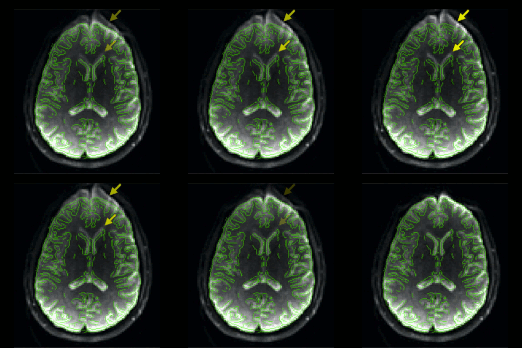
iPRES | brain
We implemented iPRES into a 32-channel head coil array to correct for localized B0 inhomogeneities and image distortions in the brain, reducing the B0 inhomogeneity by up to 83% (Truong et al. 2014).
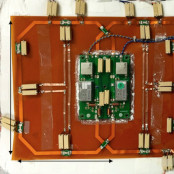
iPRES(N) | body
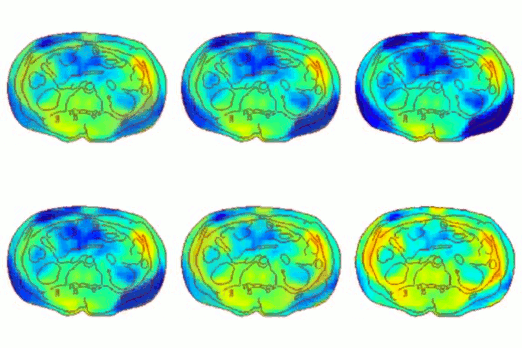
We implemented a novel iPRES(N) coil design, with N DC loops per RF coil element, into an 8-channel body coil array to enable a more effective localized B0 shimming in the abdomen (Darnell et al. 2017).
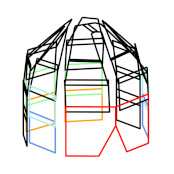
iPRES-B | brain
We developed a plug-and-play battery-powered iPRES head coil array to enable a more efficient and cost-effective localized B0 shimming in clinical applications (Darnell et al. 2017).
iPRES(N)-A
We developed a novel adaptive iPRES(N) coil design that uses switches to achieve a more cost-effective localized B0 shimming (Darnell et al. 2018).
iPRES | fMRI
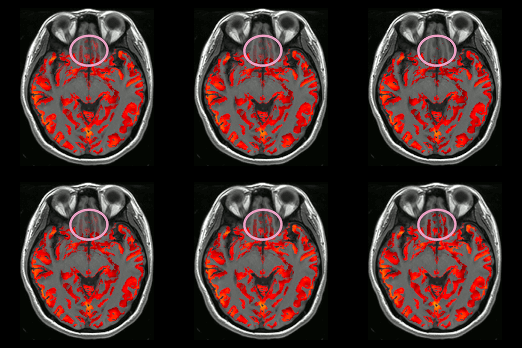
We developed a novel iPRES shim optimization method to correct for both distortions and signal loss in functional MRI applications (Willey et al. 2021).
iPRES(N) | breast
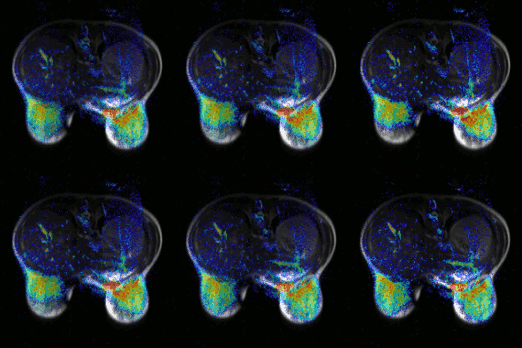
We implemented iPRES(N) into an 8-channel breast coil array to correct for localized B0 inhomogeneities and distortions in the breast (Ma et al. 2018).
iPRES(N)-A | body
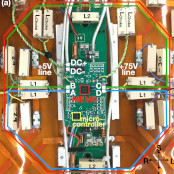
We implemented iPRES(N)-A into a 32-channel body coil array to correct for localized B0 inhomogeneities and distortions in the abdomen (Ma et al. 2020).
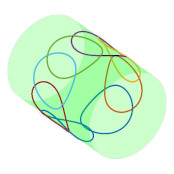
iPRES | rat
We numerically optimized an iPRES rat coil design to achieve a high localized B0 shimming performance and signal-to-noise ratio (Thompson et al. 2020).

iPRES & iRFW | review
In this review article, we discuss recent advances in RF coil technologies: flexible, wireless, and integrated RF/shim coil arrays (Darnell et al. 2021).
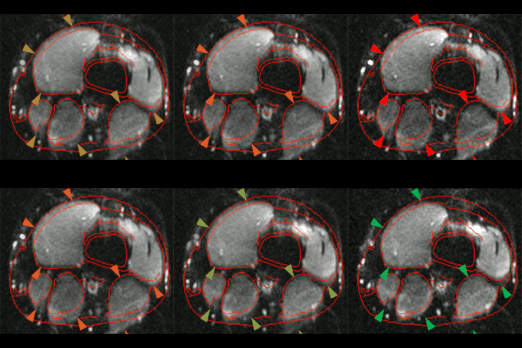
iPRES | flexible
We implemented iPRES into a 4-channel flexible multi-purpose coil array to correct for localized B0 inhomogeneities and distortions in the knee and neck (Overson et al. 2023).
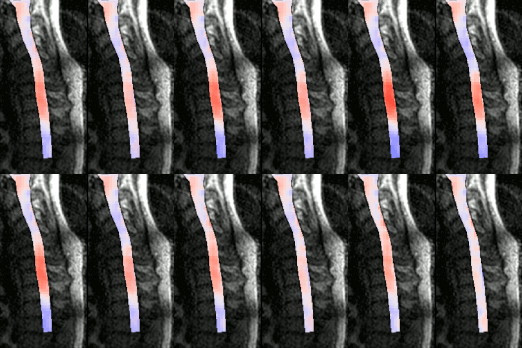
iPRES(N) | spinal cord
We performed real-time shimming of respiration-induced B0 changes in the spinal cord with an iPRES(N) coil array and a respiratory belt or an ultrasound sensor (Wong et al. 2025, 2026).
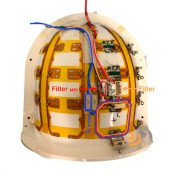
iRFW & iPRES-W
We developed novel iRFW and wireless iPRES (iPRES-W) coil designs that enable MRI, wireless communication, and/or localized B0 shimming with a single coil (Darnell et al. 2019).
iPRES-W | spinal cord
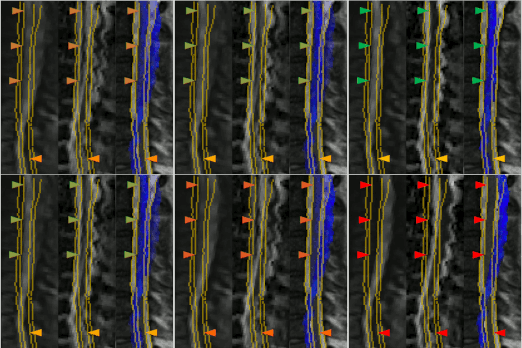
We implemented iPRES-W, along with the AIR™ coil technology, into a 4-channel spine coil array to enable wireless localized B0 shimming in the spinal cord (Cuthbertson et al. 2022).
iRFW
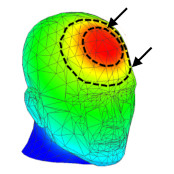
We performed simulations to optimize the design of an iRFW coil within an MRI scanner bore to enable wireless MRI data transfer (Overson et al. 2023).
iRFW | ultrasound
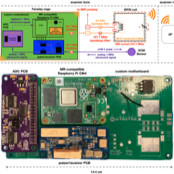
We integrated the iRFW coil design with an ultrasound-based sensor to enable MRI and wireless physiological motion monitoring (Willey et al. 2020, 2022, 2023).
dual-stream iPRES-W | brain
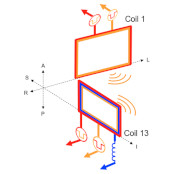
We implemented a dual-stream iPRES-W coil design into a 48-channel head coil array to enable MRI, wireless localized B0 shimming, and wireless respiratory monitoring (Cuthbertson et al. 2020).
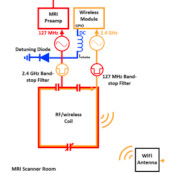
iRFW | Q-spoiling
We developed an iRFW coil design that can perform wireless Q-spoiling to detune the coil during each RF transmit cycle (Cuthbertson et al. 2021).
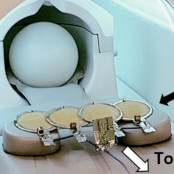
power harvesting
We developed a power harvesting coil array that can harvest the energy from the RF transmit pulses to power electronics within the scanner bore (Cuthbertson et al. 2022).
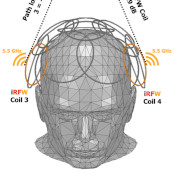
iRFW | MIMO
We performed simulations to optimize the wireless performance of an iRFW neonatal head coil array with multiple-input multiple-output wireless MRI data transfer (Dickinson et al. 2023).

iRFW | GNSS
We implemented atomic clock timing via global navigation satellite system (GNSS) signals to an iRFW coil to perform wireless clock synchronization for wireless MRI data transfer (Dickinson et al. 2024).
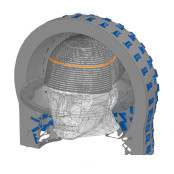
iRFW | low-field
We developed an iRFW head coil for the wireless transfer of MRI data acquired with low-field portable MRI scanners within EMT vehicles (Dickinson et al. 2024, 2025).

iRFW | Q-spoiling & GNSS
We developed a 3-band iRFW coil array that can perform MRI, wireless Q-spoiling, and wireless clock synchronization for wireless MRI data transfer (Dickinson et al. 2026).

iRFW | 7T
We developed an iRFW head coil array for the wireless transfer of MRI data acquired with a 7T MRI scanner (Sukarom et al. 2026).

LF-MRI | reconfigurable
We designed separable permanent magnet arrays and gradient coils for a portable low-field MRI scanner that can be reconfigured for brain or knee imaging (Gibson et al. 2026).

dMRI | gray matter
We developed a cortical column-based analysis of submillimeter whole-brain dMRI data to quantify the dependence of the diffusion anisotropy and radiality on the cortical depth, curvature, thickness, and region-of-interest (Ma et al. 2023).
dMRI | hippocampus
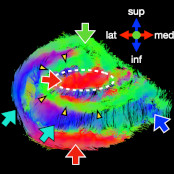
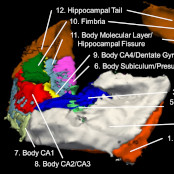
We analyzed submillimeter dMRI data of the hippocampus to investigate intra-hippocampal fiber tracts and connectomes in vivo and ex vivo (Ma et al. 2022).
dMRI | hippocampus | AD
We analyzed high-resolution dMRI data of the hippocampus to investigate changes in intra-hippocampal connectivity in individuals with Alzheimer's disease (Overson et al. 2023, 2024).

dMRI | gray matter | AD
We performed a cortical column-based analysis of high-resolution dMRI data to predict the risk of impending cognitive decline in asymptomatic individuals with early Alzheimer's disease (Overson et al. 2025).
