
The Di Giulio Lab focuses on ecotoxicology, the study of contaminants in the environment and their effects on organisms. Most of his work investigates how polycyclic aromatic hydrocarbons (PAHs) and nanoparticles affect the development of zebrafish and killifish.
My project investigates a heterocyclic PAH. Many PAHs have increased toxicity when exposed to UV light; however, this toxicity is usually attributed to photosensitization rather than photomodification (production of more toxic products as the PAH degrades). In my project, I activate a PAH to see if it will be more embryotoxic to zebrafish. Some measures that I assess are pericardial edema, yolk sac edema, bent notochord, and basic survivability.
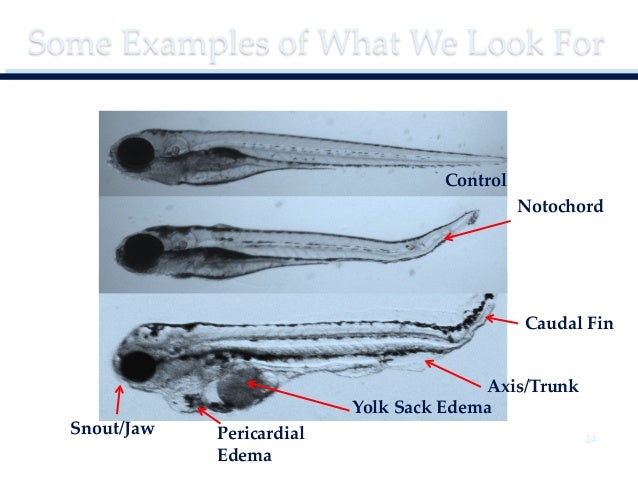
It fascinates me how toxic chemicals can become more toxic when exposed to light, which occurs in nature. Photosensitisation and photomodification can cause contaminants to be more toxic than we actually think. It’s important to explore this to understand the extent of toxicity.
While I’m interested in my research, it involves a lot of tedious tasks. Having to count over 200 fertilized embryos and pipetting them one by one requires patience. Yet in the end, being enlightened by this topic is better than living in the dark of the potential harms of light.
