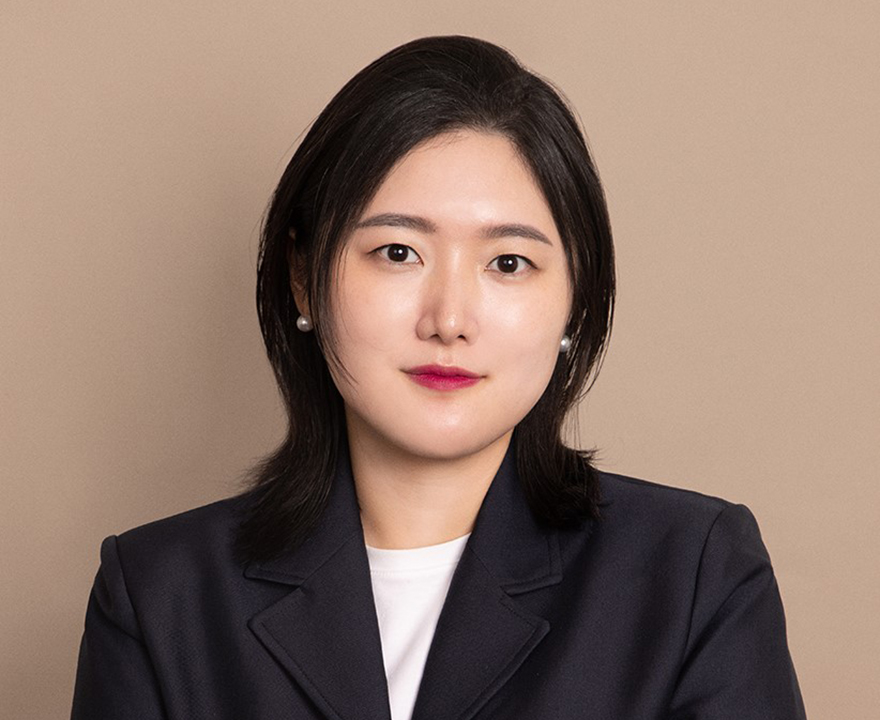
Assistant Professor | Global and International Studies
University of California, Irvine
Ka-eul Yoo specializes in contemporary multi-ethnic U.S. and Global Asias literature and culture, focusing on disability justice, public health policy, and U.S. empire and transpacific violence. In particular, she concentrates on tracing the relationships between the genealogy of biopolitical precarity, U.S. imperial violence, and disability in the global South, shedding light on Cold War legacies of racism and ableism. Alongside her research projects, Yoo continues her work as a Korean–English translator, specifically focusing on feminist multimedia art, activism, and scholarship related to disability activism and war violence in South Korea. As a scholar from South Korea, Yoo views the translation process as crucial for bringing critiques of U.S. empire from the periphery to the core.
Beyond academic institutions, Yoo works alongside community organizers at both the local and transnational levels. Most recently, she collaborated with the Korea-Vietnam Peace Foundation, translating testimonies that detail civilian massacres by South Korean troops during the Vietnam War. She is also a core member of the Ending the Korean War Teaching Collective, a group of critical Asianists and Asian Americanists designing a public syllabus on the Korean War.

Racialized Intoxication: Ongoing Korean War Fantasies of Non-Disabled Futurity in Okinawa and South Korea
Abstract
Employing a transnational feminist crip-of-color and medical humanities framework, this article uncovers the centrality of the Korean War in perpetuating the toxic debilitation of vulnerable populations in U.S.-occupied Asia, particularly Okinawa and South Korea. By examining militarized intoxication and its underexplored biopolitical harms on civilians, including sex workers, alongside the imperial and transpacific governmentality shaping these policies, I demonstrate how anticommunist fantasies of non-disabled futurity, conceived during the Korean War, were transplanted to Okinawa, intensifying its settler-colonial practices.
Analyzing Medoruma Shun’s works, Okinawan activist accounts, and Korean War-era U.S. drug policies, I reveal a deeper transpacific interconnection that challenges official narratives of Okinawan and South Korean drug policy divergence. I argue that U.S. policy in Okinawa deliberately erased intoxicated Asians from public health discourse, emphasizing the perceived success of regulating drug use within the U.S. military while reproducing South Korea’s racializing strategies that criminalized affected Asians as “disabled” communist threats.
This reflects the Korean War’s total war logic, mobilizing drugs and users to sustain militarized productivity and justifying the U.S. military presence in Asia. I unearth how this racialized debility-disability discourse laid the groundwork for present-day neoliberal public health policies that obstruct social solutions for substance (ab)users across U.S.-occupied Asia.
