
By Enwei Fan and Jiale Li
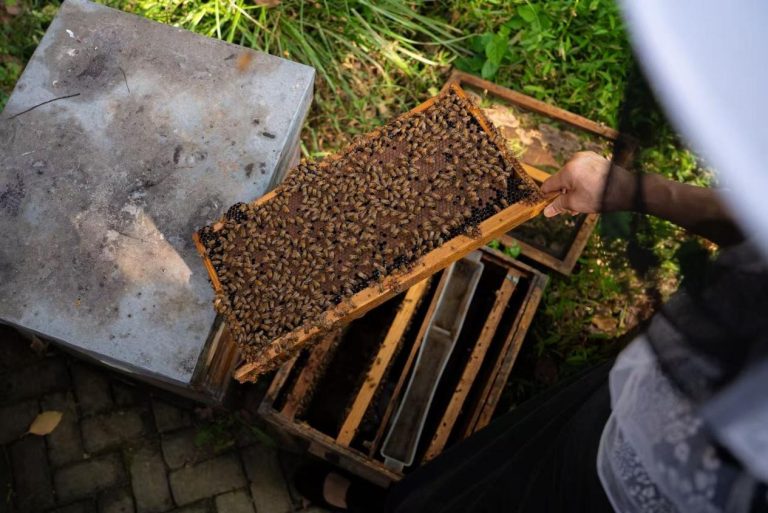
Photo: Aunt Ping and bees, Enwei Fan
Warming World, Fading Hives
“Good afternoon, Johann!” greeted Aunt Ping—a local beekeeper who has tended bees for over thirty years. “Your pre-ordered beewax is all packed.” Handing it over, she smiled:“It makes candles that burn clean—no toxic fumes like artificial ones. Healthy for folks, kind to the earth too!” Johann grinned, thrilled with his haul. When it comes to bees, many would be afraid of being stung, but do you know what role bees are playing in the ecosystem? And are you aware of that they are in danger?
Bees aren’t just buzzing backyard visitors—they’re the unsung heroes of Earth’s ecosystems and human food security. Imagine a world without coffee, vegetables and fruits, what would it be like for us? As critical pollinators, bees fertilize over 75% of global food crops (think apples, coffee, and almonds) and 90% of wild flowering plants, supporting biodiversity and 35% of the world’s agricultural output. Without them, our food supplies would shrink drastically, and prices would skyrocket. Yet these heroes are hanging on by a thread. Pesticides sneak into their nectar, zapping their nervous systems. Deforestation and concrete jungles steal their food and homes. Climate change interrupts flower-blooming times—so bees show up hungry, with no pollen to eat. Add diseases and invasive bugs attacking their hives, and it’s a perfect storm. Bees aren’t just in trouble—their decline is a warning that we are too.
As college students, we may often perceive climate change as an enormous issue, and a sense of powerlessness can creep in from time to time. However, protecting bees is precisely the kind of action we can take—starting from our campus and community—to make tangible changes.
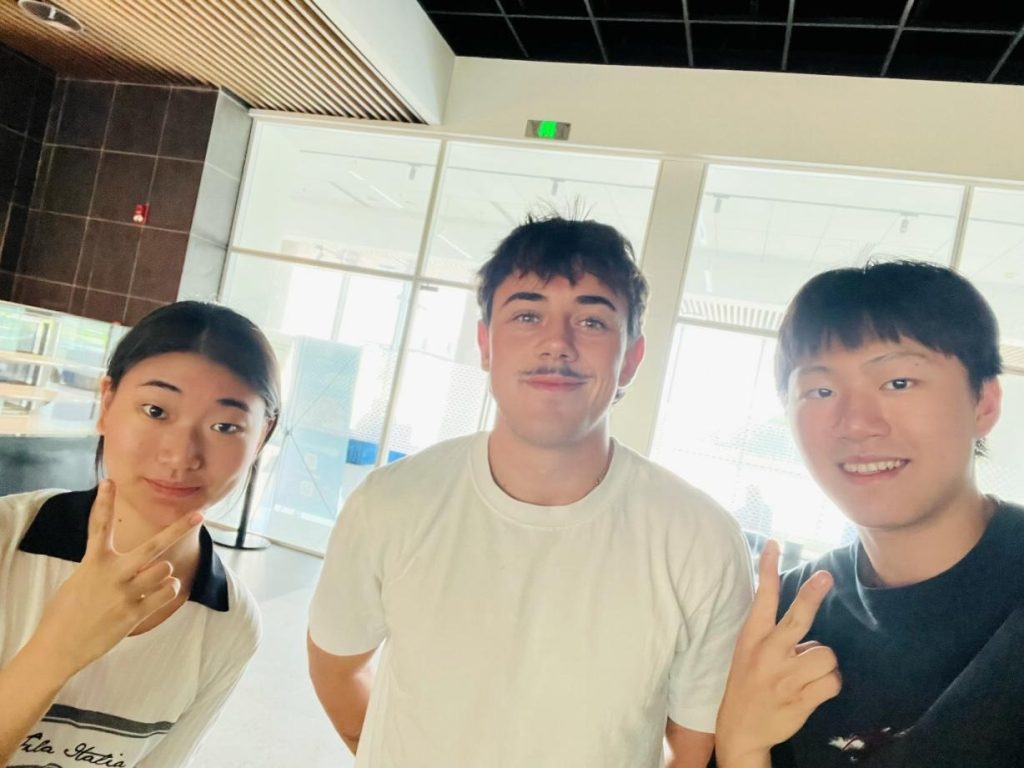
To better understand what we college students can do to protect bees, we spoke with Johann Asmus León, the president of Duke Kunshan University’s Hivemind Club to share their bee conservation efforts.
Q: What’s your story with bees?
A: I didn’t come to biology or climate science through formal study but rather through community initiatives. I was looking for a way to connect with the local environment and that’s why I and some friends started a club on campus. The idea was to get students more involved in the local environment because I believe tackling global climate issues must start with small steps—local actions addressing global problems.
Q: What are the most significant ways climate change that has affected bee in recent years?
A: The most significant climate stressor for bees is shifting seasons: longer, hotter summers and less cold winters. Warm winters may make hibernating bees wake early but without flowers, they would face survival crises. Hot summers force bees to fan hives or bring water to keep the 35°C optimal temperature, wasting energy needed for foraging. Thus, climate disruption of seasonal patterns directly harms bees’ survival rhythms.
Q: Does your club try to communicate to people about the link between climate change and bees?
A: Currently, our club focuses more on raising awareness about bees, as many people haven’t yet realized the importance of pollinators in mitigating climate change. We hope to eliminate fears about bees (e.g. the fear of being stung) so that more people can interact with and understand them, thereby sparking interest in related issues.
Q: In your view, what policies, community initiatives or individual actions do you believe would have the “greatest impact” on protecting bees from climate change?
A: It depends. For small-scale areas like DKU campus, planting more flowers can be really helpful. In China, efforts to reduce pesticide use are growing, with more sustainable farming practices being promoted. Farmers also get subsidies for boosting biodiversity—like growing a wider variety of crops. On a personal level, supporting local beekeepers works well. For example, our club helps them secure funds to try new things by buying and selling local honey.
Conclusion: thousands of rivers will gather into an ocean
Small actions can still bring about significant changes. When walking across a lawn, make a conscious effort to avoid stepping on a tiny, unassuming flower; when discarding trash, toss it into the right recycling bin—these are all simple acts within reach. We often say that all things interact in subtle ways to foster goodness, and we also know the ripple effect of “a bee or butterfly’s wing flap potentially triggering a hurricane.” As the buzz of bees fades from our ears, does a tinge of guilt well up in both your heart and mine? The answer is surely yes. So, start with one small action right now, keep doing it year after year, until that familiar buzz echoes in our ears once again.
This blog was written as part of the PUBPOL111 course Communicating Climate Solutions: Writing for Impact taught by Professor Jennifer Turner.

