
By Chris Dong and Zhang Yu
Photo: Indian Mountain School
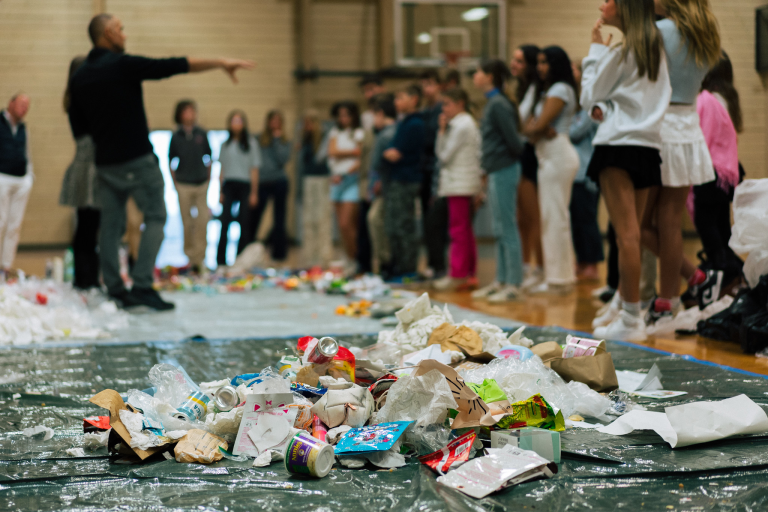
On a sunny afternoon, a group of students rushes out of the campus canteen. In their hands are plastic cups, bottled water, and takeout containers. Within minutes, most of that plastic will be tossed into a bin and will never be seen again. The campus will soon look clean again, but the plastic didn’t just disappear; instead, it’s just been hidden and out of sight.
Campuses around the world all have the same scene occurring almost every day. Even at universities with policies that target plastic and waste, daily habits still generate a constant flow of plastic waste. From food delivery packaging to bottled drinks, these small, routine choices add up to a major source of pollution worldwide.
Plastic on College Campuses
Across Duke Kunshan University, most plastic comes not from experiments and classes, but instead from student habits. Food delivery, FamilyMart purchases, and event catering account for a large proportion of waste. Globally, as stated by Data in our World, it reflects a bigger trend of how packaging alone makes up nearly 40% of all plastic produced.
This problem often goes unnoticed, “since campus cleaning systems are efficient and students rarely see the amount of plastic waste they produce,” as stated by OECD. This creates a sense of cleanliness amongst many people, despite the waste being JUST out of sight. Over time, plastics don’t disappear: instead, when we try to incinerate plastic, they often turn into a form of greenhouse gas, further harming the environment.
Possible Solutions
Campuses around the world are putting in effort to find ways that reduce reliance on single-use plastics. At DKU, tens of thousands of plastic bottles are purchased each year, even when tap water is safe to drink. Solutions include encouraging reusable cups, installing water refill stations, or only offering bottled water upon request.
Although some universities have tried to use other materials instead of plastic, like paper-based cups, that still isn’t 100% effective. Below is an interview my partner and I did with Professor Coraline Goron, who explained to us a few problems and possible solutions that DKU has been implementing within the campus.
Interview:
Q: What do you think are the biggest sources of plastic waste on our campus?
A: The largest contributors are food and beverages. Things like plastic bottles, takeout containers, and packaging from food deliveries make up the majority of our waste. Academic activities and courses don’t generate much plastic waste, since they don’t rely heavily on single-use items.

Q: How do you feel plastic waste impacts both the environment and student life here?
A: On the surface, it doesn’t feel like a big problem because our waste management and cleaning services are effective. Many students don’t realize how much plastic is actually generated. The real issue is the lack of awareness. Over time, plastics break down into microplastics, which can even contaminate food. For example, heating meals in plastic containers can release microplastics.
Q: Are students generally aware of how much plastic waste they produce?
A: Honestly, awareness is very low. At community events, especially, people use large amounts of single-use plastics without thinking twice about it.
Q: What sustainable alternatives to single-use plastics could realistically work on campus?
A: A big one is bottled water. Around 48,000 bottles are purchased every year at DKU—not even counting Family Mart sales. We could encourage reusable water bottles and make better use of water fountains, since tap water here is safe. For events, reusable cups could work, especially if people stay in one place. Another idea is to only provide bottled water upon request, rather than by default. For important guests, offering hot tea or higher-quality water could replace bottled water.
We probably can’t eliminate plastics, but we should at least reduce them to a minimum. Alternative materials, like partially paper bottles, could also be considered.
Q: What challenges might DKU face in trying to reduce plastic waste?
A: The biggest challenges are habits and convenience. Plastic is the default option at meals and events, while reusable alternatives feel heavier and require cleaning, which many see as extra work. Some also worry that reusable items aren’t sanitary, although that’s not really true.
Another issue is with the canteen—reusable cups often get lost, which creates cost problems. Finally, there’s resistance: people might not be happy if single-use plastics aren’t always available.
Challenges Ahead
The main barriers are convenience and habit. Plastic is the easiest option, while reusable alternatives require cleaning and effort. Hygiene concerns also discourage some students from using reusables, even though these concerns are often overstated. Cost and loss of reusable items, like cups or utensils, also create resistance.
This blog was written as part of the PUBPOL111 course Communicating Climate Solutions: Writing for Impact taught by Professor Jennifer Turner.

