

Dr. Imari Walker-Franklin
Friday, April 4th, 9 AM – 10 AM
Dr. Imari Walker-Franklin is a Research Scientist at RTI International, actively contributing to research aimed at assessing human and environmental exposure to potentially harmful substances. One of her key projects involves investigating the release and impact of microplastics and microplastic-associated chemicals within simulated human fluids and tissues. In 2021, Imari successfully earned her Ph.D. from Duke University, focusing on comprehending the release, transformation, and effects of polymer-associated chemicals in aquatic environments. Before Duke, Imari completed her Bachelors in Marine Science at the University of California, Berkeley. Together with Dr. Jenna Jambeck, Dr. Walker-Franklin co-authored the book “Plastics” (2023), a significant contribution to the MIT Essential Knowledge Series. Passionate about science communication and outreach, she has established a dedicated YouTube channel focused on plastic pollution, engaged in podcasts, offered scientific expertise for journal articles, and actively participated in public speaking events tailored for general audiences. Dr. Walker-Franklin serves as a member of the National Academies Roundtable on Plastic Pollution and was awarded the 2024 National Academies: Eric and Wendy Schmidt Award for Excellence in Science Communications. Dr. Walker-Franklin’s research interests span across critical areas such as plastic pollution, emerging contaminants, analytical chemistry, and environmental justice. Her commitment to bridging the gap between scientific knowledge and public understanding is evident in her multifaceted efforts to share insights and engage diverse audiences in the discourse surrounding environmental issues.
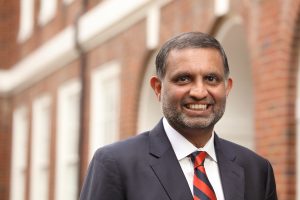 Dr.Venkataraman Lakshmi
Friday, April 4th, 4:30 PM – 5:30 PM
Venkat graduated from University of Roorkee in 1987 with a Bachelor degree in Civil Engineering and a Doctorate in Civil and Environmental Engineering in 1996 from Princeton. He worked at NASA Goddard Space Flight Center 1996-1999 as a research scientist in the Laboratory for the Atmospheres. His areas of research interest are catchment hydrology, satellite data validation and assimilation, field experiments, land-atmosphere interactions, satellite data downscaling, vadose zone and water resources. He is currently the John L Newcomb Professor of Engineering in the Department of Civil and Environmental Engineering at the University of Virginia. He has served as Cox Visiting Professor at Stanford University 2006-2007 and 2015-2016 and Program Director for Hydrologic Sciences at the National Science Foundation (2017-2018). Venkat is a fellow of the American Society of Civil Engineers (ASCE), Geological Society of America (GSA), American Society of Agronomy (ASA), American Association for the Advancement of Science (AAAS), and he has over 200 peer-reviewed articles and around 600 presentations and thesis supervisor for 25 graduate students. He is currently serving as editor for Vadose Zone Journal and the founding editor-in-chief of Remote Sensing in Earth System Science (Springer Journals). He has served on the National Academies Panel for the Decadal Survey of Earth Observations from Space (NASA) and as chair of the planning committee for Groundwater Recharge and Flow: Approaches and Challenges for Monitoring and Modeling Using Remotely Sensed Data (NGA). He is currently serving as a member of the Water Science and Technology Board, National Academy of Sciences and Vice-Chair of the Earth Science Advisory Committee for NASA. He is the President of the Hydrology Section of the American Geophysical Union

Dr. Pratim Biswas
Saturday, April 5th, 10 AM – 11 AM
Dr. Pratim Biswas is Dean of the University of Miami College of Engineering and a faculty member in the Department of Civil & Environmental Engineering, with an affiliated appointment in the Rosenstiel School of Marine and Atmospheric Sciences. For his exemplary contributions to the fundamentals of aerosol science and engineering, Dr. Biswas was elected to the National Academy of Engineering in 2019. Dr. Biswas’s research and educational interests include aerosol science and engineering, nanoparticle technology, air quality engineering, environmentally benign energy production, combustion, materials processing for environmental technologies, environmentally benign processing, environmental nanotechnology, public health, and the thermal sciences.
 Dr. Jessica Castner
Panelist, April 4th, 3:30 – 4:30 pm
Jessica Castner, PhD, RN-BC, FAEN, FAAN serves as 2025-26 Climate Leader in Residence at Duke University as a distinguished expert in nursing leadership and health policy. As the National Academy of Medicine’s 2021-22 Distinguished Nurse Scholar in Residence, Castner contributed to evidence-based policy development at the federal level related to climate change, disasters, environmental health, clinician wellbeing, and artificial intelligence applications. Dr. Castner joins Duke University as President of Castner incorporated, a woman-owned small business research institute and as University at Albany tenured faculty, where she was awarded the rank of full Professor. As the inaugural Director of Nursing at the University at Albany, Castner led the opening of a new academic unit, graduate, and undergraduate programs.
With an internationally renowned reputation for expertise, scholarship, and leadership in emergency and environmental health nursing, Castner’s trajectory has attracted funding support from the National Institutes of Health (NIH), National Science Foundation (NSF), American Nurses Association, American Nurses Foundation, American Academy of Nursing, Emergency Nurses Association Foundation, Emergency Medicine Foundation, Heilbrunn Family philanthropy through Rockefeller University, Patricia Garman Endowment, and other foundations. Castner’s research impact centers on multi-level environmental and contextual determinants of emergency health outcomes. Widely published in nursing and interdisciplinary peer reviewed journals, Castner served as the Editor in Chief of the Journal of Emergency Nursing during the COVID-19 public health emergency. In 2025, Castner was honored with the Lifetime Achievement Award from the American Thoracic Society’s Terrorism and Inhalation Disaster section.
Dr. Castner earned a BSN from Marquette University, made possible through a Bradley Foundation scholarship gift. Castner earned her MSN with a public health nursing concentration track from the University of Missouri-Columbia and PhD from the University of Wisconsin, Milwaukee. Dr. Castner has also completed a certificate in Executive Healthcare Leadership from Cornell University.
