Poetry Books
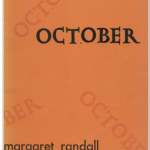
Several ‘Spies in the Audience’ interviewees produced books in addition to (or instead of) little magazines: Rosemarie Waldrop (co-editor and publisher of Burning Deck Press), Margaret Randall (editor of El Corno Emplumado), Bernadette Mayer (co-editor and co-publisher of United Artists), Maureen Owen (editor and publisher of Telephone Books), Jaime Robles (co-editor of Five Trees Press), Rose Rosenwasser and Patricia Dienstfrey (co-editors and co-publishers of Kelsey Street Press), Barbara Barg (editor of Power Mad Press), C.D. Wright (editor and publisher of Lost Roads Press), Eileen Myles (fido productions), and Deborah Costello and Lisa Kellman (editors and publishers of Black Oyster Press). Some of the presses used offset printing for their books. Offset printing is still used nowadays, but a new method called Print-On-Demand (POD) is improving the self-publishing game. Amazon’s Kindle Direct Publishing (KDP) makes publishing an e-book easy. KDP also offers POD.
Other presses used printing techniques that are less common in the 21st century: letterpress, linotype, and mimeograph* (Telephone and Power Mad Press).



Chapbooks
The term “chapbook” most likely originates from the “chapmen” of Europe and North America between the 16th and mid-19th centuries. These chapbooks featured everything from legends to lessons. In the early 20th century, the chapbook was resurrected as a vessel for alternative politics and the avant-garde.

Susan Sherman (IKON), Maxine Chernoff (Oink!), Barbara Barg (Out There and Power Mad Press), and Two and Two Chapbooks (Martha King and Susan Sherman) all edited chapbooks, the poetry book’s shorter cousin.
This video has great tips on publishing – both DIY and traditional methods – and marketing chapbooks in the 21st century.
Zines
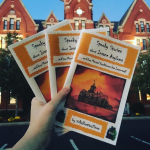
Many of the little magazines archived in ‘Spies in the Audience’ could be categorized as zines, instead. However, the only interviewee to actually mention a zine was Maureen Owen, publisher and editor of Telephone and Telephone Books.

The process of publishing 21st-century zines has not changed much from the Telephone era, but, like full-length books, “zinesters” now have the option of being published online.
Something notable from the underground literary scene during the 60s and 70s was the community. While digital publishing allows for a broader audience and threatens less intimacy, the online zine community is going strong. For example, Broken Pencil, a “mega-zine” about zines, established the BP Zine Awards in 2017.




Funding
United Artists, Out There, dodgems, and Telephone/Telephone Books received funding from the Coordinating Council of Literary Magazines (CCLM). The CCLM still exists but was renamed the Council of Literary Magazines and Presses (CLMP) in 1990.
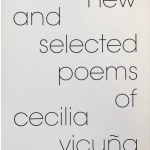
IKON, Telephone/Telephone Books, Kelsey Street, and Lost Roads Press received grants from the National Endowment for the Arts. Kelsey Street received a Literary Translation Fellowship from the NEA, which funded the publishing of Rosa Alcalá’s translation of CECILIA VICUÑA: NEW AND SELECTED POEMS (1966-2015). Surprisingly, contemporary self-publishing appears to be more expensive than it was during the mimeograph revolution; however, the digital sphere gives authors a wider potential audience and the opportunity to save money via POD – in other words, you pay more to get more.
Crowdfunding is another option. Today, crowdfunding manifests mostly in the form of GoFundMe pages or other online fundraising platforms. While the online crowdfunding arena launched in the mid-90s, the essence of the practise dates back to the 13th century, when it was used to pay for shipping expeditions. In 1713, Alexander Pope harnessed crowdfunding for its first creative mission: a translation of Homer’s The Iliad. Pope asked for donations to support his work, and in exchange, he published the names of his benefactors. Barbara Barg and Rose Lesniak, editors of Out There, and Joanne Kyger, Wednesday editor of Bolinas Hearsay News, made use of this form of funding.
