
Maureen Owen was the publisher and editor of the Telephone. She was inspired to start the zine by female writers she met in New York who were not being published; however, she published anyone who submitted. Her open-door policy regarding submissions meant that issues of Telephone were often abnormally long, the longest of which was 156 pages. Owen recalled the “agonizing decision” to declare “no unsolicited submissions” in a note in Issue 10. However, “it literally made no difference at all… The number of submissions went on just as before.”
Before founding Telephone, Owen worked as a program coordinator for the Poetry Project.
Reading at St. Mark’s Church in the Bowery Poetry Project (December 17, 1978)
Telephone/Telephone Books
I wanted a magazine that would include everyone like the telephone directory did. An alternate telephone book, a zine big enough to publish all the prodigiously powerful work I was hearing and seeing.
Each cover page of Telephone includes an image of or relating to a phone, often a “Ma Bell” phone. For Owen, Ma Bell represented what she wanted from the magazine: “[a]n alternate telephone book, a zine big enough to publish all the prodigiously powerful work I was hearing and seeing.” The zine was printed using mimeo; Owen published and edited on her own, but she hosted collating parties for contributing poets, who would then take the copies and distribute them.


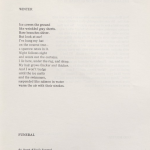
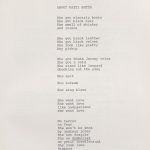
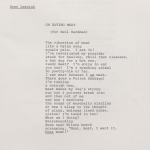
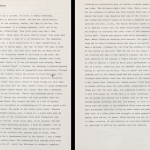


When Owen transitioned to publishing books, she also gave up mimeo printing in favour of “perfect bound publication.” Between 1972 and 1984, Telephone Books published about three books per year. In 1984, the press took a hiatus from publishing until 1999. Telephone Books was active until 2003.


On the “scene” in the Lower East Side
In the email interview from 2013 to 2014, Owen described the “tremendous” scene around St. Mark’s Poetry Project in the late 1960s:
It was as though some magical force had brought us all together. Poets, writers, artists, performance artists, from everywhere…The Poetry Project always seemed a radiating center, a hub where this community could gather for workshops, readings, collating of books and zines, discussions, or just visit the office and hang out. Everyone’s generosity to assist one another with publications and events filled us all with tremendous power; we all had help and support.
