
Jacket #2 July 1988
Maxine Chernoff was an editor of Oink! Magazine from 1971 till 85 in Chicago. She also became co-editor of New American Writing, a literary magazine focusing on contemporary American poetry, in 1986, San Francisco. New American Writing continues to publish a wide range of innovative writing, although Chernoff stopped being an editor in 2015.
On Oink!, Chernoff was part of the production for the magazine, helping with printing, typing, and collating the magazine. She recalls, “We used to do everything by ourselves in Paul’s apartment became A.B. Dick Central.”
Maxine on Oink! #11
We had a lot of issues printing that issue. We gave up in the middle on it. And then we called the printers and found a local guy who would do it for not too steep a price, but then when he saw our cover, which was half elephant half-naked man, he hesitated but then I think he just decided on a cover charge. So from then on, we had it professionally printed, but not with that local guy.
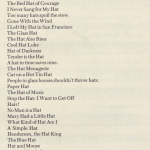

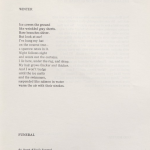

On New American Writings collection of versatile schools of poetry
I think of the ’70s as being more of an undefined space in terms of what was influencing one’s writing or how you were moving in your writing. We had more openness in Chicago because of this central location in terms of people coming in, but not the “central location” in terms of defining what poetry was. We felt open to all the different schools that were possibly writing anything of interest at the same time.

New American Writing
Chernoff and Hoover divided up the technical duties of New American Writing’s production. Chernoff was in charge of the screening and editing, while Hoover would contact the printers and manage to distribute. Hoover’s participation in the stenciling and typesetting of the magazine was noticeable, as it had become very gendered work in the other poet-editors’ perceptions.
Chernoff also brings up an interesting point on printing a high number of women poets and writers, stating that it was never intentional to print women as much as men.
I care very much about women being published, but no, it was never a case where I had to push for it, or there was anything to push for. We naturally had many good women poets to include all the time.
