

Speaker Bios
More to be announced soon!
Keynotes
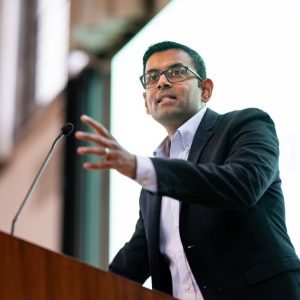
Arvind Narayanan, PhD
Director, Center for Information Technology Policy
Arvind Narayanan is a professor of computer science at Princeton University and the director of the Center for Information Technology Policy. He is a co-author of the book AI Snake Oil, the essay AI as Normal Technology, and a newsletter of the same name which is read by over 60,000 researchers, policy makers, journalists, and AI enthusiasts. He previously co-authored two widely used computer science textbooks: Bitcoin and Cryptocurrency Technologies and Fairness in Machine Learning. Narayanan led the Princeton Web Transparency and Accountability Project to uncover how companies collect and use our personal information. His work was among the first to show how machine learning reflects cultural stereotypes. Narayanan was one of TIME’s inaugural list of 100 most influential people in AI. He is a recipient of the Presidential Early Career Award for Scientists and Engineers (PECASE).

Reggie Townsend
Vice President, SAS Data Ethics Practice (DEP)
SAS
Keynote
Reggie Townsend is the VP of the SAS Data Ethics Practice (DEP). As the guiding hand for the company’s responsible innovation efforts, the DEP empowers employees and customers to deploy data-driven systems that promote human well-being, agency and equity to meet new and existing regulations and policies. Townsend serves on national committees and boards promoting trustworthy and responsible AI, combining his passion and knowledge with SAS’ more than four decades of AI and analytics expertise.

Nicholas Christakis, PhDN
Sterling Professor of Social and Natural Science
Yale University
Keynote
Nicholas A. Christakis, MD, PhD, MPH, is the Sterling Professor of Social and Natural Science at Yale University. His work is in the fields of network science and biosocial science. He directs the Human Nature Lab and is the Co-Director of the Yale Institute for Network Science. He was elected to the National Academy of Medicine in 2006; the American Association for the Advancement of Science in 2010; the American Academy of Arts and Sciences in 2017; and the National Academy of Sciences in 2024.
Society-Centered AI Panel (Research Spotlight Talks and Panel)

Neil Gaikwad, PhD
School of Data Science and Society
University of North Carolina
Moderator
Neil Gaikwad is Founding Director of the Society-Centered AI Lab at UNC Chapel Hill, where he holds faculty appointments in the School of Data Science and Society and the Department of Computer Science. He is a Fellow at MIT’s Dalai Lama Center for Ethics and Transformative Values. Neil’s research in machine learning and social computing develops human-AI collaborative systems focused on equity, fairness, and value alignment. This work has been published at premier venues (AAAI, ACM CHI, ACM CSCW, PNAS) and featured in The New York Times, Bloomberg, and WIRED. Neil has taught over 500 students and mentored more than 80 researchers, including Rhodes Scholars and PhD fellowship recipients. Neil has been recognized with MIT’s Karl Taylor Compton Prize (highest student award), the Facebook PhD Fellowship, and the IBM-UNC Junior Faculty Development Award. He has also been named a Rising Star by Stanford and the University of Chicago. He holds a Ph.D. in Society-Centered AI from MIT and is an alumnus of Carnegie Mellon’s School of Computer Science.
Panel: How are People Using AI?

Ronnie Chatterji, PhD
Duke University
Moderator
Aaron (Ronnie) Chatterji, Ph.D. is the Mark Burgess & Lisa Benson-Burgess Distinguished Professor at Duke University’s Fuqua School of Business. His work spans academia, public policy, and business, with numerous peer-reviewed publications and two books. Most recently, he served in the Biden Administration as White House CHIPS coordinator and Acting Deputy Director of the National Economic Council, overseeing the $52 billion CHIPS and Science Act implementation. Previously, he was Chief Economist at the U.S. Department of Commerce and served as a Senior Economist in the Obama Administration. Chatterji has received notable research honors including the Kauffman Prize Medal and has published in leading outlets like the New York Times, Wall Street Journal, and Harvard Business Review.
Panel: AI Companionship and Intimacy

Walter Sinnott-Armstrong, PhD
Duke University
Moderator
Walter Sinnott-Armstrong is Chauncey Stillman Professor of Practical Ethics in the Department of Philosophy and the Kenan Institute for Ethics at Duke University with secondary appointments in Duke’s Law School and Department of Psychology and Neuroscience. He teaches a MOOC, Think Again, with over a million students registered. His research is mainly on moral artificial intelligence, political polarization, and various topics in moral psychology and neuroscience. His trade book (with Vincent Conitzer and Jana Schaich Borg) on Moral AI and How We Can Get There was published in 2024.
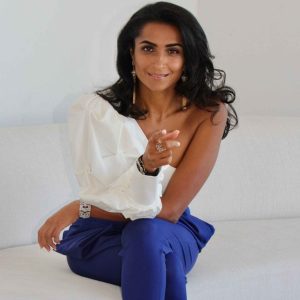
Kaamna Bhojwani
Sex, Tech, and Spirituality Podcast
Kaamna Bhojwani is a sexuality researcher, educator, and leading voice on digisexuality, exploring the social, psychological, ethical, and spiritual implications of technologies like AI and humanoid robots on intimacy and relationships. She hosts the Sex, Tech and Spirituality podcast, runs the popular KaamnaLive channel, and writes the Becoming Technosexual column for Psychology Today. A frequent guest on outlets including NBC, Reuters, and Al Jazeera, Kaamna studied sexual shame at Columbia University and is currently writing her first book, Sex, Tech and Spirituality.

Jana Schaich Borg, PhD
Associate Research Professor in the Social Science Research Institute
Duke University
Dr. Schaich Borg is an Associate Research Professor at Duke’s Social Science Research Institute, co-Director of Duke’s Moral Attitudes and Decision-Making Lab and Duke’s Moral Artificial Intelligence Lab, and former Director of Duke’s Master in Interdisciplinary Data Science. She holds affiliate positions at Duke’s Center for Cognitive Neuroscience, Institute for Brain Science, and Kenan Institute for Ethics, and has taught in Duke’s Master of Quantitative Management Program at Fuqua School of Business. In addition to her academic roles, her book Moral AI and How We Get There (with Walter Sinnott-Armstrong and Vincent Conitzer; Penguin, 2024) empowers readers of all backgrounds to grapple with the complex moral opportunities and challenges of AI. Her online classes on Coursera have reached over 200,000 students worldwide.

Timothy J. Strauman
Professor in Psychiatry and Behavioral Sciences
Duke School of Medicine
Panel: AI in the Community

Christopher Buccafusco, JD
School of Law – Duke University
Christopher Buccafusco joined the Duke Law faculty in 2022 after previously teaching in New York City and Chicago.
Buccafusco’s research covers a wide range of topics and methods related to creativity, innovation, and intellectual property law. He uses novel social science experiments to explore the nature of innovation markets, and he writes about evolving issues in copyright, patent, and trademark law, including music copyright litigation, artificial intelligence, pharmaceutical patents, and IP rights for industrial design. For the past decade, Buccafusco has co-hosted an annual workshop on empirical methods in intellectual property law with the U.S. Patent & Trademark Office and Northwestern University Law School.
Buccafusco is also a co-author of Happiness and the Law (University of Chicago Press, 2015) and a series of articles that apply recent social science research on well-being and hedonic psychology to legal issues, including criminal, administrative, tort, and intellectual property laws. He has been widely quoted in media, including in the New York Times, Wall Street Journal, and Rolling Stone. His article on the economics of airplane seat reclining for Slate has been covered by dozens of media outlets around the world.
Prior to joining Duke Law, Buccafusco taught at Cardozo Law School and Chicago-Kent College of Law. At Chicago-Kent, he won the Student Bar Association’s professor of the year award in his first year of teaching, and he later won a university-wide award for excellence in teaching. In 2024, Buccafusco received the Distinguished Teaching Award from the Duke Bar Association.
Buccafusco is a graduate of Georgia Tech and the University of Georgia School of Law and earned a master’s degree in the history of culture from the University of Chicago.
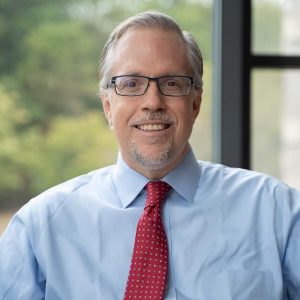
David Hoffman, JD
Duke Initiative for Science & Society – Duke University
David Hoffman is the Steed Family Professor of the Practice of Cybersecurity Policy at the Sanford School of Public Policy. He also formerly was the Associate General Counsel, Director of Security Policy and Global Privacy Officer for Intel Corporation.
Hoffman formerly chaired the Civil Liberties and Privacy Panel for the Director’s Advisory Board for the US National Security Agency. He also chairs the board of the Center for Cybersecurity Policy and Law, and serves on the Advisory Boards for the Future of Privacy Forum and the Israel Tech Policy Institute. Hoffman also founded and chairs the board for the Triangle Privacy Research Hub, which highlights and fosters cybersecurity and privacy academic research done in the North Carolina Research Triangle.
Hoffman previously served on the Department of Homeland Security’s Data Privacy and Integrity Advisory Committee and the Board of Directors of the National Cyber Security Alliance. He has also served on the U.S. Federal Trade Commission’s Online Access and Security Committee, the Center for Strategic and International Studies Cyber Security Commission, the Steering Committee for BBBOnline, the TRUSTe Board of Directors and the Board of the International Association of Privacy Professionals. He is the author of many papers and articles on cybersecurity and privacy and has testified to Congress on these topics. Hoffman’s research and teaching has been aided by funding from Intel Corporation, The Crypsis Group, The Media Trust, and Mine.
Hoffman has a JD from Duke Law School, where he was a member of the Duke Law Journal. He received an AB from Hamilton College.
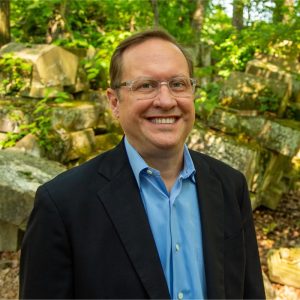
Ted Kalo, JD
Shape Advocacy
Ted Kalo brings 30 years of policy and political experience to Shape Advocacy.
Before co-founding Shape Advocacy, Ted was the Chief Operating Officer of LMG, Inc., guiding the firm’s work with Fortune 50 companies, trade associations, and non-profits.
Before joining LMG, Ted served as General Counsel for the House Judiciary Committee, leading political and policy negotiations that resulted in landmark legislation and directing the Committee’s communications. While managing the Committee’s staff of 40 lawyers, he negotiated a major overhaul of the patent laws, a reauthorization of the Satellite Home Viewer Act, updates to the Foreign Intelligence Surveillance Act, the USA PATRIOT Act and its subsequent reauthorizations, and dozens of additional pieces of legislation.
Ted served as Executive Director of the musicFIRST Coalition from 2011-2016, leading the successful campaign to stop the Internet Radio Fairness Act and spearheading the introduction of the Fair Play Fair Pay Act supported by unprecedented grassroots mobilization. He served as the Executive Director of the Artist Rights Alliance from 2018-2021, a non-profit, artist-run advocacy organization, and was a driving force in the passage of the Music Modernization Act of 2018.

Tift Meritt
Franklin Humanities Institute – Duke University
A North Carolina native and Grammy-nominated songwriter, Tift Merritt has spent over two decades weaving southern roots, poetic lyricism, and restless artistry into a critically acclaimed body of musical work. Merritt has toured globally, collaborated widely and resisted easy classification while creating on her own terms. She pursues storytelling as a means of putting essential information and positive change into the world.
As Practitioner-in-Residence at Duke University, Merritt explores lyrical presences in archival objects and the archival ethics of care with the Franklin Humanities Institute in addition to tech accountability through the lense of the music platforms with the Sanford School of Public Policy and Science and Society. She and her daughter Jean live in Raleigh, NC.
Panel: AI in the Community
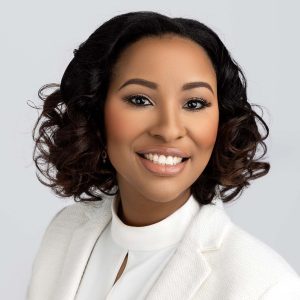
Siobahn Day Grady, PhD
Library and Information Sciences
North Carolina Central University
Dr. Siobahn Day Grady is an Associate Professor of Information Systems at North Carolina Central University and Founding Director of the Institute for Artificial Intelligence and Emerging Research. A national leader in AI, digital education, and workforce innovation, she was the first woman to earn a Ph.D. in Computer Science from North Carolina A&T State University and is widely recognized for building human-centered AI initiatives in higher education.

Henry C. McKoy, Jr., PhD
Carolina Community Impact Fund
Dr. Henry C. McKoy, Jr. is President and CEO of the Carolina Community Impact Fund and a nationally recognized leader in business, economic development, and public policy. He previously held senior presidential appointments in the Biden Administration, serving as the founding Director of the U.S. Office of State and Community Energy Programs and later as Senior Advisor in the U.S. Office of Science and Innovation. A former North Carolina Assistant Secretary of Commerce, banker, entrepreneur, and university faculty member, Dr. McKoy brings decades of experience in finance, energy, and community impact. He holds degrees from UNC–Chapel Hill and Duke University.

Sanyin Siang, PhD
Coach K Leadership & Ethics Center
Fuqua School of Business
Duke University
Sanyin Siang’s mission in life is to enable greatness in others. She helps future-forward leaders optimize their unique strengths and build super teams for thriving in uncertain ambiguous times.
At Duke University, Sanyin leads its Coach K Leadership & Ethics Center at the Fuqua School of Business and is a professor at its Pratt School of Engineering. A faculty member of Duke’s Society-Centered AI, Sanyin’s work looks at technology’s impact on teams and culture. Her depth of understanding of the GenZ mindset and intergenerational patterns results from her two decades of engagement with undergraduate and MBA students.
A futures designer, she advises CEOs, boards, sports industry leaders, tech founders, and multigenerational family business leaders on activating human-centric leadership. She is also an investor in sports teams and leagues including Boston Legacy FC (NWSL), Premier League of Basketball, Unrivaled Basketball League, Crux Football (a MCO for European Women’s Soccer), and SailGP USA.
Inducted into the Executive Coaching Hall of Fame by Thinkers50 in 2023 (the premier biennial ranking of global management thinkers and advisors), she was recognized as the world’s most influential executive coach & mentor (2019) and one of its top 50 management thinkers (2021, 2023, 2025). Sanyin brings a unique combination of practitioner sensibility, academic grounding, and patterns for leadership success drawn from work with leaders across a diversity of sectors and industries.
With more than 1 million followers on LinkedIn, her thought leadership has been featured in NYTimes, Economic Times of India, WSJ, Forbes, Fortune, HBR, and Inc. She pens the Coaching for the Future Forward Leader Advice Column for MIT Sloan Management Review and The Last Word Column for Dialogue Review and is author of the award-winning The Launch Book. Additional insights for a Leadership Playbook are in her newsletter: https://leadershipplaybook.substack.com
She serves on Novartis’s Cultural Leadership Advisory Board, helping the CEO and CHRO with culture transformation. Her advisory has included GV (formerly Google Ventures), Privateer Space, DRIVE by DraftKings, National Women’s Soccer League, and the US Tennis Association (US OPEN). Her Board Service has included: NC Museum of Life & Science, The National Advisory Board of Duke Chapel, The Friends Board of the Nasher Museum of Art, and The Congressional Award Advisory Board.
A proud double Dukie, (BSE ’96 MBA ’02), she lives in Durham, NC with the love of her life, Chad (MD ‘99) and their three children.
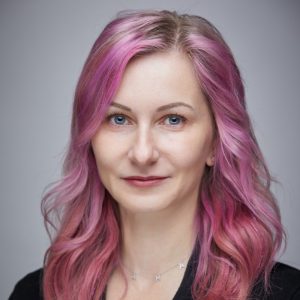
Natalia Summerville, PhD
Memorial Sloan Kettering Cancer Center
Adjunct Associate Professor
Pratt School of Engineering – Duke University
Natalia Summerville is Director of Decision Science at Memorial Sloan Kettering Cancer Center. She leads a team of highly skilled professionals who develop analytics products to support key hospital operations, healthcare transformation, and clinical cancer research.
Natalia is deeply passionate about the Data4Good movement (the use of analytics for social good) and has been collaborating with many non-profit and mission-driven organizations to implement data analytics for social good. Specifically, since 2015, Natalia has been working closely with several Milk Banks across the US to support and improve their operations and strategic initiatives through Data Science; leading and coordinating teams of students and professional volunteers to produce relevant analysis and tools. Natalia is currently a board member within “Pro-Bono Analytics” at INFORMS, focusing mostly on Milk Bank projects and HMBANA.
Natalia has also been teaching undergrad and grad-level classes in Operations Research, Data Analytics, and Machine Learning since 2005 at Tecnologico de Monterrey, North Carolina State University, Massachusetts Institute of Technology, and Duke University. Currently, she holds an Adjunct Associate Professor appointment within Pratt Schools of Engineering at Duke.
New Faculty Spotlights
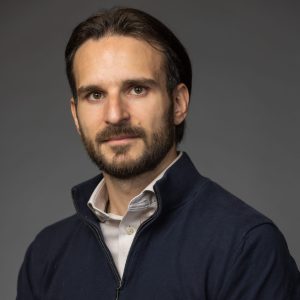
Alessio Brini, PhD
Pratt School of Engineering
Talk Title: AI in Finance and Economics: From Data to Decisions that Matter
Alessio Brini is Executive in Residence at Duke University’s Pratt School of Engineering, where he works with the Digital Asset Research & Engineering Collaborative (DAREC). His research focuses on applying machine learning to finance and economics, with an emphasis on decentralized finance and digital assets. At Duke, he teaches courses in Machine Learning for FinTech, Data Wrangling, and Econometrics, and mentors students on applied FinTech research projects. Brini earned his Ph.D. in Mathematical Finance from Scuola Normale Superiore (Italy), where he studied reinforcement learning for sequential decision-making in finance. His work bridges data science, financial markets, and computational economics.
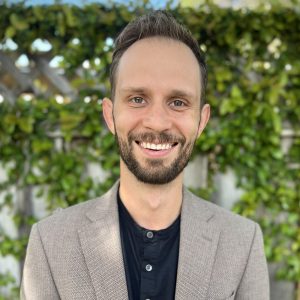
Rich Eva, PhD
Pratt School of Engineering
Talk Title: Technology & Suffering
Rich is the Director of Character Forward, an initiative in Duke’s Pratt School of Engineering that integrates character formation across the engineering experience. He also serves as a research fellow at Duke’s Kenan Institute for Ethics. Rich earned his Ph.D. in Philosophy from Baylor University and his A.B. from Princeton, where he competed as a Division I athlete. Before graduate school, he worked for several years at Barclays Bank as an assistant vice president specializing in contract negotiation. His research and teaching center around ethics, political philosophy, and pedagogy.

Brandon Fain, PhD
Computer Science
Talk Title: Fairness in the Alignment Problem
Brandon Fain is an Assistant Professor of the Practice in Duke University’s Department of Computer Science, where his research and teaching focus on algorithms, artificial intelligence, fairness, and ethical factors. Fain teaches some of the largest courses at Duke on algorithms and machine learning, and his research has been published at leading conferences including AAAI, AAMAS, ICML, IJCAI, and ACM FAccT.

Wenhao Jiang, PhD
Sociology
Talk Title: Interaction-Level Segregation: An Image-Driven Approach
Wenhao Jiang is an Assistant Professor in the Department of Sociology at Duke University, where he is affiliated with the Duke University Population Research Institute (DUPRI). He received his Ph.D. in Sociology from New York University. His research examines the cultural meanings of work, the temporal organization of labor, and the uneven spatial distribution of opportunities and workplace networks, using large-scale data and computational methods. His teaching focuses on the integration of causal inference and machine learning, as well as the study of labor market stratification in the era of algorithms and the proliferation of personal data.

Tong Qiu, PhD
Ecology
Talk Title: AI for Ecology: Harnessing Remote Sensing to Understand Ecosystem Functions in Natural and Built Environments
Tong Qiu is an ecologist interested in understanding how global change affects terrestrial ecosystem functions and services across scales. He is particularly interested in how climate and habitat change jointly drive biodiversity shifts within both natural and urban systems. Together with his graduate students and postdocs, Tong develops data-model synthesis frameworks that integrate multi-source remote sensing, field sampling, and ecological monitoring networks with advance statistical and deep learning models.
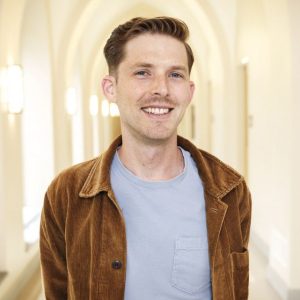
Daniel Scott Smith, PhD
Sociology
Talk Title: How AI is helping us discover the nature and impact of human judgment in science
Daniel Scott Smith studies what makes or breaks science. He leverages natural language processing (NLP), machine learning, and generative AI to analyze millions of texts to examine the social foundations and impacts of scientific knowledge from global, historical, and gender/feminist lenses. His work advances three objectives: (1) explain the social determinants and effects of scientific authority, (2) describe and improve the foundations of scientific knowledge making, and (3) understand and foster innovation and viewpoint diversity in science. Before arriving to Duke as an assistant professor of Sociology, he was a postdoc at Stanford and he holds three degrees from there and one in policy from Harvard.

Richard So, PhD
English
Talk Title: Talking to the Dead: The Social Case for AI Hallucinations
Richard Jean So is the Rhodes Chair in Digital Humanities and Associate Professor of English at Duke University. His research focuses on the cultural and societal effects of large language models and generative AI, as well as developing culturally-informed approaches to improving these systems—particularly in the domains of creativity, communication, and evaluation. His work has appeared in leading humanities journals including PMLA and Critical Inquiry, as well as top scientific venues such as ACL, EMNLP, and PNAS, and has been featured in The New York Times, The Atlantic, and The New Yorker. He is currently leading research initiatives on AI-generated content and its effects on human judgment and culture.

Anne L. Washington, PhD
Rothermere/Harmsworth Duke Chair in Technology Policy
Sanford School of Public Policy
Talk Title: Fragile Foundations: Hidden risks in AI infrastructure
Anne L. Washington, PhD is the Rothermere/Harmsworth Duke chair in Technology Policy at the Sanford School of Public Policy. She asks questions about the balance of power between human lives and organizations that control digital record-keeping systems. Her current research focuses on artificial intelligence as infrastructure to analyze risk, stability, and accountability. She earned a master’s degree in Library and Information Science (MLIS) at Rutgers University, and a bachelor’s degree in Computer Science at Brown University. She received an National Science Foundation CAREER award for her research on open government data. Her 2023 book, Ethical Data Science: Prediction in the Public Interest, was published by Oxford University Press. As a scholar of public interest technology, she leads conversations on the human priorities that influence data innovation.

Shuyan Zhou, PhD
Computer Science
Talk Title: Building the playgrounds for AI agent
Shuyan Zhou is an Assistant Professor in the Department of Computer Science at Duke University, where she is affiliated with the DukeNLP group. She directs the i2x lab, which explores research on AI agents, their environments, and their interactions with humans. Prior to her position at Duke, Shuyan was a research lead at Meta focusing on general purpose computer use agents. She obtained her Ph.D. in Language Technologies from Carnegie Mellon University’s Language Technologies Institute, under the supervision of Professor Graham Neubig. Her research pioneered foundational work in AI agent evaluation, establishing standard benchmarks for the field.
