
2025 Career Trek
Exploring the Intersection of Business and Sustainability in Denver, CO
Written by Olivia Wuttke (MEM ’26)
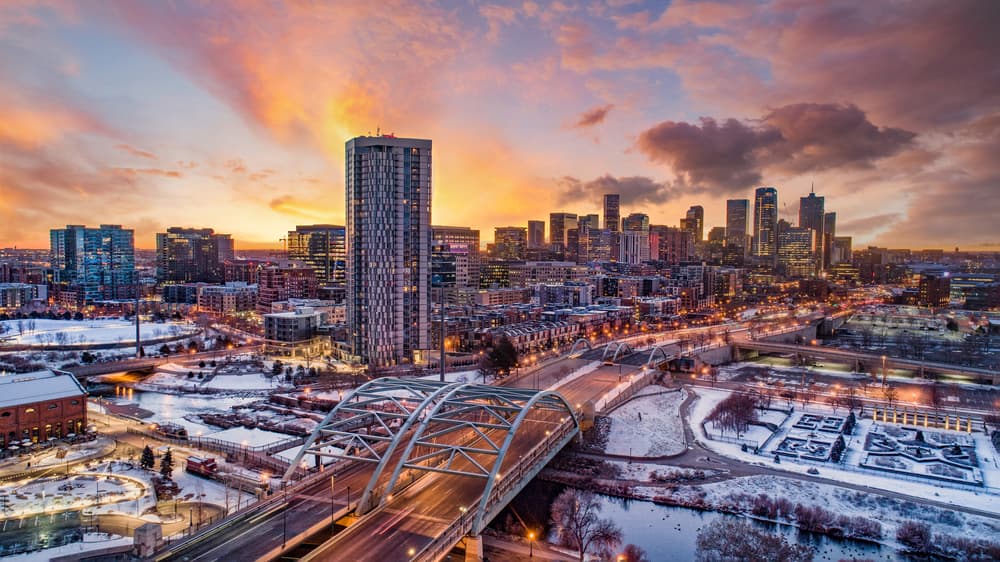
Recapping the 2025 Nic Net Impact Career Trek
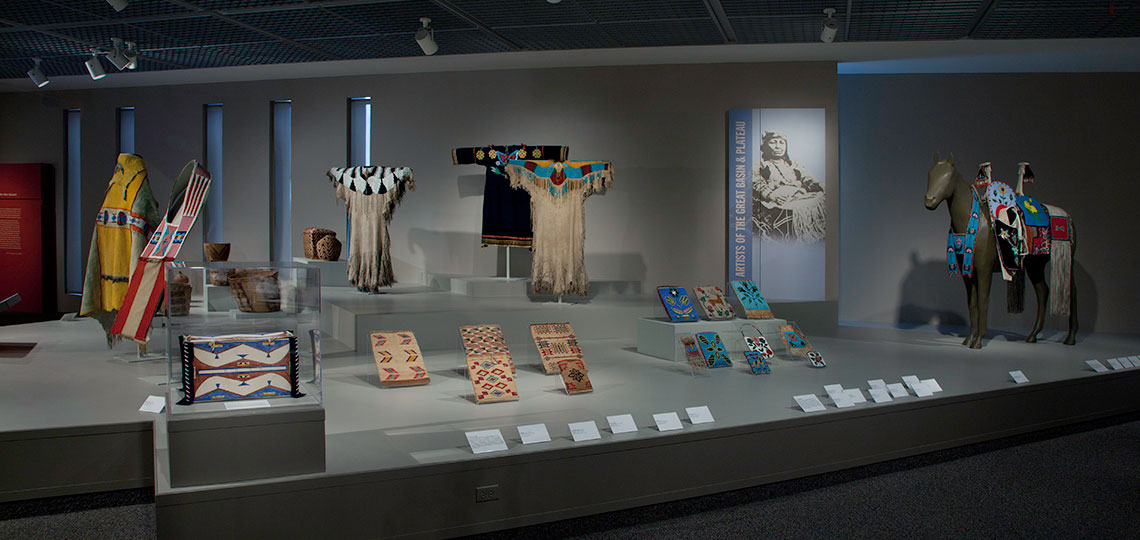
Photo: Denver Art Museum’s Indigenous Arts of North America Collection


I landed early Sunday morning at Denver International Airport, shaking off my fatigue and replacing it with the excitement of returning to the city of my alma mater (the University of Denver). Before kicking off the career trek’s planned company tours, I spent my afternoon exploring the Denver Art Museum. Walking through the museum’s exhibit entitled Indigenous Arts of North America, I noticed a prominent focus on interactions between humans and land resources. Many pieces in this exhibit made me reflect on how we view, treat, and interact with the natural environment and its ecological resources. These thoughts informed my mindset and approach in the following two days of touring five sustainable-focused companies.
Vitality VF
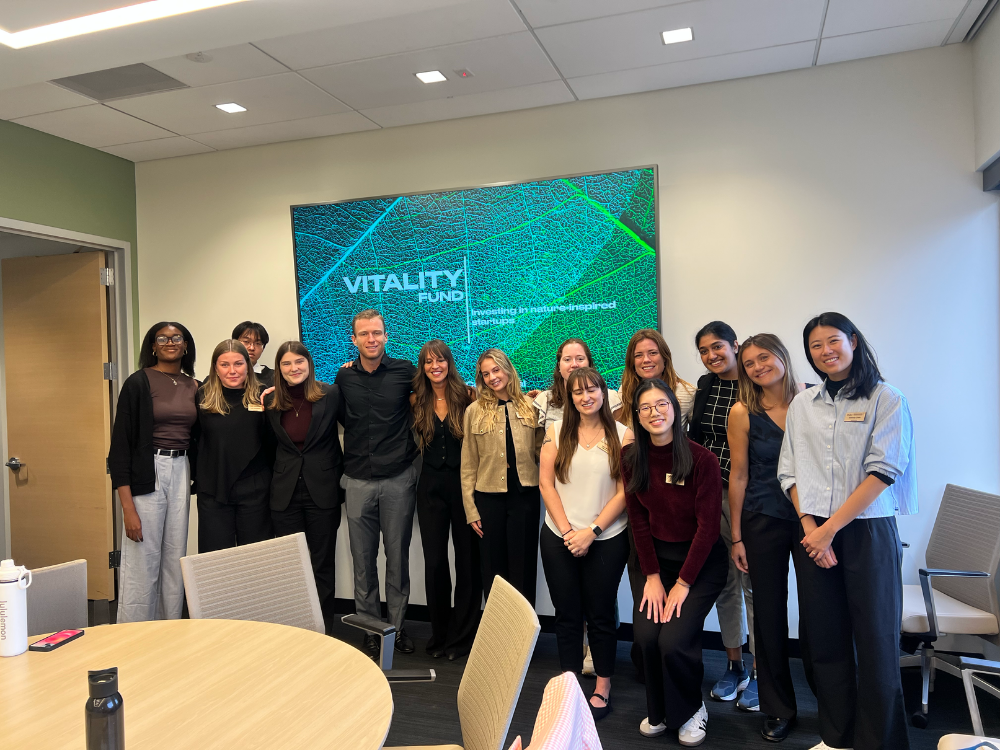
Monday morning, my fellow career trekkers and I drove over to the headquarters of Vitality VF, where we were met enthusiastically by the Co-founder and Managing Director Natalya Wallin. Natalya’s excitement and passion for her work was infectious, and despite the early hour, the entire conference room was wide awake. Natalya’s vision for Vitality is to solve billion-dollar problems using the expertise of nature. Her fund invests exclusively in early-stage biomimicry technology startups designed to solve the pressing environmental problems of the future.
KSL Capital Partners
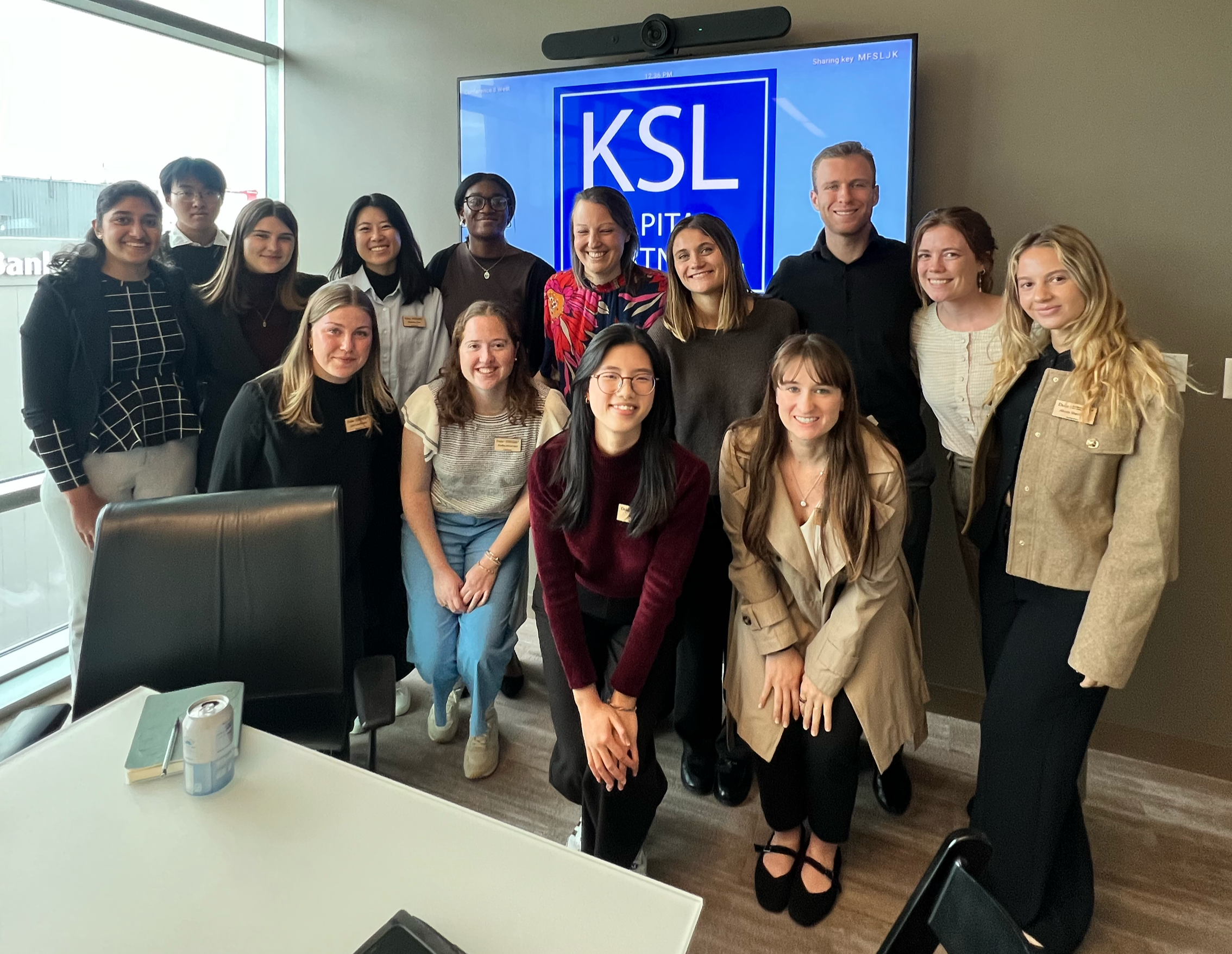
Our minds reeling with the possibilities of reef-mimicking cement and AI soil health tracking (see reefcycle and tierrasphere), we entered the sleek lobby of KSL Capital Partners. In a conference room with a mountain view, we heard insights into private equity and KSL’s vision from Kavin Vasudevan followed by an overview of KSL’s sustainability strategy from Duke MEM/MBA alum Amanda Braun. As Sustainability Senior Manager, Amanda provides sustainability guidance to KSL’s portfolio companies, intending to integrate ESG into operations to increase value and mitigate risk.
Tersus Solutions
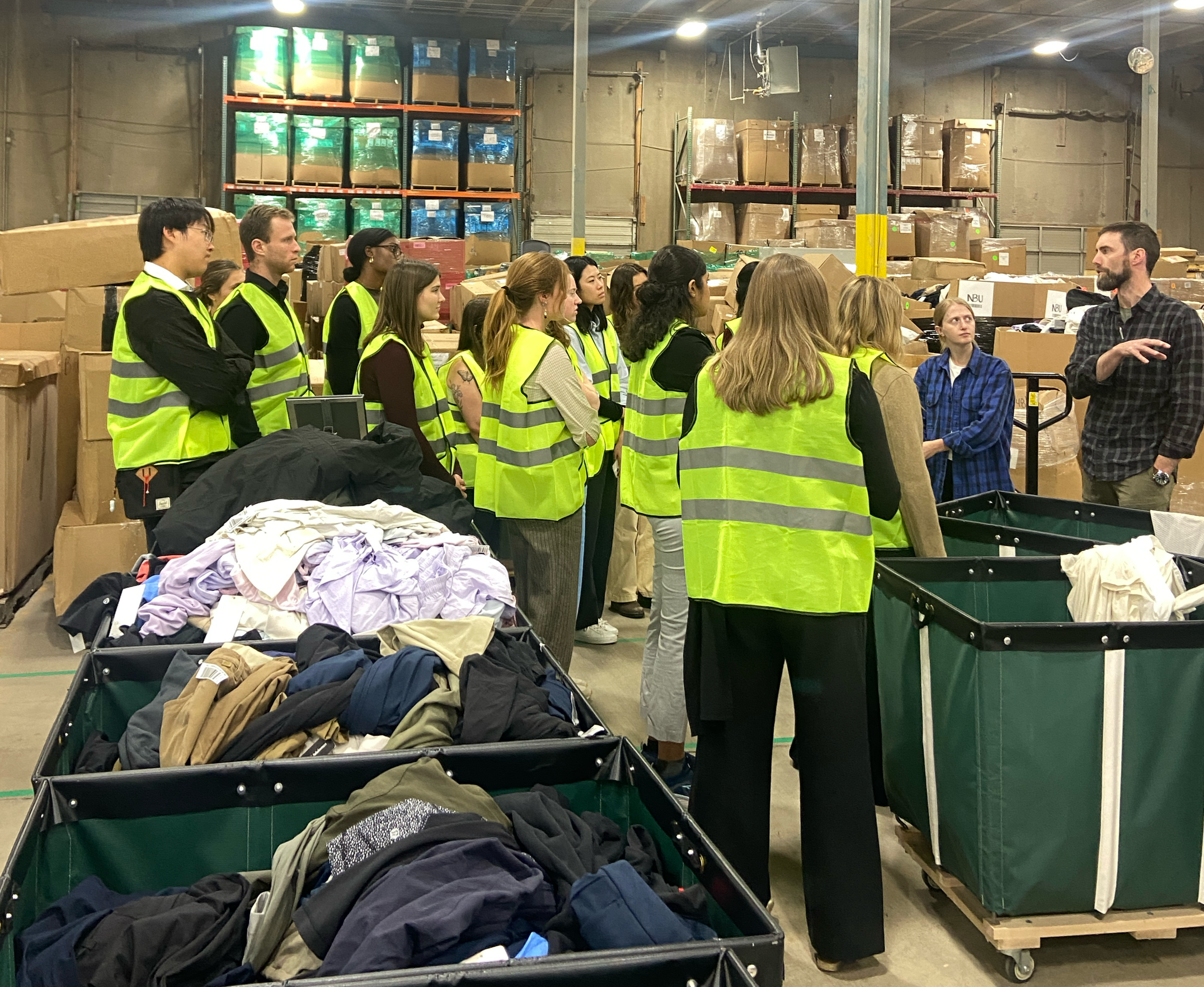
After lunch, the group headed to Tersus Solutions, a textile recycling center in Englewood, Colorado (just south of Denver). Becky Day and Abby Manwiller welcomed us inside with handshakes and Halloween candy. After a presentation summarizing Tersus’ vision of diverting textiles away from landfills and back into brand sales, the group donned high-vis vests and headed onto the factory floor for a tour. We got to peek our heads into Tersus’ high-tech liquid CO2 washing machines, observe workers making live sewing repairs, and hear about the streamlined cataloguing system all textile pieces are added to as they move through the factory stations. Walking through the rows and rows of re-sanitized and repurposed clothes and shoes, I felt awe and amazement at how well Tersus was able to harness a system’s waste and turn it into a business service.
Alumni+ Panel & Mixer
After the long day of company tours, we got the chance to unwind at the Duke Alumni+ panel and mixer. First, we heard career insights from Jason Craymer, Megan Parker, and Devon Bonney. The key takeaway I gained from this panel was the idea of homing in on a specific skill or industry field, becoming an expert in that niche, and then seeking out companies where your expertise adds value. After the panel, we chatted with Denver-based Duke alumni, making connections while enjoying the brisk October temperatures on the outdoor patio.
Ball Corporation
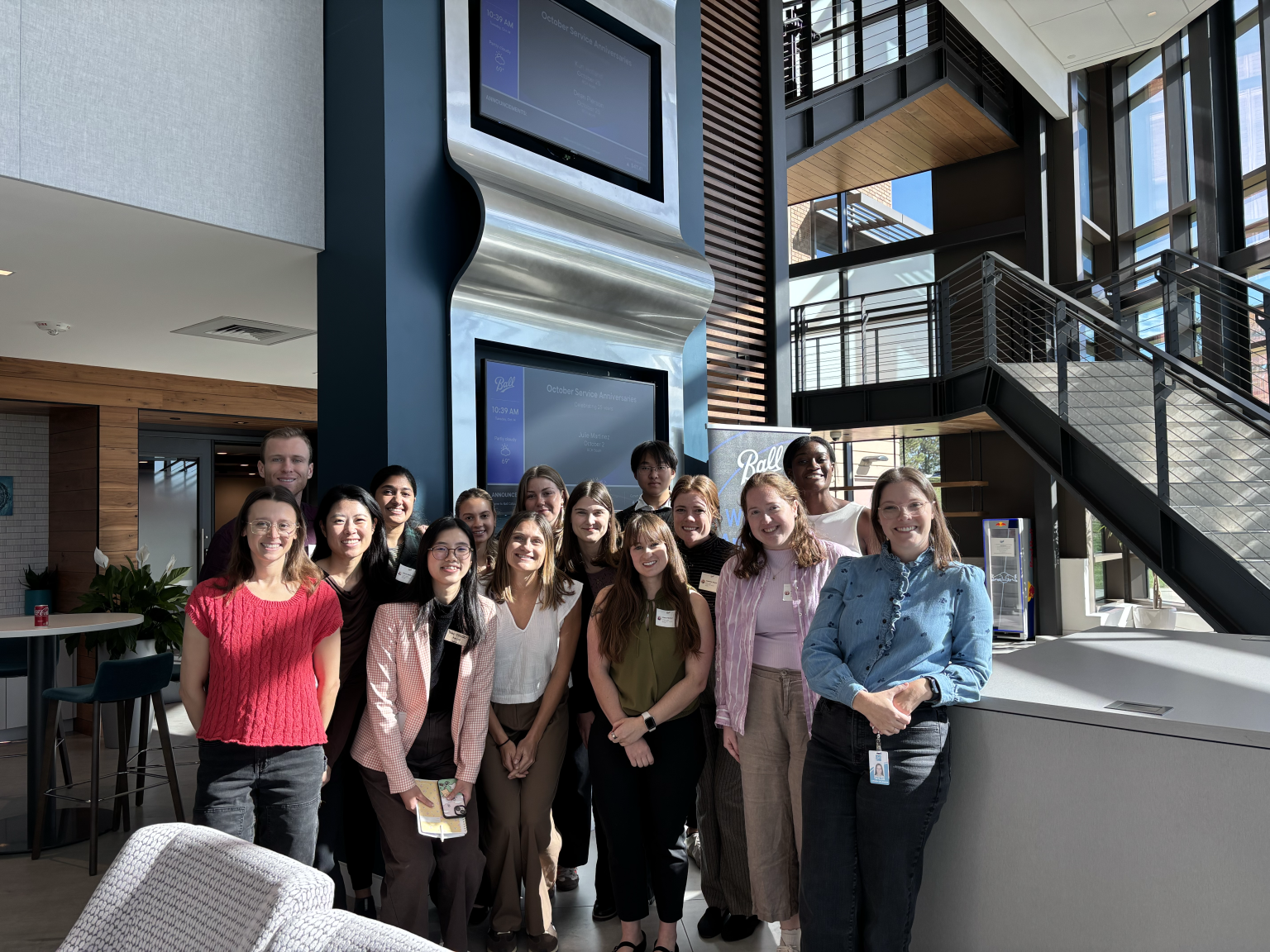
On Tuesday morning, day 2, we drove out to Ball Corporation’s headquarters in Broomfield, Colorado. In a conference room with a fantastic view of the Boulder Flatirons, we heard from Taylor Cornish and two members of her team, Tess Wasowicz and Dave Nebel, about Ball’s global sustainability strategy and future aspirations. Ball Corporation’s business model improves directly alongside improvements in sustainability– more recycled aluminum incorporated into cans means cheaper production costs and increased efficiency. Ball places a high value on transparency and dedicates the time to answering several voluntary sustainability assessments in addition to producing an annual sustainability report. It was refreshing to see sustainability conversations at the forefront of such an expansive company, and it was equally refreshing to sip sparkling water from Ball cans during the presentation.
EcoEnclose
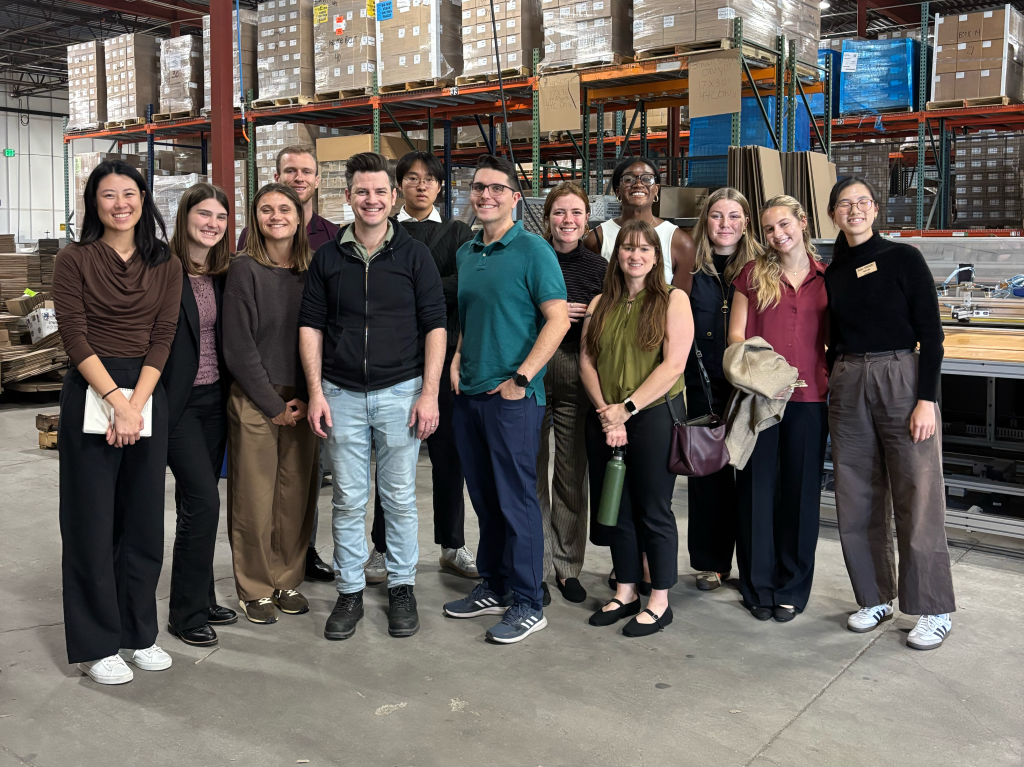
After lunch we headed to EcoEnclose, our final stop on the trek. There we heard from CEO Saloni Doshi about EcoEnclose’s various sustainable packaging offerings. We passed around sample packaging that included a polybag made of seaweed and a shoe box with print made from algae ink. After the presentation, we headed into the factory where Jason Craymer and Frank Maramor led us on a tour of various packaging and printing machines. While EcoEnclose acknowledges that there is no such thing as perfectly sustainable packaging, they are constantly striving to make improvements by increasing the percentage of recycled material in their products, explore new creative packaging innovations, and expand the brands they serve.
Final Reflections
I left the career trek feeling inspired and optimistic. I had just encountered five prime examples of the intersection of business and sustainability in the city I want to live in. As I rapidly approach my Master of Environmental Management graduation date, I’m excited to begin my career by joining the fight for a sustainable future. We need more businesses to demonstrate a legitimate commitment to making their operations more sustainable, and we need more creative people attacking wicked problems with business and technology innovations. There is much to be done, and I’m ready to start working on it.
Upcoming 2025 Events


Pre-2025 Events
Exploring Sustainability in Seattle: A Nicholas School Net Impact Career Trek Experience
Written by Thien Vo (MEng)
Edited by Nicholas Sommer (MEM/MBA ‘26), Lauren Ng (MEM ‘25), Samia Aboni (MEM ‘26)

Read the Seattle Career Trek blog recap

Photo: Group Photo at Amazon with Rana Marks, Janique Francis, Gauhkar Nazarova

Photo: Students and Duke Sustainability Alumni at Seattle, at the Alumni Mixer

Photo: Bullitt Foundation Group Photo with Christopher Meek

Photo: Microsoft Group Photo in front of the One Esterra building

Photo: REI Group Photo with Greg Gausewitz

Photo: American Seafoods Group Photo with Tim Fitzgerald

Photo: Amazon Group Photo in-front of the banana stand at Amazon’s Spheres Complex
The Nicholas School Net Impact Club recently embarked on a career trek to Seattle, providing 16 graduate students with a unique opportunity to delve into various company strategies for incorporating sustainable practices into their operations. From e-commerce and technology to outdoor gear pioneers to seafood processors, each visit offered valuable insights into the diverse strategies businesses employ to address environmental challenges. Here’s an overview of some of the most notable experiences from this enlightening journey.
Students organized a vibrant alumni mixer event, which was well-attended by Seattle-area Duke alumni working in sustainability. Hosted at Fremont Brewing, the mixer began with small-group discussions led by alumni Anne Landfield Greig (MEM ‘96), Kendall Glauber (MEM ‘16), Lucas Joppa (Trinity, PhD ‘09), and Rachel Baker (MEM/MF ‘12). This offered students invaluable insight into a broad range of opportunities related to sustainability, from nonprofits focusing on conservation and recycling partnerships to learning about how industries like consulting, technology, and private equity are thinking about their sustainability strategies. Students appreciated the opportunity to learn directly from alumni about their career journeys after Duke, and it was also a great experience for Seattle alumni working in sustainability through networking and reconnecting.
As a first stop on the trip, students visited the Bullitt Center, designed to be the world’s greenest commercial building and certified as a “Living Building” by the International Living Future Institute. The Bullitt Center visit was particularly inspiring owing to its focus on efficient water usage, energy efficient design principles and thoughtful usage of space and natural elements. Students learned about its innovative water cycle system and passive design features, highlighting practical techniques for achieving energy efficiency. The center stands as a testament to what is possible when sustainability is prioritized in building design. Guided by University of Washington architecture professor, Christopher Meek, the group appreciated experiencing firsthand how sustainable building design can be both commercially viable and create numerous health and wellness co-benefits for employees.
Microsoft
At Microsoft, sustainability efforts were evident across various sectors. The visit included an all-electric commercial kitchen and dining hall demonstration at the One Esterra building —a bold move towards reducing carbon footprints as well as a walking tour of the company’s brand-new East Campus in Redmond. Students interacted with members of various teams to learn about different facets of sustainability, from campus operations and reporting to venture capital, supply chain, and policy. Led by Sr. Director of Supply Chain Integrity, Bryan Rybarik, the students met Duke alum Kelsey Sturman (BA) and other team members on a visit that included the on-campus geothermal center.
REI
REI stood out as a company embodying resourcefulness, consideration for people and planet and value driven operations. Their mission to make outdoor exploration accessible to all is supported by a community-driven approach, particularly in their business model as a member-owned co-op and by offering pre-loved gear through their Re/Supply program. Led by Duke alumnus Greg Gausewitz (MEM’18), Senior Manager of Product Sustainability, students toured the Creative Hub, where yet-to-be-released product is tested in their gear testing lab. Students also visited the REI archive, which highlighted REI’s ethos and history through artifacts from REI’s past. The visit showcased REI’s innovative spirit and practical mindset.
American Seafoods
American Seafoods revealed itself as an intriguing operation as the world’s largest at-sea processors operating seven vessels in the Bering Sea and North Pacific Ocean Led by Duke alumnus Tim Fitzgerald (Trinity, BS ’98), Chief Sustainability Officer at American Seafoods, Duke students toured a commercial fishing vessel, getting to view firsthand the massive fishing nets, crew quarters, a full-functioning cafeteria, an onboard factory processing fish immediately after capture, and a freezer preserving them within 2 hours. This efficiency exemplifies resourcefulness in an unexpected setting. In addition, students learned about the company’s various sustainability initiatives, such as lifecycle footprint management. material recycling processes, and traceability.
Amazon
Amazon presented itself as a hub of entrepreneurial culture, where employees are encouraged to take ownership of projects and continuously innovate. A discussion panel led by Fuqua alumni Rana Doehne (MBA ’19), Janique Francis (MBA ’21), Gaukhar Nazarova (MBA ’19), and Xander Kent (MEM/MBA ’16) highlighted how operations and compliance drive many of Amazon’s sustainability initiatives, emphasizing investment as a key strategy and a forward-looking approach to energy and sustainability. The culture of internal mobility among employees was intriguing, showcasing Amazon’s commitment to personal growth and adaptability. Following the panel discussion and lunch, the students toured the botanical gardens within Amazon’s Spheres Complex which serves a three-part mission of biological conservation, employee workplace, and environmental education.
Starbucks
Starbucks offered a fresh perspective on its corporate identity beyond being a coffee company. Students had the unique opportunity to visit the Tryer Center—Starbucks’ innovation lab—and engage in a fireside chat with Chief Sustainability Officer Michael Kobori, discussing various topics ranging from water use and waste reduction initiatives to climate change adaptation in the coffee supply chain and careers in sustainability.
Conclusion
The Seattle sustainability career trek was an eye-opening journey that exposed participants to various industries’ approaches to environmental responsibility. Each company visited offered unique lessons in innovation, resourcefulness, and commitment to sustainable practices. Whether it was the Bullitt Center’s advanced yet sustainable building technologies, REI’s inventive resourcefulness, or American Seafoods’ efficient operations at sea, these experiences underscored the importance of integrating sustainability into every aspect of business operations. This trek not only broadened participants’ understanding of corporate sustainability but also inspired them to explore how they can contribute to these efforts in their own careers. The collaboration between students from Nicholas, Pratt, Fuqua, and Sanford, which made this trip a success, highlights the interdisciplinary nature of this work and Duke’s commitment to leading sustainability efforts across disciplines. We look forward to witnessing the innovations these future leaders will bring to their careers.
