Saving Pilot Whales: Climate Change and Potential Solutions

Victoria Grant and Mary Osborn

Saving Pilot Whales: Climate Change and Potential Solutions

Ocean ecosystem stability depends on all creatures involved to maintain the natural balance of the ecological pyramid. The food chain relies on predators and prey to keep each from overpopulating or going extinct. One species in particular, the pilot whale, is a type of predator that prey on squid and other fish in order to survive. Due to anthropogenic forcings, the prey populations have decreased which results in a food chain alteration affecting all the species within the marine ecosystem. The strain on prey populations pressures pilot whales, who feed on these species, into having to search for prey in other areas of the ocean increasing the instances of beaching. In addition, climate change is altering the marine ecosystems and the species which rely on them. This increases both temperatures and acidification of the water that these species rely on. Natural balances in place have been affected by the way humans are treating the planet. Organizations and conservationists are doing their best to try and save these whales and study the forces and reasons for the beaching and the reduction in their population.

Beaching of pilot whales is something that naturally happens as a result of time of year and geography of a landscape. Areas which have shallow waters and curved beaches are more likely to result in beaching of whales than a normal beaching areas which creates areas of “hotspots” where this is seen more often. Yet when pilot whales feel the need to move from one location to another due to lack of food, this can result in more beaching in areas these whales are not used to hunting in. Since these pilot whales rely on echo-location they cannot identify that they are swimming into shallow waters because when the sand is soft the echo does not send back in the same way (BBC News, What makes this New Zealand beach a whale graveyard?). Scientists have found that due to humans overfishing the prey of the pilot whale, many species of pilot whale have been forced to leave the area in which they normally hunt to find more food, resulting in increased instances of beaching. Not only have humans affected the prey species but also affect the natural cycles of the ocean.

Climate change has been found to contribute to stranding events in current years and the progression of increasing temperatures and changes in weather patterns will continue to worsen the severity of whale stranding. Climate change impacts the activity of marine life by raising the temperature of the water and increasing acidification. Oceans naturally absorb the carbon dioxide emitted but, with the excessive emission output by humans, oceans are absorbing higher carbon dioxide levels which increase acidification. Increased acidification negatively impacts marine ecosystems through the destruction of habitats, like coral reefs, and causing physiological stress. Organisms experience reduced growth and reproduction impacting the species in relation to them. Since climate change has accelerated in recent decades, scientists have detected significant genetic evidence of bottlenecks (Miralles et al 2016). Bottlenecks in particular lead towards extinction due to the loss of biodiversity within the populations of pilot whales. Therefore, climate change is indirectly affecting pilot whales and other ocean species.

Change in weather patterns and acidification have impacted pilot whales prey animal. Pilot whales’ main source of food relocating due to the changing ocean environment and coming further north towards countries like Tasmania. Their prey move into bay areas where the pilot whales get trapped when the tides change. Prey species are continuing to relocate and come into areas which provide higher beaching risks for pilot whales. The stranding events with pilot whales tend to be more severe than most cetacean species due to their strong social bonds. Pilot whales move in large pods and the members of the pod have strong social bonds to each other (Nolan 2003). Although one whale may be stranded, the rest of the pod will join the lone whale which could be several hundred whales. Predictions of more whale beachings have been made and show the events will get worse if no action is taken to correct the problem.

Climate change worsens with no immediate action and further impacts the pilot whale’s prey. More beachings will result in more deaths of the species which could change their endangered status. Whale deaths negatively impact tourism on the beaches they become stranded on. Whales have the tendency to explode after they die because their bodies are pent up with gases. People would have to cut open the whales after they die in each stranding event; taking away the beauty and appeal of a beach. The bodies of the dead whales have no place to go after death because, if returned to the ocean, they may end up on the private property of the beach residents. If the problem causing whale stranding is not corrected, whales will continue to get stranded and beach deaths will increase. Pilot whales are currently not in endangered species status but, scientists worry if the pattern continues, they may join the ranks of many other species toward extinction (Nolan 2003). With a declining food supply and population deaths increasing with each year, scientists’ worries are proving to be valid.

Solutions in which will help not only the pilot whale species but other marine species includes projects such as the Blue Carbon Initiative which mitigates climate change through the restoration and protection of the marine ecosystems that support the pilot whale and its prey species. This is supported by a majority of international organizations such as IUCN and IOC-UNESCO. Another project in effect is the Ocean Acidification international Reference User Group (OA-iRUG) which uses scientific information and conveys it to audiences of the general public. This focuses also on policy and decision makers which end up having the most power in regard to conserving marine ecosystems (IUCN, The Ocean and Climate Change). These projects which take into account the effects of climate change on marine ecosystems focuses on overall ecosystem stability which protects and supports marine organisms such as the pilot whale.

Climate change must be addressed to fully correct the problem. Pilot whales are going to continue to follow their prey if their prey relocates to areas with high stranding risks, the whales will continue to put them at risk. It was found that “the population of short-finned pilot whales that inhabited the coastal waters of California also abandoned the sector in search of its prey” which are squid (Go to Whales Online, Climate Change). Only one whale has to become stranded to cause a huge event to occur. Actions to combat large greenhouse gas emissions must be taken by federal governments but, ordinary people have the power to reduce their carbon footprint. By reducing fossil fuel use by driving less and lower the thermostat at home, one can begin lowering their carbon output and reduce their contribution to the problem. Voters can look for laws and voice their opinions on legislation pertaining to greenhouse emissions or government role in climate change programs. Becoming active in larger organizations is another way to contribute to the fight against climate change.

Works Cited:

“Climate Change.” Go to Whales Online. Whales Online, n.d. Web. 02 Mar. 2017. <http://baleinesendirect.org/en/whales-at-risk/threats/climate-change/>.

“THE OCEAN AND CLIMATE CHANGE.” (n.d.): n. pag. IUCN – International Union for the Conservation of Nature. Web. <https://www.iucn.org/sites/dev/files/import/downloads/oceans_and_cc_brochure_final_1011.pdf>.

Miralles, Laura, Marc Oremus, Mónica A. Silva, Serge Planes, and Eva Garcia-Vazquez. “Interspecific Hybridization in Pilot Whales and Asymmetric Genetic Introgression in Northern Globicephala Melas under the Scenario of Global Warming.” Plos One 11.8 (2016): n. pag. Web.

Nettleford, Jocelyn. “Whale Strandings No Surprise to Climatologists.” Australian Broadcasting Corporations. (2004). Web. <http://www.abc.net.au/7.30/content/2004/s1255082.htm>.

Nolan, Tanya. “Mass Whale Beaching Mystery Solved.” ABC Local Radio. (2003). Web.<http://www.abc.net.au/worldtoday/content/2003/s997632.htm>.

“What Makes This New Zealand Beach a Whale Graveyard?” BBC News. BBC, 13 Feb. 2017. Web. 03 Mar. 2017. <http://www.bbc.com/news/world-asia-38953557>.

Uranium Contamination in the Navajo Nation: An Environmental Justice Impact Analysis

With every light switch flipped, every faucet turned, and every car driven, humans consume more of the Earth’s precious and limited natural resources – often unsustainably. While we must work to curb our ever-expanding environmental footprint, we cannot neglect past environmental transgressions, especially as their effects continue to impact lives. One such transgression exists in the Navajo Nation – a region spanning parts of Arizona, New Mexico, and Utah – where the native people have lived for decades on land contaminated by pollution from abandoned uranium mines. However, these mines represent a deeper social issue – one of environmental justice, as the Navajo people, a minority group, have suffered a “disproportionate burden of costs” while others profit (Cox and Pezullo). The environmental injustice endured by the Navajo people is rooted in a history of discrimination, has extended to present day, and looms ever more ominously under the current administration.

Uranium mining in the Navajo Nation dates back to 1944. From the end of World War II and into the Cold War Era, uranium, a necessary component in the fledgling nuclear program, was in high demand. So, private mining corporations swarmed the uranium rich Navajo Nation, bringing with them new mining jobs for the Navajo people. From 1944 until 1986 when the final uranium mine was closed, a total of 30 million tons of uranium ore was extracted, much of which was sold to the United States Atomic Energy Commission, the only purchaser of uranium ore mined from the Navajo Nation until 1966 (Landry). However, after being shut down, uranium mines were abandoned without proper seals or caps, leaving 521 uranium mines open to local contaminate air and water (Arnold).

(https://ehp.niehs.nih.gov/wp-content/uploads/2014/01/ehp.122-A44.g001.png)

As stated by the Agency for Toxic Substances and Disease Registry, uranium is “a naturally-occurring radioactive metal [that] may cause adverse health effects related to both its radiological and chemical properties.” The milling process further exacerbates the contaminant effects of uranium as the chemical process which separates the uranium from rock leaves behind mill tailings which “are rich in the chemicals and radioactive materials that were not removed, such as radium and thorium.” These radioactive materials, have been shown to have detrimental health impacts on exposed populations, particularly in the kidney and urinary systems (Uranium). More studies are currently underway to more clearly understand the effects of uranium exposure on human health, for example, the Navajo Birth Cohort Study. Headed by Maria Welch of the Southwest Research Information Center, the study of 599 has found that 27% of participants have elevated levels of uranium in their urine, a staggering statistic in comparison to the 5% of the general US population. Another alarming statistic reports that cancer rates in the Navajo Nation have doubled from 1970 to 1990 (Morales).  Health risks due to uranium exposure are a real and present danger to the people of the Navajo Nation.

Not only is the generation of men who suffered direct exposure as they worked in the uranium mines and mills affected, but also the women who came into daily contact with radioactive particles as they washed their husband’s clothes, their children who often played in pools contaminated by radiation, and even future generations who breathe contaminated air, drink contaminated water, and live in homes built from contaminated materials (Arnold). The health and wellbeing of over 173,000 people is at stake, with those most affected residing near the 4 main clusters of Uranium mines, in the Four Corners area: Tse Tah, Red Valley and Cove, Ariz., and Monument Valley (Arizona Rural Policy Institute) (Landry). Contamination from abandoned uranium mines has pervaded deep into the lives of the Navajo people, bringing with it not only health risks but also a sense of distrust towards federal government.

(http://ehp.niehs.nih.gov/wp-content/uploads/2014/01/ehp.122-A44.g004.png)

From a historical standpoint, distrust towards the American government is warranted. The Navajo Nation, along with many other Native American tribes, has suffered a history of maltreatment at the hands of the predominantly Caucasian American federal government. Tensions escalated alongside restrictions on Native American rights as America entered the era of colonial expansion, manifesting in 1864 when over 9,000 innocent Navajo people were forced on the 18 day “Long Walk” from their homes to the Bosque Redondo Reservation at Fort Sumner, New Mexico, located over 300 miles away from their homeland. Only 7,304 Navajo were released in 1868 when a treaty agreement was signed, releasing the surviving natives from captivity but not returning full ownership of their former lands (Navajo Internment Ends). The Navajo people have endured a history of persecution, stigmatization, and discrimination which, unfortunately, continues to impact current generations as well.

Historical discrimination which established the Navajo people as a marginalized minority group has heavily influenced both the Navajo people’s socioeconomic position. Of the 173,667 people living on the reservation, 96.1% of which are either American Indian or Alaska Native in ethnicity, a disproportionate number face economic instability. Average per capita income in the Navajo nation is only $10,685, under half of the average in the State of Arizona, $25,680. Poverty levels are an extremely high 38% in the Navajo Nation, over twice as high as Arizona which has a poverty rate of 18% (Arizona Rural Policy Institute). The Navajo people, like many other Native American tribes living on reservations and African American populations, are confined to a cycle of poverty heavily influenced by geographic location. These groups often live in communities lacking basic infrastructure like gas stations, groceries, and hair salons, leading them to venture into other communities to partake in these services (Peralta). Money flows outward, and the local economy is further weakened in a positive feedback loop that perpetuates poverty in marginalized ethnic groups.

Not only are these groups marginalized financially, they also lack recognition in politics. Only three presidents have visited Native American territory in American history, the most recent being Barack Obama’s visit to the Standing Rock tribe in North Dakota in 2014 (Zezima). In the words of founder George McGraw of DIGDEEP, an organization working to provide clean drinking water in the Navajo Nation, “This is a community that has found itself voiceless” both economically and politically (Morales). Lacking the financial resources to provide for health care necessitated by uranium exposure and the political pull needed to lobby for their people’s wellbeing, the Navajo’s lack of voice extends beyond economics and politics to their health outcomes, an issue further complicated by a legacy of purposeful historic dissimulation of pertinent information.

In this regard, parallels can be drawn from Navajo uranium contamination to the Tuskegee Experiments and lead-contaminated water in Flint, Michigan. In the forty-year-long Tuskegee Experiment, more officially known as the Tuskegee Study of Untreated Syphilis in the Negro Male which began in 1932, 399 men with syphilis were purposefully withheld treatment even after penicillin, the drug of choice, became available. Though they were given free medical trials, meals, and burial insurance, informed consent was absent from the experiment and patients were kept ignorant of highly relevant personal health circumstances (Tuskegee Timeline). In 2016 when government officials allowed water from the Flint River to corrode city pipes in Flint, Michigan, despite full knowledge that the corrosion was introducing lead and other toxins into the water supply (Yu and Shapiro). Though seemingly disjointed – one an officially conducted study from the 1930s and the other a policy scandal from under a year ago – the health injustices in Tuskegee and Flint share a commonality with the uranium mining-affected Navajo Nation in that consequences primarily affected marginalized groups kept deliberately ignorant of vital information directly relevant to health outcomes.

When uranium mining first commenced in the 1940s, the Navajo did not even have a word meaning “radioactivity” (Arnold). Rather, many Navajo saw the influx of uranium mining as a blessing, an opportunity for work that did not require them to travel away from home. Sadly, this blessing effectually acted more as a curse, bringing forth many years of contamination and many attendant negative health outcomes. In fact, jobs offered in uranium mines qualify as a form of economic blackmail, perpetuating the concept that low-income communities must choose between “financial worth and environmental protection” when seeking employment (Cox and Pezullo). George Tutt, former uranium miner, recounted his initial reaction to the influx of uranium mines, saying, “We thought we were very fortunate,” but added that “we were not told, ‘Later on this will affect you in this way'” (Arnold). Lack of transparency has repeated itself time and time again in American history, primarily impacting already marginalized minority population groups and contributing to a legacy of distrust and pessimism towards both the US government and the greater American society.

(https://ehp.niehs.nih.gov/wp-content/uploads/2014/01/ehp.122-A44.g003.png)

Looking forward, we must find methods and resources to remediate the environmental health issue of abandoned uranium mines in the Navajo Nation. Such efforts are already underway, undertaken by a diverse set of organizations, ranging from the United States Environmental Protection Agency (EPA) to Anadarko Petroleum to NGOs like DIGDEEP, an organization working to build clean water wells for those living on the reservation (Morales). Recently, the United States federal government and two subsidiaries of the Freeport-McMoRan mining company, Cyprus Amax Minerals Co. and Western Nuclear Inc., reached a $600 million settlement agreement with the Navajo Nation. The mining companies will clean up 94 abandoned uranium mines in the Navajo reservation, with the United States government contributing $335 million to a trust account to help fund site evaluations, cost analyses, and cleanup of the mines. (Landry). While the costs of uranium mine clean up are high, no monetary can, nor should, quantify decades spent by Navajo people surrounded by uranium mines, mills, and waste. However, about one third of mining companies from the time of uranium mining proliferation have either shut down or run out of money (Morales). With many of these companies unable to pay their due share in uranium cleanup efforts, it becomes a question of who will pay and when.

In this regard, the United States government has actively taken strides to address uranium contamination; in 2008, the EPA established a Five-Year Plan to confront contamination in the Navajo Nation and, in 2014, initiated another Five-Year Plan to continue the efforts of the original (United States Environmental Protection Agency). However, with the recent election of Donald J. Trump to the presidency, the situation becomes ever more unclear, especially as he has publically called climate change a “hoax” and stocked his cabinet with climate change deniers, including Scott Pruitt who is to lead the EPA (Davenport and Lipton). In demonstrating a clear lack of regard towards environmental issues, Trump also disregards the populations most affected and further destabilizes their already precarious existence.

With over 160,000 abandoned hard rock mines contributing to negative health outcomes in the western United States, it is critical that we continue to endorse clean up initiatives and spread awareness about this issue (Morales). However, the best advice offered by the EPA in a fact sheet addressing the effect of uranium and radiation on health is to “eat a healthy diet,” “use drinking water from a regulated source,” “get regular cancer screenings,” and “REDUCE YOUR CONTACT” (United States Environmental Protection Agency). For impoverished and marginalized populations residing in the Navajo reservation, these seemingly intuitive tips are simply not feasible due to social, geographic, and financial limitations. The fact of the matter is, environmental injustices committed against the native people of the Navajo nation in the mid- to late-1900s have demonstrable health impact on local populations to this day and will continue to do so unless improvements are made in terms of intervention and remediation.

In the years to come, we must work to rectify uranium contamination in the Navajo Nation. Scientifically speaking, more studies can be conducted to better understand the full extent of the impact of uranium contamination on both local environment and residents, and new technologies focusing on the remediation of hard rock mines and contaminated locales should be further explored. The humanities and social sciences will be crucial in raising awareness of the issue at hand and in forming policies which will make intervention implementation both cost effective and feasible for the affected and often marginalized communities. Hard sciences, soft sciences, and humanities must coalesce to right the wrong committed against not only the Navajo Nation but against all communities facing environmental injustice.

Looking back, had humans not desired to use uranium to build atomic weapons to assert their nation’s dominance in the global sphere, perhaps the uranium would have remained safely embedded in the rocks of Arizona, Utah, and New Mexico. Had humans informed mine and mill workers of the adverse health effects they and their families would face from exposure to radioactive dust and rays, perhaps workers would take more precautions or choose find other work. Had humans valued the lives of other humans equally, regardless of race, history, or socio-economic status, perhaps uranium mines would have been properly capped and covered instead of abandoned and left open to contaminate. In the years to come, we cannot allow our value systems to condone discriminatory policy and practice but rather we must unite seemingly disparate forms of human intelligence in defense of not only the marginalized, but mother earth herself.


Works Cited


Arizona Rural Policy Institute. “Demographic Analysis of the Navajo Nation Using 2010 Census and 2010 American Community Survey Estimates.” North Arizona University. n.d. Web. 17 Feb. 2017.

Arnold, Carrie. “Once Upon a Mine: The Legacy of Uranium on the Navajo Nation.” Environmental Health Perspectives 122.2 (2014): A44-49. Environmental Health Perspectives. U.S. Department of Health and Human Services. Web. 17 Feb. 2017.

Cox, Robert, and Phaedra C. Pezullo. “Chapter 10 Environmental Justice and Climate Justice Movements.” Environmental Communication and the Public Sphere. 4th ed. Los Angeles: SAGE, 2016. N. pag. Web. 26 Feb. 2017.

Davenport, Coral, and Eric Lipton. “Trump Picks Scott Pruitt, Climate Change Denialist, to Lead E.P.A.” The New York Times. The New York Times, 7 Dec. 2016. Web. 26 Feb. 2017.

Landry, Alysa. “Navajo Nation Abandoned Uranium Mines Cleanup Gets $600 Million.” Indian Country Media Network. N.p., 14 Feb. 2017. Web. 17 Feb. 2017.

Morales, Laurel. “For The Navajo Nation, Uranium Mining’s Deadly Legacy Lingers.” NPR. NPR, 10 Apr. 2016. Web. 17 Feb. 2017.

“Navajo Internment Ends, but 2,000 Died While Imprisoned – Timeline – Native Voices.” U.S. National Library of Medicine. National Institutes of Health, n.d. Web. 03 Mar. 2017.

Peralta, Katherine. “Native Americans Left Behind in the Economic Recovery.” U.S. News and World Report. U.S. News and World Report, 27 Nov. 2014. Web. 17 Feb. 2017.

United States Environmental Protection Agency. “Five-Year Plan 2014 – 2018: Federal Actions to Address Impacts of Uranium Contamination on the Navajo Nation.” Fact Sheet. The White House. Washington, D.C. n.d. Web. 19 Feb. 2017

United States Environmental Protection Agency. “Uranium and Radiation on the Navajo Nation YOUR HEALTH.” Fact Sheet. The White House. Washington, D.C. n.d. Web. 19 Feb. 2017.

“Uranium.” Agency for Toxic Substances and Disease Registry. Centers for Disease Control and Prevention, 03 Mar. 2011. Web. 18 Feb. 2017.

“U.S. Public Health Service Syphilis Study at Tuskegee – The Tuskegee Timeline.” Centers for Disease Control and Prevention. Centers for Disease Control and Prevention, 08 Dec. 2016. Web. 18 Feb. 2017.

Yu, Mallory, and Ari Shapiro. “Flint Residents’ Broken Faith: ‘The People We Trusted Failed Us’.” NPR. NPR, 10 Feb. 2016. Web. 19 Feb. 2017.

Zezima, Katie. “As Obama makes rare presidential visit to Indian reservation, past U.S. betrayals loom.” The Washington Post. The Washington Post, 13 Jun. 2014. Web. 19 Feb. 2017.

Across the Tracks: A Discrepancy of Green Spaces


Science and society, two seemingly opposing spheres, are undeniably interconnected, and this can only be seen once the fact that humans and the environment are not antagonists is acknowledged. Once this is understood, it is possible to dissect issues of the environment in terms of the impact they have on humans and society; history and sociology combine with biology and earth science to create a deeper awareness of the world and its people. Unveiling the issue of how redlining in Durham leads to predominantly black neighborhoods becoming subjected to experiencing the detrimental effects of having less green space than their predominantly white counterparts will serve as a case study of this notion.

Blast to the Past

A delve into history is imperative to understanding current events and societal aspects. To understand why certain neighborhoods are deemed sacrifice zones, or areas that can be allotted more environmental degradation than other seemingly more important areas, it is essential to uncover institutional, geographical oppression of the past. During the depression era, as a means of halting homes from being foreclosed, there were governmental initiatives to provide bonds for American people to pay their mortgage. Except, much like any other time in history, there was an exclusive definition of what it meant to be American and what level of protection the government would provide its citizens. Will Michaels and Frank Stacio highlight this discriminative aspect of the loaning process by stating that, “…in larger cities, the government drew boundaries between neighborhoods that were eligible and ineligible for new loans. The so-called ‘risky’ areas were usually low income, African-American communities.” Thus, the African-American community suffered through the depression with no assistance from the same government that was setting out to stimulate economic prosperity in neighborhoods just down the road. This seemingly aged practice has followed the black community to present day institutionalized discrimination, including environmental oppression. These same boundaries are used in current decisions made on allocations of resources during infrastructure planning.

Lack of Green? What Does that Even Mean?

            While nature is not the first image that pops into a person’s head when thinking of infrastructure, the planning of parks and tree plantings is intertwined with decisions on where to place roads and buildings. Since the “risky area” based boundaries excluded African-American communities from receiving governmental benefits, this same exclusion occurs when the government is deciding which areas will be rich, green urban forests and which areas will be desolate, grey urban deserts. Elizabeth Friend elaborates on this phenomenon by explaining, “These maps were also used by the City of Durham to direct tree-planting programs, resulting in lush canopies in wealthy white neighborhoods and sparse plantings in East Durham,” she also adds, “…East Durham has 40 percent less tree canopy coverage than the traditionally higher-income neighborhoods like Trinity Park, a direct result of redlining.” This case plays into the notion that certain areas of the environment can be sacrificed for the sake of human civilization. It is seemingly thought that making the white neighborhoods’ greenery abundant will off-set the environmental effects of depriving entire communities of adequate vegetation. Or have the environmental effects of this practice even crossed the policy makers’ minds? If they realize or not, any action taken on the environment is connected to issues of other areas; which is why the melting of arctic ice is not caused by actions taking place directly in this region of the world. Essentially, taking environmental risks in one area will affect the quality of the environment in other areas, but it should not take the thought of environmental behavior being connected to see how depriving certain communities of greenery due to traces of decades old racism and class discrimination is problematic. This issue exemplifies how the social aspects of a human cannot be isolated from environmental issues and vice versa.

The Issue Does Not Stop There

As if this inequity wasn’t enough, the lack of greenery in a community brings arise to other issues involving not only the environment, but also health and economic issues adversely impacting the people in these areas. With a bias of green infrastructure comes a bias of air quality, home prices, and overall mental happiness. Early environmental movements were based on the notion that nature was awestriking and needed to be preserved for the pure aesthetic value it provided mankind. In low income, non-white communities, the freedom and peace provided by the aesthetic qualities of vegetation is stripped away. This issue does not stop here because a non-aesthetically pleasing community leads to a drop in the value of the homes in these areas. On top of all of that, without trees to produce oxygen and reduce the carbon dioxide, the air quality in the corresponding area decrease; thus, the people in these already marginalized groups are forced to breathe in far more harmful pollutants that lead to asthma and deaths related to heart attacks and respiratory issues. Cheryl Katz reported in 2012 that, “Communities of color and those with low education and high poverty and unemployment face greater health risks even if their air quality meets federal health standards.” Poorer communities in America, and all over the world, are the first to experience the effects of environmental neglect due to the fact that they do not have the resources or governmental assistance the wealthier communities have to avoid and compensate for the effects occurring. Imagine being systematically beat down a system due to the color of your skin, your socioeconomic class, or even your gender, and then having to return to a home in a neighborhood that looks and feels like an entirely different world compared to the lush, green neighborhoods down the road. It is almost as if the opposing green and grey communities parallel the civil and social atmospheres for privileged and marginalized people living in the same nation, except each group knowing an entirely different America.

Implications + Moving forward

While seemingly backwards, it is necessary to once again look to the past in order to understand the present situation, thus reshaping thought about moving forward. It would be easy to wonder why the people in these communities have not spoken out about these injustices in order to bring about change, and if they even know there is a difference between their community and the communities down the road. Historically people of color and of lower economic classes are fully aware of the injustices occurring in their backyards, their voice are muffled out by the desires of people who could make a change. J. Robert Cox suggests that, “the arrangements and procedures of power may undermine the respect accorded to such individuals by narrowly defining the acceptable rhetorical norms of environmental decision making.” That is to say that the people in these communities often speak out against these inequities, but are shut down by the notion that they do not know what they are talking about due to their emotional connection to the issue.

Brian Palmer’s ideas support the notion that you must look back to understand the present by stating, “Communities of color have been battling this injustice for decades. To understand environmental justice, it’s worth looking back at the events that helped launch the movement in the first place.” The foundation of the environmental justice field was established during the civil rights movement as people spoke against the environmental inequities that were occurring alongside other more visible injustices. Once it is understood that environmental oppression stretches back into the civil rights movement, there can be systematic changes made that parallel the institutional changes that have been made during this movement that alleviated some of the more apparent discrimination that was occurring at the time. Greg Cooper suggests in a report published in 2016 that the city planners in Durham should take advantage of most of the trees aging to redistribute the green infrastructure which will in turn correct the bias that stems back to redlining of the depression era.

In order to move forward, there must first be an acceptance of the events of the past that are still impacting the lives of American people. Next, the government must place value in the right to a clean environment and adjust or create systems that protect this right. Even so, without a clear understanding of the fact that the human and the environment are interwoven, the right cannot exist purely out of the verity that perceptions of realities begin with the construction of related objects. As long as the environment is constructed as being separate from the human, it will continue to be perceived as having immense expendability and manipulability. This parallels the truth that as long as people of color are constructed by xenophobic and paternalistic terms, they will continue to be perceived as a group that is expendable. The degrading actions taken on both the environment and people of color unveil the vile perceptions of both entities that undoubtedly need to be address and reconstructed.


Works Cited

Cox, Robert, and Phaedra C. Pezullo. “Chapter 10 Environmental Justice and Climate Justice Movements.” Environmental Communication and the Public Sphere. Los Angeles: SAGE, 2016. N. pag. Print.

Designed by Contexture International | Http://www.contextureintl.com. “Multi-Criteria Decision Analysis for Street Tree Plantings.” Durhams Urban Forest. N.p., n.d. Web. 03 Mar. 2017.

Friend, Elizabeth. “Depression-Era Redlining Leaves Parts Of Durham Less Green.” WUNC. N.p., 10 June 2016. Web. 03 Mar. 2017.

Michaels, Will, and Frank Stacio. “Mapping Inequality: How Redlining Is Still Affecting Inner Cities.” WUNC. N.p., 26 June 2016. Web. 03 Mar. 2017.

Palmer, Brian. “The History of Environmental Justice in Five Minutes.” NRDC. N.p., 18 May 2016. Web. 03 Mar. 2017.

Issue Analysis Kevin Bhimani- The Root of the Problem: A Look into Monsanto Co.


The Root of the Problem: A Look into Monsanto Co.

Genetically Modified Organisms (GMOs) are defined as “organisms in which genetic material (DNA) has been altered in a way that does not occur naturally by mating and/or natural recombination” (WHO). In our current climate, there is widespread debate not only in the realm of if these GMOs have benefitted our planet in the aspects of long-term food production, yield, health, and more but also as to whether or not they should even be allowed.

Source: Organics

At the core of the controversy surrounding them is a certain company called Monsanto. Founded in 1901 as a chemical company, Monsanto found its claim to fame (or more poignantly, infamy) by innovating the agribusiness/biotechnology sphere in the 1980s by changing the genetic makeup of plant cells. They have pushed to make seeds that are resistant to pesticides, grow bigger fruits and vegetables, add supplemental nutrients, delay the ripening process, and more in an effort to revolutionize the age-old techniques of farming (Bruso). Yet, not surprisingly, this “innovation” has led to a plethora of problems currently plaguing not only the farming industry, but our society as a whole. The use of legal power to overrun farmers, an enormous yearly revenue to buy out competitors, and inherent dangerous effects of their chemical imprint has led to a scorched trail of health problems, harmful environmental impacts, and jobless farmers in its path. The following analysis will point to the root of these issues and a give a detailed look as to what impact it has had on our society.

One of the primary notions leading to the controversy surround Monsanto is the ruthless strong-arming and lobbying that the company has used in order to pursue their own revenue-driven agenda. The U.S. Department of Agriculture estimated that in 2016, 94% of soybean acres and 92% of corn acres were planted with biotech varieties—Monsanto owns 90% of the market share in those sectors (Bunge). They then use this to drive a $13.5 billion a year revenue to increasingly raise prices of their seeds and drive organic farmers into bankruptcy if they cannot afford the hikes. With this in mind, one might be curious as to why farmers buy into the model of using the genetically modified seeds in the first place, being as though almost all seeds used today in the U.S. are genetically modified. The answer lies in the fact that these seeds not only provide for increased crop yields due to the incredibly detailed way in which they were engineering, but also the fact that it is an enormous convenience to farmers to use “Round-Up Ready seeds” as they are resistant to many pesticides.


Source: NY Times

Farmers simply have to plant the seed and spray the chemicals on their crops, killing everything in its way besides the plant itself. Yet, many farmers today cannot buy the seeds as they have become far too expensive to purchase as crop prices continually decrease overtime.

Source: Wall Street Journal

It is a problem likened to the Epipen today, as these seeds often times are viewed as a necessity to make a living, but many farmers can simply not afford them at the price they are at today.

Now if you just so happen to have these seeds on your land without having a costly and exclusive contract with Monsanto, rest-assured there will be a powerful force of private investigators (or the “seed police” as they are colloquially called by farmers), lawyers, and more coming for your small operation. Take for instance Gary Rinehart. In 2002, he was visited by one of these Monsanto cronies at his general store that he owns in the 350-person town of Eagleville, Missouri. The man asked why he was illegally using Monsanto-patented genetically modified seeds for his farm, when Rinehart in fact was doing no such thing. Yet, Rinehart was still brought to court, forced to hire a lawyer, pay exorbitant fees, all to have the case dropped as it was clear no foul-play was at work. And in the end, Rinehart was left with an incredibly expensive bill, detracting from his livelihood as he was working hard to maintain his store, whereas for Monsanto, this was just another day’s work in which thousands of farmers just like him are being persecuted (Barlett and Steele).

Source: Vanity Fair

The concept of patenting seeds in and of itself is far-fetched, as for “nearly all of its history the United States Patent and Trademark Office had refused to grant patents on seeds, viewing them as life-forms with too many variables to be patented” (Barlett and Steele). However, in 1980, the U.S. Supreme Court ruled in a five-to-four decision to change the classification of seeds into widgets, thus opening the door for Monsanto and other companies to exploit this and patent their own technology surrounding them. (Barlett and Steele).

However, even though Monsanto may make GMOs, they do not want consumers to know that the food that they are eating has been genetically modified. The case of Proposition 37 in California, which proposed “to label all GMO foods, including processed foods that contain GMO ingredients, to prevent GMO foods from being labeled or advertised as ‘natural’” is a good example (Frostenson). Agriculture company giants funded a massive resistance to defeat the proposition from Monsanto leading the way to Pespi Co., Nestle, and more all contributing huge sums.

Source: Sunlight Foundation

Monsanto and friends are so large and have so much cash flow that they can simply lobby politicians to get their way in most every scenario that benefits them. By referencing the aforementioned statistic that Monsanto owns 90% of all GMOs, they essentially control the food supply for the U.S. They are able to control what type of food is planted in terms of how the seeds are genetically modified, they control who has the rights to use their seeds, and they can lobby to control the labeling (rather selective mislabeling) of the food that their seeds produce. And if all the above does not work to stop their competitors and opposition, Monsanto can and will buy them. In 2005, Monsanto “paid $1.4 billion for Seminis, which controlled 40% of the U.S. market for lettuce, tomatoes, and other vegetable and fruit seeds” (Barlett and Steele). Then two weeks after that, it bought out Emergent Genetics (third-largest cottonseed company) for another $300 million. They have put such a stronghold on the market for GMOs, unlike any other company in any other industry. And with a market capitalization of $50.66 billion, it makes them one of the largest companies in the world regardless of industry. A long history of mergers and acquisitions activity, coupled with future interests could “lift the new value [of Monsanto] to more than $100 billion” effectively giving them the monopolistic power to acquire and eliminate any and all competition in their way (Hakim).

Furthermore, the use of harmful chemicals on Monsanto’s part negatively impacts the environment and people alike. One such instance of the type of environmental detriment that Monsanto has caused can be seen with Colony Collapse Disorder (CCD) among bee populations. The benefits bees have to the food supply cannot be understated. Many of our fruits, vegetables, and more are reliant on bees pollinating them so that they can grow with the proper nutrients, something that is a problem if bee colonies are collapsing. True to fashion of eliminating opposition, Monsanto acquired a company called Beelogics whose primary focus is to combat and control Colony Collapse Disorder (Alliance for Natural Health). Monsanto’s use of pesticides has been linked to CCD in many instances, yet the overwhelming power that they have always finds a way to subvert this.

Source: NY Times

For example, organic beekeeper Terry Ingram had a catalog of fifteen years of research backing his claim that “Round-Up Ready” crops were causing CCD. However, when he asked the Illinois Department of Agriculture to test one of his honeycombs because the bees would not go near it, they did not test for chemicals, rather “foulbrood, a disease that affects bee larvae” and followed that up by confiscating every piece of bee equipment that he had, including the bees themselves. They destroyed all his evidence in the process as well (Alliance for Natural Health).

Another such reference comes on March 8, 1949 in which Monsanto’s plant in Nitro, West Virginia exploded, sending tons of chemical vapor into the air, covering the surrounding town (Barlett and Steele). This chemical, known as dioxin, has been classified by the International Agency for Research on Cancer as a “known human carcinogen”. Workers and citizens across the town had skin eruptions within days following the explosion, pointing to the dangerous effects that the chemicals Monsanto is putting in the food that we eat can cause. Monsanto is even in the pockets of the Environmental Protection Agency when it comes to health concerns as a recent court filing on the behalf of a number of people claiming that Monsanto’s Roundup gave them cancer details how the EPA is reportedly colluding with Monsanto (Gillam). The claim is that top-ranking EPA official Jess Rowland “who oversees the EPA’s cancer assessment for glyphosate, the key ingredient in Monsanto’s weed-killing products, is a key author of a report finding glyphosate was not likely to be carcinogenic” and is using this to work with Monsanto to help them in their legal battle. There is even direct discord in the EPA, as toxicologist Marion Copley cites evidence from previous animal studies that “he is almost certain that glyphosate causes cancer” (Gillam). It abundantly clear that the chemicals that Monsanto uses in its products we have most definitely encountered are harmful to not only humans but the environment as a whole, yet once again with enough power (read: money) they can change the rhetoric to further their cause.

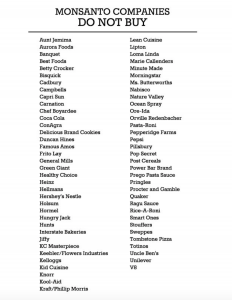
In terms of solutions for combatting Monsanto, there have been numerous rallies and organizations formed attempting to stop the agrochemical giant. However, Monsanto actually believes that it can change the perception of its own company by future innovations that they will try and introduce. One of these being an “RNA spray”, which is supposed to kill harmful pests that destroy crop fields and “be no more harmful than orange juice to humans” (Regalado). Yet, just like with anything Monsanto does, their biggest battle is from a public relations standpoint. As Regalado put it, “the real problem can be summarized in a single word: Monsanto. For half the world, that is enough to know it’s evil. But Monsanto is also the best way to make this real. For the scientifically literate, this is the dream molecule.” There is some merit in trying to push the boundaries and make good on decades of turmoil that has been caused, but unfortunately this is still not a reality in its current state. In addition to supporting organizations that fight Monsanto and the injustices that they bring upon farmers, everyday citizens, and the environment every day, you can make an impact by simply boycotting the Monsanto line of products.

Source: Organics

Currently, this is the best way to advocate against the company as the only way to fight a company that’s only concern is money is to take that away from them. And consumers around the world have the power to do just that.

This Week’s Links

Mapping Sea Level Trends

From National Oceanic and Atmospheric Administration (NOAA): Tides and Currents Sea Level Trends Map  https://tidesandcurrents.noaa.gov/sltrends/sltrends.shtml.

Mapping Public Opinion Trends

From Yale Program on Climate Change: Yale Climate Opinion Maps http://climatecommunication.yale.edu/visualizations-data/ycom-us-2016/.

Shell Knew

“‘Shell knew’: oil giant’s 1991 film warned of climate change danger” via The Guardian

“Public information film unseen for years shows Shell had clear grasp of global warming 26 years ago but has not acted accordingly since, say critics”

Events This Week & Weekend

#DataRescue at UNC!

Wendell Berry Film at The Carolina Theater!

E.O. Wilson Biodiversity Days at Duke!

Only technology can save us from climate change – Thabit Pulak

Being at Duke, we all probably realize that we are pretty much living in an echo chamber when it comes to issues like climate change. The overwhelming majority of us in this bubble here will likely agree that climate change is human made (as do 97% of scientists) , and poses a threat to our continued existence if nothing is done about it. But yet as it stands, nearly half of Americans don’t believe that climate change is man made. America is one of the richest countries in the world, with one of the most “educated” populations in the world – but yet how can so many people think this way, despite concrete evidence? I was suddenly curious – was this problem limited only to America? Did other countries also have large amounts of climate change deniers? I personally hypothesized that perhaps countries that have economic reliance on fossil fuels (which is mostly developed nations) are perhaps more likely to have a larger portion of the population deny the human impact of climate change, due to dominant internal politics of that nations.

I found it surprisingly easy to look up the statistics of climate change opinion by country. Wikipedia had a table listing all the countries from first to last – and just at a cursory glance, it seemed immediately clear to me how low America ranked on that list (where higher up on that list indicates a higher portion of the population supporting the fact that climate change being man-made). What surprised me even more, is that so-called progressive European nations like Germany, United Kingdom, and France, all had similar percentages of climate change deniers to the United States (at about half the population, if not more!). I took a look at an analysis by Pew Research, and they concluded my suspicions – according to them, “People in countries with high per-capita levels of carbon emissions are less intensely concerned about climate change”. This makes sense – if you are emitting a ton of carbon, you likely depend on it, and perhaps are unwilling to give it up. Internal politics within those nations are likely to keep this going. It is simply too economically “worth-it” for these nations to make any change, especially if they are not immediately affected by climate change.

I’m not going to lie – I am quite pessimistic in this issue as a whole. I don’t actually think that the world can come to a consensus in quick enough of a time to regulate carbon emissions worldwide. Well-meaning environmentalists scattered throughout the developed world might put pressure on their own governments to change, but it simply will never outweigh the immediate economic benefits of mining fossil fuels. The current pressure on countries like India/Bangladesh and other developing nations to curtail their activities such as population growth is hypocritical, and in the large scale – not impactful to the scale of saving the planet. The average American emits over 35 times the carbon of the average Indian (who already consumes somewhat more relative to other developing nations). It is clear that the developed nations have done much more to impact climate change in a negative way than most developing nations can ever dream of. Putting the burden on the developing nations is not reasonable, unless it is facilitated by the developed nations themselves.

I personally think that for this issue in particular, the best solution we will have is if our technologies advance to the point in which clean energy is so economical, that it makes no sense to mine for fossil fuels, IN THE SHORT TERM, as well as the long term. Most people care about the short term more than the long term (unfortunately) – this is why green energy hasn’t picked up the steam it should have, despite arguments by scientists on the benefits in the long term. Science can save us – green energy needs to be viewed by the capitalistic market as the sole economically viable choice.

Wike, Richard. “What the World Thinks about Climate Change in 7 Charts.” Pew Research Center. N.p., 18 Apr. 2016. Web. 27 Feb. 2017.

“Climate Change Opinion by Country.” Wikipedia. Wikimedia Foundation, 25 Feb. 2017. Web. 27 Feb. 2017.

Thoughts on Pumzi, Oil on Water, and The Petrol Pump – Thabit Pulak

Out of all three pieces which we had the opportunity to engage with, I felt that Pumzi had the deepest effect on me. When it comes to issues of the environment, especially if describing a future apocalyptic-type scenario, I feel that visual media is the best way to go about it. Pumzi paints the grim picture of how a society in East Africa lives in a future where water is scarce. The interesting thing about Pumzi was that technology was quite advanced – much more relatively to what we have today. Yet it appeared that the living standards – as in the comforts that we humans are typically accustomed to in the modern world today – have dropped substantially. It appears that not only is water incredibly scarce, but energy seems to be at a premium as well – humans are required to get on exercise machines, and take turns running it in order to power the living facility. It appears that the technological advances in the future are solely serving the purpose of sheer survival, and nothing much more. Pumzi is a possible glimpse into a future when people don’t care about their careless habits in the present.

The Petrol Pump was the next most impactful piece on my mind. I honestly have never read anything like it before – the entire writing piece focused on a space in time that was perhaps no longer than 30 minutes. It was quite remarkable to me that the writer was able to wring out so much meaning and introspection within that constrained time frame. I felt myself asking questions about the environmental/societal implications of my own day to day actions as the writer talked about his thoughts during the process of finding gas to pump into his car.

Oil on Water by Helon Habila wasn’t a bad piece by any means – but I place it last simply because Pumzi and the Petrol Pump were so good! In this story, Habila describes the fight between Nigerian Militants and the oil companies for their mutual desire for oil in the country. Habila vividly describes the destruction of natural land via the exploitation by the developed world.

One thing I feel however, is that Oil on Water – at least compared to the other two pieces we engaged with – seems to shift blame on environmental destruction more to large corporations and foreign interests rather than the individual. While there is a very important truth to this, I don’t think this is the best truth to push forward. What I mean by this is that these corporations are ultimately run by people. These people at one point in their lives, were young children, growing up and learning from their surroundings. I think the best messages are those that push forward individual responsibility as well as bringing awareness to the problems big corporations have made to the environment. The Petrol Pump seems to reconcile these two things better than Oil on Water.

Works Cited

Pumzi by Wanuri Kahiu
Calvino, Italo, and Tim Parks. “The Petrol Pump.” Numbers in the Dark: And Other Stories. New York: Pantheon, 1995. 170-75. Print.
Habila, Helon. Oil on Water: A Novel. New York: W.W. Norton, 2011. Print.

Preaching to the Choir

While I have compliments and criticisms for all the things we read and watched this week, these comments are mostly stylistic. I am fully supportive of what these works are fundamentally representing: climate change is happening, it is our fault and we need to do something about it. As a class, we learned a lot from the works we interacted with in class, but everyday we are are preaching to choir. It would benefit the United States at large if our citizens would read and discuss any of these works. Sadly, this currently cannot happen.

1 in 4 of Americans are skeptical of global warming according to a 2014 Gallup poll, despite 97% of climate scientists saying that global warming is real and a problem! Public schools are part of the blame for this flawed thought and are also the best way to change this flawed thinking. Public schools have very specific guidelines, from local and state government, for what they can teach since these schools receive their budget from taxes. This has led to public schools in South Dakota receiving a “balanced teaching of global warming,” which means teachers must say that global warming is theory rather than a proven fact. Teachers must present both “sides” when discussing global warming in Texas and teachers in Kentucky must “discuss the advantages and disadvantages of scientific theories [global warming].” Public schools can not show the kinds of material that we look at class and that is a waste of an opportunity.

50.4 million children attended some form of public education (K-12) in 2016. That is 50.4 million Americans who will have the ability to VOTE. They are not being taught what they need to in order to become a fully-informed voter because of their state’s political agendas. These children need to wrestle with various kinds of environmental material. Some teachers who want to teach their classes about climate change can not because they also did not receive any education on the subject matter while in school. This has led to the majority of teachers who do discuss climate change, not doing so for more than an hour or two a school year. This also has led to more troublesome outcomes. 30% of teachers teach that humans have a small role in global warming and 10% of teachers deny the very existence of global warming to their students.

Despite the fact that the United States’s Department of Defense has announced that climate change is the number one threat to our country, state governments still disagree! in 2015, Florida’s government banned all of its employees from using the word “climate change.” Donald Trump’s presidency will likely do not thing to address the fact that our local governments are preventing our children from receiving the appropriate education to understand global warming.

However, there is hope! People can pressure their local governments to allow climate change education in schools. The Portland School Board just recently prohibited any material that is skeptical of global warming from being used in schools because of a push by a coalition of environmentalists, parents and students. We all need to pressure our local governments to create a syllabus that public schools will have to use when teaching their students about global warming. Short stories, interactive timelines and Leonardo DiCaprio’s documentaries are all easy, useful and attractive means of getting the climate change message across to young people. These all are great examples of what should be on a state-mandated curriculum.

But I guess I am still preaching to the choir.


IMAGE found from: https://nescwaterblogged.wordpress.com/2012/12/12/preaching-to-the-choir/

Sustainable Duke News

Re-blogging the rich and wonderful content loaded into this week’s Sustainable Duke newsletter:

News

Nominate staff, faculty, or students for the 5th Annual Sustainability Awards

Nominations due March 24th, award winners and their nominators will be celebrated at the annual Duke Sustainability Awards luncheon

Duke Carbon Offsets Initiative 2016 Annual Report

Read about the innovative programs implemented by DCOI to produce carbon offsets for Duke University

DCOI Collaboration Builds Local Carbon Markets
Urban Offsets partners with “TreesCharlotte” to create offsets that support climate commitments by Duke University and other institutions

Live for Life Mobile Market CSA & Customized CSA Work Drop Off Site

CSA sign up and special chance to customize drop off location at your workplace

Duke Campus Farm 2016 Annual Report

Learn about new staff, programs, and produce at the farm in 2016

Duke Campus Farm 2016 CSA Sign Ups Open

Receive a weekly share of high-quality, sustainably-grown produce that’s harvested hours before delivery

Duke Campus Farm Offers First Credit-Bearing In-The-Field Programming

“Imagining Food Futures” brings humanities and natural science scholars together

The Herald-Sun: Back to The Land

Duke Campus Farm promotes education, food systems


See more at sustainability.duke.edu/news_events. Subscribe to the newsletter yourself via this link.