The warm form next to me shifts, then a blast of cold hits. Small feet pad across cold wooden floors. I don’t even need to peek out from under my heavy grey blanket to know that Teiko has already woken up. But I don’t want to – not yet. It’s too cold. Cold and wet and lonely. The bed is nice. Nice and warm. I wish I had more blankets but Obaa-san says that we only have enough for one per bed. To my right I see Momiji sound asleep, and I nestle a little closer to the little furnace that is my sister. When I was little, I didn’t have any sisters though. It was just me and Okaa-san and Otou-san and the baby. I think the baby was a boy. But then the baby disappeared one day and Okaa-san cried and cried and eventually Otou-san got quieter and quieter. Some days he wouldn’t come home until very late and I sometimes I could hear the sound of him shouting over Okaa-sans crying. But then one day they disappeared too. Obaa-san says that they got caught in floodwaters while they were on their way home from visiting the local Shinto temple. Apparently she found me playing on the beach. So now we live together, Obaa-san and I, along with Teiko and Momiji and Akira and Rei and Kyoko and Risa and Daichi and this new boy named Shou. He’s new. Sometimes he’s still a bit shy and cries sometimes but we help him. Yesterday I taught him how to lay out the seeweed Rei and Daichi gather to dry on the port side of our house. Usually the water doesn’t rise up too high so it stays drier over there. I remember when I was little on special occasions we would eat something called fish sometimes. It was usually cold and slimy. Obaa-san says that we can’t eat fish anymore because lots of them died and a lot of the ones that are left have goo inside. So we eat seaweed. Maybe today I will teach Shou the game I learned where you count the wave crests and see how high we can get. Maybe I should get out of bed. But then again. It’s so warm here…
Category Archives: Uncategorized
Environmental Art, Knut Bry
See: http://www.tinagent.no/photographersdirectors/knut-bry/water-for-everyone
Knut Bry is a widely acclaimed photographer who hails from Norway. His photography is simple, non-abstract, yet deeply profound. In my mind, this is why he elicits strong emotional responses to his photographs. Last year, he began posting pictures of water. However, with hashtags that read “boycott Nestlé” and “water is for everyone”.
When I asked Mr. Bry the reason behind his hashtags, he told me “Several years ago, Nestlé diverted a river and cut off the only water source for two towns and a large Native reserve in British Columbia. The company declared that the water was a universal commodity for the taking, not a natural resource guaranteed for Canadians. They had armed guards at the gate from the U.S. and a large number of the locals were badly affected resultantly.”
Water is a limited resource, and a necessity for every life form on earth. However, problems begin to arise when large Multi National Companies -bolstered by strong lobbies- such as Nestle begin to exploit these resources. In turn, they cause damage not only to the environment but also to the people of the areas. Often, these people belong to the weaker sections of society. Institutional forces are arrayed against them, making them voiceless in the face of companies like nestle.
Despite the severe droughts in southern Ontario, Nestlé continues to extract four million liters of groundwater every day from an aquifer near Guelph. In fact, Nestlé pays approximately $15 per day for this precious resource. It only pays a mere $2.25 for every 1 million liters of water it takes. They then ship this water out, using plastic bottles and sell it all over the Americas- at a high profit. (Ferreras)
Knut Bry is not alone in believing that water is a human right, and that the turning of water into a commodity for the profit of the highest bidder- a travesty. Privatization of access to water is a slippery slope that has cost many countries- especially developing nations- dearly by selling the right to water to multinational corporations, who in turn are only interested in profit from sales to the highest bidder. Poor local residents are given last access after the profit is taken.
#boycottnestlé #waterisforeverone
Consumer Culture and Climate Change
In class this week we read the Pope’s encyclical on climate change. We compared it to the Paris agreement and learned that surprisingly the Pope takes a more extreme stance on the solution to climate. The main difference between the Paris agreement and the Pope is that the Pope directly isolates the cause of climate, namely human consumerist behavior.
The Pope, like many climate change activists, holds corporations and governments accountable for endorsing policies that encourage pollution. However, he recognizes that the incentives for these collections of people to act they way they do arises from consumer and voter preferences. If we lived in a world where people preferred eco-friendly products and recognized the immediate importance of climate change, governments and corporations wouldn’t have such an immense effect on the environment.

Pope Francis also dedicates a part of a chapter entirely to discussing the importance of education in relation to climate change. He holds that scientific knowledge is important to understanding our connection to nature, but it is not the only way in which we should relate to the environment. However, spirituality, to the Pope, is integral to cultivating a healthy relationship between human beings and nature. This is because the root cause of pollution is our incessant need to feel fulfilled by material objects. Without this consumer culture, climate change would not be such a ridiculous issue.
References:
Encyclical Letter, LAUDATO SI,’ “On Care for Our Common Home”
Giving Waste Up for Lent
Evident in the Encyclical is Pope Francis’ reverence for the history of the church, especially through the statements and opinions of his predecessors. While the Pope is known to have immense influence over the worldwide Catholic community, Pope Francis in particular is incredibly popular with protestants as well as non-Christians. Many consider his popularity as a result of his progressive attitudes, in opposition to the Catholic Church’s reputation of social conservatism. Pope Benedict XVI was the first Pope to resign from the position since 1415, creating apprehension in Catholics on whether the Church would stick to old ways or if the new pope would diverge from classical conventions. Fortunately, Pope Francis was seen by many of the religious and non-religious communities as a breath of fresh air. He immediately moved hotly debated social issues such as homosexuality and abortion to the side and brought the overall wellbeing of the fellow human to the forefront of importance for the Church and for the world.

http://jezebel.com/cool-pope-is-so-cool-that-hes-willing-to-baptize-martia-1575914240
Regardless of scientific evidence, the issue of climate change is still “controversial”. Pope Francis, using the platform of the Encyclical, called for people to recognize their responsibility not only to planet, but to themselves. Through reading and comparing Pope Francis’ Encyclical and the Paris Climate Agreement, it becomes evident that international dialogue about climate change varies immensely depending on who is involved in the conversation. Governments and corporate interests were not the intended audience of the encyclical. Being raised as Catholic, I have experienced how the official opinion of the Pope is incredibly influential in both small and large global communities, with Francis’ Encyclical being no different. Hopefully, Francis’ words of love for one another can reach the morality of every person unaware of the harm of their actions and change their behavior for the betterment of us all.
Blog Post 7 – Brandon Foreman
Climate change reminds me a lot of the Marvel movies where there is a super-sized, evil villain who knocks down buildings, turns the sky to black, and takes an army of good guys to tackle it. They are monstrous forces and can refute any individual effort that threatens to bring it down.
While I have learned a ton from this class and can see the good that humanities can do to address climate change, I am a scientist at heart and believe in the techno-fix. The humanities is used to spread awareness, and it can do a wonderful and absolutely imperative job, but when that big battle does occur, it will be the physical tools and methods humans have developed that will ultimately fight climate change.
I wanted to take a moment to brainstorm some engineering feats that would make a difference. Trees are great, but what if, similar to a vacuum, there was a machine that could suck pollutants out of the water or carbon out of the air and use it to create materials? What if we could replicate the effects of a freezer or refrigerator on a mass scale to halt the temperature increase in the arctic? How long will it take to make corn an effective energy source? Can we adjust cattle feed so that cows release less methane?
When push comes to shove, these are the types of machines and mechanisms we will have to create in order to stop climate change. I have faith in humans to do it; still, all these projects require time and a team. The only question is if we start early enough before it is too late.
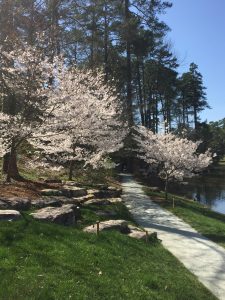
Environmental Psychology
Social media is full of suggestions for productive habits to form that are guaranteed to benefit your physical health, mental health, relationships, friendships, parenting abilities, intellect, and the list goes on. But at the same time, a trend has emerged on those same platforms in which everyone shares updates and stories about these supposedly wholesome and helpful habits. As well-intentioned as people may be, the result is still a pivot away from improving one’s life and towards presenting a facade to the public in which you appear to live the perfect life. It becomes more of a burden to keep up with the Joneses than a way to find peace and balance in a busy world.
As a psychologist as well as an environmental scientist, I sometimes take an odd perspective on current issues. I am interested in not only the scientific and ecological factors at play in studying climate change and other problems, but also the way that people respond to different challenges and what the best approaches are to finding solutions. I began to realize the intersection between social media’s fascination with healthy lifestyles/habits and environmental issues during our class activity on Tuesday.
The benefits of going outside and spending time in nature are extremely well-documented (see articles below), but these are usually portrayed as being on a personal, individual level: you are happier, healthier, and more creative. After walking around Durham and parts of East Campus, I got back to my dorm and felt not only relaxed, happy, and motivated, but also more connected with both the natural world and the people around me. I wanted to see if this was a universal experience, so I did a bit of research and found a study by the University of Rochester that found that people feel significantly more energetic when they spend time outdoors. More importantly, though, they had to be among nature to feel the largest effects, not just simply outside.
This led me to wonder if environmental activists could take advantage of these effects through the social media healthy habits trend that I noticed. It wouldn’t be hard to spread the idea of spending time outside in nature as an extremely beneficial activity to incorporate into one’s daily or weekly routine (especially because the benefits are so numerous and well-supported by research!) However, this is one pop-wellness trend that I think would be more effective if it became integrated into the share-everything culture of social media. I noticed that as I tweeted my pictures, I was more deliberate about observing my surroundings, and I found myself paying more attention to both the details of nature and the trash that was everywhere on my walk. On a personal level, I also felt more connected to the natural world that I encountered- and therefore more protective of it.
Starting the trend (perhaps through the #OptOutside hashtag or some other social media campaign) of spending time outdoors and sharing photographs and stories about this new practice on social media could have numerous benefits, even beyond the personal and psychological. Caring for nature becomes a personal investment, as nature has become part of your own life and you are more attached to it. People will also be more aware of the ecological and environmental challenges faced in their area, and if they care more about nature, they may be more likely to start picking up trash, and as Pope Francis accurately described, such small changes can have large ripple effects. Finally, the social aspect of sharing your experiences with others (in person as well as on Facebook, Twitter, or other platforms) will draw others into the trend, thus multiplying the benefits exponentially as it becomes a commonly-encouraged practice.
Of course, this is an extremely idealistic view of how the world works. Many people do not have the time or the ability to regularly spend time in nature, and others may simply have no interest in doing so in the first place. But I’m an optimist, and if this catches on in just a tiny percentage of people, I think it will be worth it. After all, part of enjoying nature involves being a bit of a romantic, a bit of a dreamer, and a bit of a poet. And we all have a little bit of that inside us.
Some of my favorite photos from my wanderings:







Benefits of nature: South University / American Psychological Association / University of California, Berkeley / New York Times / Psychology Today / The Atlantic / National Geographic / VICE
The paris agreement
The most powerful members of society belonged to this family. After many years of internal contention due external pressures, they engendered an offspring. Due to the family’s preeminence and power, the rather vacuous offspring came to be much celebrated. There was much a-do about nothing.
I felt the need to poorly personify the Paris agreement, just to make lucid how poorly fruitful the agreement was. The time, effort and resources used to produce it were all but effectual. After analyzing and scrutinizing the particulars of the Paris Agreement, one can conclude that the most prominent achievement of the Paris climate agreement is perhaps, that there was an agreement at all.
We have been lingering in an old paradigm for a long time. It was over 2 decades ago, in 1992 that the UN officially acknowledged the hazards of greenhouse gasses, and the greenhouse effect. It in turn adopted the Framework Convention on Climate Change. It has been an annual reoccurrence since 1994, that the members of the convention “meet in one place, call for reports, work out procedures, discuss and bicker and walk out on each other, able to do much except the one, crucial thing: formulate a global resolution that would slow and eventually halt climate change” (Meyer)
To my mind, climate change is our modus operandi. The great story of the 21st century man. No other narrative enshrouds the human race in quite similar a manner. Climate change forces answers about: the ethics of the global economy, of oil and gas, of technology and innovation, of food security, of democratic republics and command capitalism, of colonialism, dictatorships and the indigenous peoples, of who is rich and powerful and who is poor and voiceless.
We are living in the middle of history. As countries continue to have conflicts over boarders, increase investment in weapons of mass destruction, and abominate refugees in their midst. In Paris, they tried, miraculously and inadequately, to care for their common good. (Meyer)
So, if climate change does pique your curiosity, and you too feel worried about our not so distant future, then make an effort. Its individuals who make the government, the state and the nation. It may sound clichéd, but individual action leads to collective action. We cannot expect a piece of paper to miraculously save us from a mess we’ve been making for years. We cannot stagnate and continue to cling to models of the past, because the future is now. We need to show concern for our environment in the way we vote, in the way we spend our civic attention and in the way we communicate our concerns to the policy makers. We have been having the same discourse of the ruination of our environment and the depletion of our scarce resources. We need to act. Fast.
References
Corbyn, Chloe. “The Paris Agreement on Climate Change – A Summary.” In Brief. Assemblywales.org, 04 Apr. 2016. Web. 10 Mar. 2017.
Meyer, Robinson. “Is Hope Possible After the Paris Agreement?” The Atlantic. Atlantic Media Company, 12 Dec. 2015. Web. 10 Mar. 2017.
Blog Post 7 – Ryan Bronstein
Our perceptions of the environment largely shape the way in which the environment is treated. This week, I took a walk with nature to remind myself of its beauty. Upon my exploration of the Duke Gardens, I came across a mother instilling in her young child a reverence towards nature as they observed the many fish of a Koi pond. What I also noticed was that the fish were gathering and swimming towards the mother and child, making their own observations as well. Thus, this image represents the symmetry between human interactions with nature and nature’s interactions with humans. Every individual is a part of nature and to disrespect the environment is to disrespect oneself.
The Encyclical of Pope Francis does a tremendous job of declaring man’s role as a part of nature. Pope Francis makes it clear that the unsustainable lifestyles largely lived today are degrading the environment. More importantly, he emphasizes that every individual has to act to heal the wounds of mother nature because that is the only way she can be saved. In order to do this, individuals must perceive nature not as something that can be owned, but rather as something that provides for each of us. Through this shift in mindset, we can learn to appreciate nature and live sustainably.
On the other hand, the Paris Agreement does not set forth the responsibility of the individual to save the environment. Instead, it sets the power with the governments and only encourages them to volunteer their assistance. Thus, it is my belief that this is a very weak agreement, made in a time when the world needs a strong declaration and commitment such as the one provided by Pope Francis. As the world degrades around us, it is time to demand action, not simply ask for volunteers. It is understandable that some nations, such as developing nations, simply do not have the resources to fight climate change. This is why the battle cannot be fought solely by the governments. Climate change must also be combatted at the individual level by living more sustainably. These lifestyles only arise out of a specific perception of the environment, one of reverence, which can be instilled at any time. It could happen to a Miami citizen as the city drowns around him, or it could even happen to a little boy observing the beautiful fish of a Koi pond for the very first time.

The Pope Knows: Living in a Throwaway Culture
The Popes ENCYCLICAL LETTER “LAUDATO SI’” does a great job of putting forth a moral argument for why we need to take action on saving our planet. “Our planet” is exactly how he describes our earth. It is up to all of us to take care of our common home. He makes a plea to humanity to start to recognize the signs and symbols that we are hurting our earth and need to seek a sustainable future.
What I think stuck with me the most in this is that he talked about how we live in a “throwaway culture” in which we are quick to throw things away rather than recycle them or fix them. I think most people have the money to get the newest and best thing and are quick to abandon whatever they don’t need anymore. I think we can find a middle ground here though. We need to make better choices, make more effort, and find the places in which we can donate things for reuse. One thing I do in which I feel finds this middle ground is that when I declutter my house or get rid of old clothing I take it to the thrift store for them to reuse things. Instead of going to the mall to buy new clothes, I shop at the thrift store and buy clothes other people didn’t want anymore. I think that is a proper way of doing things.
I am sure everyone has heard of the saying “One mans trash is another mans treasure” and I think this can apply to today as well. We need to get over the “ick” factor of buying used products and spend less on new items. I think I have saved hundreds if not thousands of dollars buying things second hand rather than brand new. This includes clothing, furniture, shoes, appliances, etc. I have no shame in buying used things because in my mind we are all the same and we can all benefit from sharing things. I think the pope would agree that we can all make moves big or small to save our earth from ourselves.

http://thoughtcatalog.com/rebeca-gomez/2014/10/dos-and-donts-of-thrifting-by-a-thrift-store-shopaholic/
Using Social Media for Good
I, quite frankly, am not good at social media.
I do not have the most friends on Facebook.
I rarely post – if at all – on Instagram.
I wouldn’t know where to start if I decided to get a Twitter.
However —
Social media has power. It influences not only our thoughts but also the very issues we think about – the issues we deem worthy of spending those few extra seconds we have before class starts or the last couple minutes before we go to sleep at night contemplating. For some, it means indulging in Tastemade videos on Snapchat, for others, scrolling through women’s fashion on Pinterest. Or, it could mean spreading awareness about environmental issues and the choices we can make to lessen our negative impact on climate change.
https://www.instagram.com/p/BRWe6elA5M8/?taken-by=life_in_the_anthropocene&hl=en
It could mean posting pictures of the world around us, of nature’s many wonders which may not be here in ten years or twenty years for future generations.
https://www.instagram.com/p/BRWej0vA_Dn/?taken-by=life_in_the_anthropocene&hl=en
It could even mean exposing the harmful impacts of everyday activities that society has deemed acceptable (i.e. both the cars we drive and the roads we drive on).
https://www.instagram.com/p/BRdu6aRACxs/?taken-by=life_in_the_anthropocene&hl=en
Media options are numerous, and opportunities are infinite. Coming from someone who owns up to her poor social media skills, if I can make an Instagram account, spread awareness through environmental photography, and have my posts be “liked” by complete strangers, you can too.
Don’t just make a post, make an impact.
Follow me on Instagram: life_in_the_anthropocene
Also, for more information on how social media can help save the environment, check out this article by the Huffington Post.
**One thing to remember as you go forward is to always act – and post – purposefully. Drawing a parallel to two recent and critical environmental documents, the Paris Accords and Popes Francis’ encyclical on the environment, Laudito Si, I encourage you all to follow in Pope Francis’ footsteps. In his multiple chapter long encyclical, Pope Francis delves deeply into the real issue of climate change is at hand and the effects it will have on us all, focusing specifically on impoverished nations. He calls on Christians – using the Bible as evidence – to protect the Earth we live in, to not see it as a cheap and bottomless source of resources meant for us to exploit, but rather a gift in which we are meant to coexist. This encyclical calls on the individual to act, to change behaviors, and in essence,”be the change you want to see in the world,” to quote a very wise man ~ Ghandi. In contrast, the Paris Accords, the product of almost fifty years of deliberation among the international community, failed to put forth anything substantial regarding the issue of climate change, instead encouraging participating nations to follow protocol which is best for their own country and, for developed nations, to help out undeveloped nations when possible. Though both are key documents in the global climate change conversation, one is far more substantial than the other and thus has far greater impact.
