 Dr. A G Abubaker (Al-Maktoum College of Higher Education)
Dr. A G Abubaker is the Principal & Vice Chancellor of Al-Maktoum College of Higher Education.
Dr. A G Abubaker is a passionate academic leader dedicated to advancing multicultural initiatives and interfaith studies. He is committed to promoting teaching, research, and lifelong learning, fostering dialogue and diversity as integral academic disciplines for global understanding.
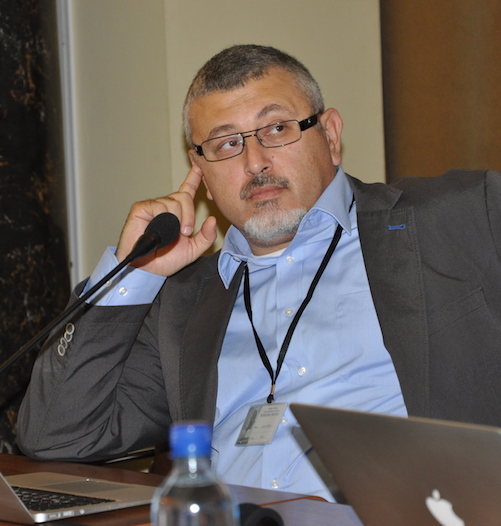 Ayman Agbaria (University of Haifa)
Professor Ayman Agbaria is a researcher, poet, playwright, and social activist.
Professor Ayman Agbaria is a researcher, poet, playwright, and social activist who serves as an associate professor in the Department of Leadership and Policy in Education at the University of Haifa. His areas of expertise include: education among ethnic and religious minorities; policy and pedagogy for civics education; Islamic education; and teacher training. His poems have been published in many anthologies in various languages, and six of his plays have been produced.
 Imam Abdullah Antepli (Rothko Chapel in Houston, Texas)
Imam Abdullah Antepli is the President of the Rothko Chapel in Houston, Texas.
Imam Abdullah Antepli is the President of the Rothko Chapel in Houston, Texas—an independent, globally recognized institution dedicated to art, spirituality, and human rights. He is a globally acknowledged scholar and leader in cross-religious and cross-cultural dialogue. His Muslim Leadership Initiative helped young Muslim American leaders understand Judaic and Israeli studies and cultivated compassion in the face of fear and hate. He built multiple organizations that facilitated religious and spiritual life on college campuses across the United States, sowing seeds of understanding between religions while upholding their cultural integrity and dignity. He has written extensively on religious and cultural issues, contributing his vibrant voice to national and international media on these crucial areas of public affairs. As a Muslim-American Imam and one of the few scholars bridging faith, ethics, and public policy—and as someone born in Turkey who has lived in three different countries—Abdullah Antepli offers the academic and interfaith worlds a vital element of intellectual, ethnic, religious, and cultural diversity.
 Alija Avdukic (University of Dundee School of Business)
Professor in Political/Moral Economy and Islamic Finance.
Dr. Alija Avdukic is a Professor in Political/Moral Economy and Islamic Finance at the University of Dundee School of Business where he also works as Deputy Associate Dean for Globalization and Recruitment and serves as a trustee and investment advisor for the International Waqf Fund of Islamic Relief Worldwide. He holds a Ph.D. in Islamic Economics and Finance from Durham University (2016) and master from the University of Gloucestershire (2010). His research interests focus on Islamic moral and political economy, sustainable development, Islamic banking and finance, entrepreneurship and educational studies. His recent work critically examines the social and developmentalist failure of Islamic banking and finance in achieving its ethical and economic objectives. He also actively contributes to empirical research on Islamic finance and its impact on economic development. Dr. Avdukic has held several academic leadership roles, Programme Coordinator at Al-Maktoum College of Higher Education, head of department at Markfield Institute of Higher Education. He has developed multiple MSc and diploma programmes in Islamic finance and sustainability. He supervises Ph.D. candidates, serves as an external examiner and contributes to numerous peer-reviewed journals and edited volumes on Islamic economics and finance. In addition to academia, Dr. Avdukic has served as a UNDP consultant on ESG for Islamic finance, advising on sustainability frameworks that integrate Islamic economic principles. His public engagement includes keynote speeches at major international conferences, policy advisory roles, and editorial board memberships in academic journals. He has also secured research grants supporting refugee entrepreneurship, Islamic finance, and sustainable development. Fluent in English, Arabic, and Bosnian, Dr. Avdukic continues to shape discourse in Islamic political economy and finance through research, teaching, and consultancy.
 Yaakov Ariel (University of North Carolina at Chapel Hill)
Yaakov Ariel is a professor of Religious Studies at the University of North Carolina at Chapel Hill.
A graduate of the Hebrew University and the University of Chicago, Ariel completed a doctorate degree in History of Christianity. His research focuses on Christian-Jewish relations in the modern era, Christians and Palestine, New Christian and Jewish Religious Movements, and the effect of the counterculture on Religion in America. Ariel’s book, Evangelizing the Chosen People, won the Outler Prize of the American Society of Church History. His latest book, An Unusual Relationship: Evangelical Christians and Jews, was published by New York University Press (2013).
 Paul Ariese (Amsterdam University of the Arts)
Paul Ariese is a researcher and senior lecturer in Religious Heritage at the Reinwardt Academy (Amsterdam University of the Arts)
He is a graduate of the University of Leicester’s School of Museum Studies (MA with distinction) and was also trained as an architectural and graphic designer (BA). Since 1997, Ariese worked on numerous projects for museums, visitor centers and heritage institutions all over the Netherlands, next to museum projects and museum capacity building programs in the Middle East, East Africa, and South(east) Asia. At the Reinwardt Academy, he lectures amongst others on heritage and religion. His research focuses on crosspoints / tipping points of religious space and narrative exhibition space.
 Skender Asani (Center for Spiritual and Cultural Heritage)
Dr. Skender Asani is the director of the Center for Spiritual and Cultural Heritage of Albanians in Macedonia.
Dr. Skender Asani is the director of the Center for Spiritual and Cultural Heritage of Albanians in Macedonia, since 2014. He is also the co-founder and President of the NGO Acta Non Verba, an NGO with a mission to improve society and promote civil society and local communities. The NGO also works to strengthen interethnic and interreligious relations; promote health care and protect the rights of women, children, minorities; encourage ethical and moral values; promote development and environmental protection; promote development of sports and recreational activities; protect cultural heritage of the communities in the Republic Macedonia; and combat anti-Semitism, Islamophobia, xenophobia, racism and hate speech. Asani has been project coordinator for the project “Dealing with the past – History and politics,” supported by the United States Department of State – Bureau of Educational and Cultural Affairs, and a participant in the research trip for the project “Civil Courage in Difficult Times.” With the Institute and NGO’s, Dr. Asani has helped to organize projects including a book promotion in Skopje of the memoirs of Mimi Kahmi Ergas-Faraggi, My life under the Nazi Occupation, and in Scadar, Macedonia, Participating in The Beit Project, a European and Mediterranean project promoting social cohesion.
 Doron Avraham (Bar Ilan)
Doron Avraham (Ph.D.), is an Associate Professor at the General History Department in Bar Ilan University.
His main field of research and instruction is modern German history, with a focus on the history of nineteenth-century German political and religious thought. Recently, Doron was a research fellow at the History Faculty of Oxford University. He published his book about Prussian conservatism in Germany, and he is also the author of a series of articles in international journals. Currently, he is writing a book about German neo-pietism, Jews and nationalism.
 Carol Bakhos (UCLA)
Carol Bakhos is Robert E. Archer Professor in the Study of Religion in the Department of Near Eastern Languages and Cultures at UCLA.
Since 2012 she has served as Chair of the Study of Religion program and Director of the Center for the Study of Religion at UCLA. Her most recent monograph, The Family of Abraham: Jewish, Christian and Muslim Interpretations (Harvard University Press, 2014), was translated into Turkish (2015). Her other monographs and edited works include: Ishmael on the Border: Rabbinic Portrayals of the First Arab (SUNY, 2006), winner of a Koret Foundation Award, Judaism in its Hellenistic Context (Brill, 2004), Current Trends in the Study of Midrash (Brill, 2006), the co-edited work, The Talmud in its Iranian Context (Mohr Siebeck, 2010), and most recently the co-edited volume, Islam and Its Past (Oxford University, 2017). Bakhos is currently working on editing the second volume of the ten-volume Posen Jewish Anthology of Culture and Civilization (Yale University Press).
 Carina Branković (Oldenburg)
Dr. Carina Branković is coordinator of Lower Saxony's: Certificate Critical Education against Antisemitism in Lower Saxony in the Context of School (ZABIN)
Dr. Carina Branković is coordinator of Lower Saxony’s “Certificate Critical Education against Antisemitism in Lower Saxony in the Context of School” (“Zertifikat Antisemitismuskritische Bildung in Niedersachsen im Kontext Schule”) (ZABIN) at the Carl von Ossietzky University of Oldenburg, Germany and a postdoctoral researcher at the Potsdam branch of the Elie Wiesel Research Center. She studied Religious Studies, Protestant Theology and Jewish Studies at the University of Heidelberg, the Hochschule für Jüdische Studien Heidelberg and the University of Zurich. Her professional and research interests focus on the critical education against Antisemitism, on Jewish life in contemporary Germany, and post-Holocaust Jewish Literature. Her study of George Tabori’s Holocaust Drama “The Cannibals” (New York City 1968) and “Die Kannibalen” (West Berlin 1969) came out in 2019 (published as a book in 2024). She is presently researching the genesis of Elie Wiesel’s “La Nuit” in the post-war French literary and philosophical context.
 Katherine Brown (University of Birmingham)
Katherine E. Brown (she/her), Professor of Religion, Gender and Global Security, University of Birmingham.
Professor Katherine Brown is Head of Department and Senior Lecturer in Islamic Studies in the Department of Theology and Religion, University of Birmingham. She is interested in Muslim women’s involvement in violent religious politics, specifically Islam. Her work examines the ways in which gendered jihadi narratives motivate and enfranchise, and how they combine with everyday experiences of living and politics. She also examines how counter-terrorism and counter-radicalisation programmes impact on religious women’s rights and Muslim communities. She is currently finishing a volume on gender and anti-radicalisation measures worldwide, as well as working on articles looking at gender in the Utopian and apocalyptic visions of the Islamic state group, Daesh.
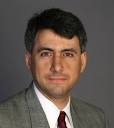
Peter Casarella (Duke)
Professor Peter Casarella at Duke Divinity School specializes in Latinx theology.
Peter Casarella has been a Professor at Duke Divinity School since 2020, where he specializes in Latinx theology. He has published a monograph,
Word as Bread: Language and Theology in Nicholas of Cusa, and co-edited the following collections:
Cuerpo de Cristo: The Hispanic Presence in the U.S. Catholic Church;
Finding Beauty in the Other: Theological Reflections Across Religious Traditions;
The Whole is Greater than its Parts: Ecumenism and Inter-religious Encounters in the Age of Pope Francis;
Puentes y No Muros: Construyendo la Teología a través de América; and
Pope Francis and The Search for God in América. His edited volume of Louis Dupré’s final essays,
Thinking the Unknowable, appeared with Notre Dame Press in 2024, and his co-edited volume with Tom Masters,
Chiara Lubich: Essential Teachings on Unity, will appear with Orbis Press in February of 2026 in their series on Modern Spiritual Masters.
 James Chappel (Duke)
James Chappel is Associate Professor of History at Duke University.
James Chappel is Assistant Professor of History at Duke University. He studies the intellectual, political, and religious history of modern Europe. He is currently completing a manuscript entitled “Spiritual Welfare: Catholic Political Economy in Twentieth Century Europe” (forthcoming from Harvard University Press). This work studies Catholic social-economic thought as a transnational whole, arguing that it had massive and overlooked impact on the shape of post-1945 Europe, where its influence was mediated through the new Christian Democratic parties that swept to power across the continent. He is also working, as a second project, on the institutional and social-scientific consolidation of the family in post-1945 Europe, and is particularly interested in how the “problem of aging” is conceived and administered.
 Alexander Deeg (Leipzig)
Prof. Alexander Deeg is a pastor of the Lutheran Church and holds the chair for Practical Theology at Leipzig University.
Prof. Dr. Alexander Deeg, born in 1972, is a pastor of the Lutheran Church and holds the chair for Practical Theology at Leipzig University in Germany. He concentrates on the fields of worship and homiletics, as well as for many years on Jewish-Christian dialogue. In 1995/96 he pursued Jewish studies at Hebrew University in Jerusalem – a starting-point for his continuous engagement in the theory and practice of Jewish-Christian encounter. In his dissertation (Predigt und Derascha) he reread traditional Jewish hermeneutics in the light of contemporary homiletical questions. Deeg is (among others) the director of the Lutheran Institute of Liturgical Studies, the Secretary of Societas Homiletica and one of the editors of the International Journal of Homiletics.
 Mulayka Enriello (Italian Islamic Religious Community)
Mulayka Enriello is responsible for Education at the Italian Islamic Religious Community and founder of the I.S.A. Interreligious Studies Academy ETS in Milan.
She graduated in Mathematics at the University of Pavia (Italy). Her main field of research is the development of interdisciplinary educational paths on “Islam and Mathematics”. On that topic, she is going to publish the proceedings of different training courses and conferences held in Rome and Milan during the last academic year. She also collaborates with the Higher Institutes for Religious Sciences (ISSR) in Milan and other Italian cities, holding training seminars for teachers in the public schools about inter-religious education and understanding. In this framework, she has published articles about the prophet Abraham in the Islamic tradition, edited by the Franciscan Edizioni Messsaggero di Padova in Padua, Italy.
 Essam Fahim, Department of Humanities and Social Sciences, LUMS
Dr. Essam Fahim is an Assistant Professor in the Study of Religion at the Department of Humanities and Social Sciences at LUMS in Lahore, Pakistan.
Dr. Fahim’s teaching and research interests include the fields of Islamic Studies (Islamic law, Islam in the modern period, and Islam in Pakistan), Religious Studies (theoretical, ethnographic and historical approaches), Philosophy of Religion (pragmatism, hermeneutics and ethics) and Religion and Violence (the study of religious language and behavior).
 Udi Greenberg (Dartmouth)
Udi Greenberg is Professor of History at Dartmouth College.
Udi Greenberg’s research focuses in particular on intellectual, political, and gender history in the twentieth century. He is the author of “The Weimar Century: German Émigrés and the Ideological Foundations of the Cold War” (Princeton UP, 2015) and “The End of the Schism: Catholics, Protestants, and the Remaking of Christian Life in Europe, 1880s-1970s” (Harvard UP, 2025). He is currently working on the impact of decolonization and mass migration on European life from the 1940s to the 1980s.
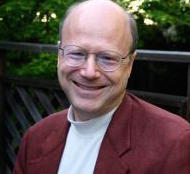 Malachi Hacohen (Duke)
Malachi H. Hacohen is Professor of History, Political Science and Religion.
Malachi H. Hacohen is Professor of History, Political Science and Religion, a Senior Fellow at the Kenan Institute for Ethics, and a Bass Fellow at Duke University. He is the director of the Religions and Public Life Initiative at the Kenan Institute for Ethics . He teaches European intellectual history and Jewish history. He has previously taught at Columbia University, New York University, and Reed College. His research interests focus on Central Europe and include social theory, political philosophy, and rabbinic literature – Midrash to Kabbalah to halakhic responsa. Hacohen writes on the Central European Jewish intelligentsia, the European nation state vs. empire, Jewish-Christian relations, and the dilemmas of writing Jewish European history that is both cosmopolitan European and authentically Jewish. He is presently completing a book in Jewish European history focusing on the biblical story of Jacob and Esau (Jews and Christians) as it is told through the ages. Chapters include the biblical and rabbinic period, medieval & early modern Judaism, Jewish emancipation, the European nation state and the Central European Jewish intelligentsia, the Austrian Empire and the Jews, post-Holocaust Europe and the State of Israel. Some of Hacohen’s recent articles deal with Cold War liberalism, the Congress for Cultural Freedom and the formation of a public sphere in postwar Central Europe, and Austrian scientific culture at the turn of the twentieth-century.
 Yemima Hadad (University of Leipzig )
Prof. Yemima Hadad is an Assistant Professor of Jewish Studies (Judaistik) at the Theological Faculty of the University of Leipzig and a research fellow at the Bucerius Institute for Research of German Contemporary History and Society at the University of Haifa.
Her scholarly work spans Modern Jewish Thought, German-Jewish Philosophy, Political Theology, Continental Philosophy, and Jewish Feminism. She is currently working on a monograph, Thinking with Care: Feminine Interventions into the Ethics of Dialogue. The book traces the meaning of feminine thought (Frauendenken) in the 20th century and discusses its relevance for contemporary gender discourses.
 Dirk Hartwig (University of Münster)
Dirk Hartwig is junior lecturer at the Centre for Islamic Theology at the University of Münster and at the same time research assistant at the 'Corpus Coranicum' project of the Berlin-Brandenburg Academy of Sciences and Humanities.
Dirk Hartwig is junior lecturer at the Centre for Islamic Theology at the University of Münster and at the same time research assistant at the “Corpus Coranicum” project of the Berlin-Brandenburgische Akademie der Wissenschaften. He was trained in Hebrew and Judaic Studies, Arabic Language and Literature and Iranian Studies at the Freie Universität Berlin, the Hebrew University of Jerusalem, the New York University and the University of St. Andrews. He is mainly interested in the intersections of cultures, religions, languages and literatures, and their crosspolinations. His current research is mainly dedicated to the study of the Qur’an and Islamic Exegesis, where he successfully maps the continuous negotiation/s with the traditions of the Jews, i.e. Rabbinic literature, and traditions of early Christianity, i.e. the writings of the Church fathers. Unlike many Western scholars, he does not understand the Qur’an as a replica of the Judaeo-Christian Bible/s, but rather as – what Harold Bloom has called – conscious misreading, witnessing the drama of the formation of a new community in negotiation and competition with Jewish and Chrisian traditions. In his research, which is indebted to the Wissenschaft des Judentums, the Qur’an becomes visible as a theologically challenging text and as the result of an initial religious revelation, which is subject to human development. He also teaches courses in Qur’an and Qur’anic Studies at the University of Münster and the al-Maktoum College of Higher Education (Dundee), bringing together a confessional approach/es to the Holy Text with the findings of the ‘critical’ school of Qur’anic Studies.
 Árpád v. Klimó (The Catholic University of America)
Árpád v. Klimó is Professor of History at the Catholic University of America.
Árpád v. Klimó is Professor of History at the Catholic University of America. He teaches Modern European History and does research on the history of 19th and 20th century Hungary, Italy and Germany. Most recently, he has published the Routledge History of Hungary since 1945 (2018) and the monograph “Remembering Cold Days. The 1941 Novi Sad Massacre, Hungarian Politics and Society (1941-89” (Pittsburgh UP, 2018). Currently, he is working on a project on “Cardinal Mindszenty and Anticommunism in the time of detente West Germany, Portugal, South Africa and Venezuela (1971-75).
 Zohar Maor (Bar Ilan)
Dr. Zohar Maor lectures on modern history at Bar-Ilan University and Herzog College.
Dr. Zohar Maor lectures on modern history at Bar-Ilan University and Herzog College (Israel). Among his publications are a Hebrew Biography of Martin Buber (2016), “Reconciling the Opposites: Max Brod and Nationalism in Prague” in the last issue of German Studies Review and “Hans Kohn: The Idea of secularized Nationalism” in the upcoming issue of Nations and Nationalism.
 Ellen McLarney (Duke)
Ellen McLarney is Associate Professor of Asian and Middle Eastern Studies.
Ellen McLarney is Associate Professor of Asian and Middle Eastern Studies at Duke University. Her training is in Comparative Literature and Middle East Studies — at the intersection of cultures, languages, peoples, civilizations, and literatures. Her early research was on the Arabic novel, as a vehicle of cross-cultural fertilization under the conditions of colonial modernity, but also as an alternative vision of indigenous political and cultural expression. Her current project uses a cultural studies approach to analyze the media networks cultivated by Islamic communities and institutions in Latin America, as well as related cultural output—films dubbed into Spanish from Farsi and Arabic, Spanish and Portuguese literature revolving around Islamic themes, transnational connections between Beirut and Brazil in the art world, Latin American political movements that invoke Palestine, and a shared political vocabulary of decolonization, social justice, and liberation theology that articulates not just South-South solidarities, but also the contours of a contemporary Latin American Islam.
 Julie Mell (North Carolina State University)
Dr. Julie Mell is a historian of European Jewish communities and medieval Europe whose research focuses on economic antisemitism and inter-cultural encounters in medieval Europe.
Julie Mell is Associate Professor of History at North Carolina State University. She teaches courses in medieval history and Jewish history. Her research focuses on the Jewish communities in medieval Europe. Her book The Myth of the Medieval Jewish Moneylender (Palgrave, 2017) challenges commonplace narratives about Jews and their moneylending function in the commercialization of Europe. She has published articles in Jewish History, Jewish Historical Studies, and the Wiener Jahrbuch für Jüdische Geschichte Kultur und Museumswesen, and received fellowships from the Yad HaNadiv, the Memorial Foundation for Jewish Culture, and the American Association of University Women.
 Alberto Melloni (Modena-Reggio)
Alberto Melloni is a full professor of History of Christianity in the University of Modena-Reggio.
Alberto Melloni is a full professor of History of Christianity at the University of Modena-Reggio, Secretary of the John XXIII Foundation for Religious Studies, and Chair holder of the Unesco Chair on Religious Pluralism and Peace at the University of Sapienza, Rome. He serves on the board of several international journals of religion and has written numerous books on the history of the Vatican. He is principal investigator for the European Infraia Rei_Res project headed by the Fondazione, and coordinator of the Resilience research infrastructure project. He spearheaded the establishment of the European Academy of Religion, a research platform which includes institutions, associations, academies, publishers, reviews concerned with the study of religion throughout Europe, the Mediterrean, Middle East, the Balkans, Caucasus and Russia. He worked on the History of the Second Vatican Council directed by Giuseppe Alberigo, and directed the Edizione nazionale dei diari di A.G. Roncalli (Istituto per le scienze religiose, Bologna 2003-2008), the Dizionario del sapere storico religioso del 900 (Il Mulino, Bologna 2010) and Cristiani d’Italia. Chiese, stato, società 1861-2011 (Treccani, Rome 2011). He has founded the series Politics and Holy See in the 20th Century (il Mulino, Bologna) and Christianity and History (Lit, Münster); he worked on the creation of the EU network on Pius XI and the EU network TRES.; he attends regularly the meetings of the World Public Forum presided by Vladimir Ivanovic Yakunin and Mikhail Seregievic Baydakov.
 Hilda Nissimi (Bar Ilan)
Dr. Hilda Nissimi is chair of the General History Department at Bar-Ilan University.
Dr. Hilda Nissimi, chair of the General History Department at Bar-Ilan University, Israel, is interested and has published on the subject of collective identity. She has published several articles and a book on the Mashhadi community and the importance of its memory practices on its formation since the forced conversion in 1839. She is now interested in reading Jewish and Israeli museums as an identity texts. Her research on community museums in Israel was published in Jewish Culture and History.
 Imam Yahya Pallavicini (COREIS)
Imam Yahya Pallavicini is vice-president of COREIS, the Islamic Religious Community of Italy, one of the principal organisations of institutional representation of Islam in Italy with a vocation for theological training, ecumenism and intercultural education in the West.
Yahya is a member of the Italian Minister of the Interior’s Council on Islam in Italy since 2005. Moreover, he is a member of the European Council of Religious Leaders ECRL and an ISESCO Ambassador for Dialogue among Civilizations.
 Rocío Cortés Rodríguez (Pontifical Catholic University of Chile)
Prof. Rocío Cortés Rodríguez is an Assistant Professor of Theology, researching interreligious dialogue, Scriptural Reasoning, multiple religious belonging, and Latin American theology .
Prof. Rocío Cortés Rodríguez is an academic of the Faculty of Theology and a member of the Practical Theology area. Her work promotes interreligious dialogue, especially with Judaism, Islam, and Aboriginal traditions. Rocío has focused her career on inter-religious co-existence in societies where their religious diversity poses specific challenges. In her Master’s degree studies, her research addressed the religious co-existence between Jews, Christians, and Muslims during the 10th century in Al-Andalus (Andalusia). Soon after, during her doctoral studies, she further developed on that co-existence question but now focused on the current times. Thus, in 2019, she applied the Scriptural Reasoning, a method for interreligious dialogue, to the Chilean context.
 Matthew Rowley (Leicester)
Dr. Matthew Rowley earned his PhD at the University of Leicester and specializes in the relationship between religion and violence in the Puritan Atlantic world.
Dr. Matthew Rowley earned his PhD at the University of Leicester. He specializes in the relationship between religion and violence in the Puritan Atlantic world. After graduating, he worked on the ‘Remembering the Reformation’ project in the department of history at Cambridge. He is currently working on the ‘William Wilberforce Diaries’ project at the University of Leicester and is editing a two-volume primary source reader on Protestant Political thought from Martin Luther to WWI (in connection with the Cambridge Institute on Religion and International Studies, University of Cambridge). His multidisciplinary work discusses politics, warfare, theology, religious epistemology, identity, race, slavery, law, and the communal remembrance of the past.
 Heather Miller Rubens, Ph.D. (ICJS )
Heather Miller Rubens, Ph.D. is the Executive Director at the Institute for Islamic, Christian, and Jewish Studies in Baltimore, Maryland .
Heather Miller Rubens, Ph.D. is the Executive Director and Roman Catholic Scholar at the Institute for Islamic, Christian, and Jewish Studies. Rubens is an experienced teacher, public speaker, facilitator, and scholar-practitioner of interreligious learning and dialogue. She develops educational initiatives that foster interreligious learning and conversation for the public in the Baltimore-Washington corridor and online. In her research and writing, Rubens creatively focuses on the theoretical, theological, ethical, and political implications of affirming religious diversity and building an interreligious society. She is currently working on a book entitled In Good Faith: An Argument for a Multireligious Democracy. Rubens holds degrees from Georgetown University (B.A.), the Oxford Centre for Hebrew and Jewish Studies (G.Dip.), and the University of Chicago (A.M. and Ph.D.). She has taught at Lewis University, DePaul University, and St. Mary’s Seminary, and she served as a Visiting Scholar at Princeton Theological Seminary.
 Carolyn Sanzenbacher (Southampton)
Dr. Carolyn Sanzenbacher is Honorary Fellow at the Parkes Institute for the Study of Jewish/Non-Jewish Relations.
Dr. Carolyn Sanzenbacher is Honorary Fellow at the Parkes Institute for the Study of Jewish/Non-Jewish Relations, University of Southampton. Her research is focused in the history of antisemitism, with emphasis on the anti-Judaic teachings of Christianity and their causal relations to the Holocaust. Her doctoral dissertation examined the role of the Jewish Question in ecumenical Protestant aspirations for world expansion of Jewish evangelization in the years immediately before, during, and after the Holocaust. She is currently in the last stage of a book on relations between Christian organizational understanding of antisemitism and Christian organizational responses to antisemitism during the Hitler years. The work examines the network of international bodies that constituted the Protestant ecumenical movement of the early twentieth century, the streams of thought on antisemitism that flowed through its channels, and formal organizational protests against antisemitism between 1933 and 1945. She is part of the Parkes Institute outreach team on Christian-Jewish relations, and is presently involved in a study on challenges to post-Holocaust Christian-Jewish dialogue.
 Benjamin Schewel (UVA, Groningen)
Benjamin Schewel is an Associate Fellow at the Institute for Advanced Studies in Culture at the Univeristy of Virginia.
Benjamin Schewel is an Associate Fellow at the Institute for Advanced Studies in Culture at the Univeristy of Virginia and a Fellow at the Centre for Religion, Conflict, and Globalization at the University of Groningen.
 Shahrzad Sabet (NYU)
Shahrzad Sabet is a Co-Director of the Center on Modernity in Transition and a Fellow at the Institute for Public Knowledge.
Shahrzad Sabet is Co-Director of the Center on Modernity in Transition and a Fellow at the Institute for Public Knowledge. Her research and training span a variety of disciplines, including political science, philosophy, economics, and psychology. She has held positions at Princeton University, the University of Maryland, and Harvard University, where she received her PhD, and her work has been featured in outlets such as The New York Times and The Washington Post. She is currently working on a book entitled The Crisis of Identity and the Case for Human Oneness, which argues that only a universal human identity can fundamentally resolve the tensions around group identities and reconcile the oneness and diversity of humankind.
 Todd Weir (Groningen)
Todd Weir is Professor of History of Christianity and Modern Culture at the University of Groningen.
Todd Weir is Professor of History of Christianity and Modern Culture at the University of Groningen, where he also directs the new Centre for Religion and Heritage. Prior to his move to the Netherlands in 2016, Todd taught history for nine years at Queen’s University Belfast. He published a study on Secularism and Religion in Nineteenth Century Germany: The Rise of the Fourth Confession in 2014 with Cambridge University Press. His next major research project will be a transnational history of the term “worldview” from 1790 to the present.
 Joachim Willems (Oldenburg)
Joachim Willems is a professor of Religious Education Studies at the Institute of Protestant Theology at the University of Oldenburg.
Joachim Willems is a professor of Religious Education Studies at the Institute of Protestant Theology at the University of Oldenburg.

Imam Yahya Zanolo (I.S.A. Interreligious Studies Academy ETS)
Imam Yahya Zanolo is the president of I.S.A Interreligious Studies Academy ETS.
Yahya is the president of the I.S.A. – Interreligious Studies Academy, an association based in Italy (Milano) that since 2007 fosters education initiatives on religions, mainly Islam, through courses, seminars, art exhibitions and publications.
