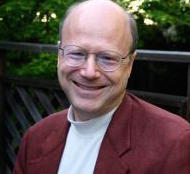
 Malachi Hacohen (Duke)
Malachi H. Hacohen is Professor of History, Political Science and Religion.
Malachi H. Hacohen is Professor of History, Political Science and Religion, a Senior Fellow at the Kenan Institute for Ethics, and a Bass Fellow at Duke University. He is the director of the Religions and Public Life Initiative at the Kenan Institute for Ethics . He teaches European intellectual history and Jewish history. He has previously taught at Columbia University, New York University, and Reed College. His research interests focus on Central Europe and include social theory, political philosophy, and rabbinic literature – Midrash to Kabbalah to halakhic responsa. Hacohen writes on the Central European Jewish intelligentsia, the European nation state vs. empire, Jewish-Christian relations, and the dilemmas of writing Jewish European history that is both cosmopolitan European and authentically Jewish. He is presently completing a book in Jewish European history focusing on the biblical story of Jacob and Esau (Jews and Christians) as it is told through the ages. Chapters include the biblical and rabbinic period, medieval & early modern Judaism, Jewish emancipation, the European nation state and the Central European Jewish intelligentsia, the Austrian Empire and the Jews, post-Holocaust Europe and the State of Israel. Some of Hacohen’s recent articles deal with Cold War liberalism, the Congress for Cultural Freedom and the formation of a public sphere in postwar Central Europe, and Austrian scientific culture at the turn of the twentieth-century.
 Zohar Maor (Bar Ilan)
Dr. Zohar Maor lectures on modern history at Bar-Ilan University and Herzog College.
Dr. Zohar Maor lectures on modern history at Bar-Ilan University and Herzog College (Israel). Among his publications are a Hebrew Biography of Martin Buber (2016), “Reconciling the Opposites: Max Brod and Nationalism in Prague” in the last issue of German Studies Review and “Hans Kohn: The Idea of secularized Nationalism” in the upcoming issue of Nations and Nationalism.
 Dr. A G Abubaker (Al-Maktoum College of Higher Education)
Dr. A G Abubaker is the Principal & Vice Chancellor of Al-Maktoum College of Higher Education.
Dr. A G Abubaker is a passionate academic leader dedicated to advancing multicultural initiatives and interfaith studies. He is committed to promoting teaching, research, and lifelong learning, fostering dialogue and diversity as integral academic disciplines for global understanding.
 Alija Avdukic (University of Dundee School of Business)
Professor in Political/Moral Economy and Islamic Finance.
Dr. Alija Avdukic is a Professor in Political/Moral Economy and Islamic Finance at the University of Dundee School of Business where he also works as Deputy Associate Dean for Globalization and Recruitment and serves as a trustee and investment advisor for the International Waqf Fund of Islamic Relief Worldwide. He holds a Ph.D. in Islamic Economics and Finance from Durham University (2016) and master from the University of Gloucestershire (2010). His research interests focus on Islamic moral and political economy, sustainable development, Islamic banking and finance, entrepreneurship and educational studies. His recent work critically examines the social and developmentalist failure of Islamic banking and finance in achieving its ethical and economic objectives. He also actively contributes to empirical research on Islamic finance and its impact on economic development. Dr. Avdukic has held several academic leadership roles, Programme Coordinator at Al-Maktoum College of Higher Education, head of department at Markfield Institute of Higher Education. He has developed multiple MSc and diploma programmes in Islamic finance and sustainability. He supervises Ph.D. candidates, serves as an external examiner and contributes to numerous peer-reviewed journals and edited volumes on Islamic economics and finance. In addition to academia, Dr. Avdukic has served as a UNDP consultant on ESG for Islamic finance, advising on sustainability frameworks that integrate Islamic economic principles. His public engagement includes keynote speeches at major international conferences, policy advisory roles, and editorial board memberships in academic journals. He has also secured research grants supporting refugee entrepreneurship, Islamic finance, and sustainable development. Fluent in English, Arabic, and Bosnian, Dr. Avdukic continues to shape discourse in Islamic political economy and finance through research, teaching, and consultancy.
 Dirk Hartwig (University of Münster)
Dirk Hartwig is junior lecturer at the Centre for Islamic Theology at the University of Münster and at the same time research assistant at the 'Corpus Coranicum' project of the Berlin-Brandenburg Academy of Sciences and Humanities.
Dirk Hartwig is junior lecturer at the Centre for Islamic Theology at the University of Münster and at the same time research assistant at the “Corpus Coranicum” project of the Berlin-Brandenburgische Akademie der Wissenschaften. He was trained in Hebrew and Judaic Studies, Arabic Language and Literature and Iranian Studies at the Freie Universität Berlin, the Hebrew University of Jerusalem, the New York University and the University of St. Andrews. He is mainly interested in the intersections of cultures, religions, languages and literatures, and their crosspolinations. His current research is mainly dedicated to the study of the Qur’an and Islamic Exegesis, where he successfully maps the continuous negotiation/s with the traditions of the Jews, i.e. Rabbinic literature, and traditions of early Christianity, i.e. the writings of the Church fathers. Unlike many Western scholars, he does not understand the Qur’an as a replica of the Judaeo-Christian Bible/s, but rather as – what Harold Bloom has called – conscious misreading, witnessing the drama of the formation of a new community in negotiation and competition with Jewish and Chrisian traditions. In his research, which is indebted to the Wissenschaft des Judentums, the Qur’an becomes visible as a theologically challenging text and as the result of an initial religious revelation, which is subject to human development. He also teaches courses in Qur’an and Qur’anic Studies at the University of Münster and the al-Maktoum College of Higher Education (Dundee), bringing together a confessional approach/es to the Holy Text with the findings of the ‘critical’ school of Qur’anic Studies.
 Matthew Rowley (Leicester)
Dr. Matthew Rowley earned his PhD at the University of Leicester and specializes in the relationship between religion and violence in the Puritan Atlantic world.
Dr. Matthew Rowley earned his PhD at the University of Leicester. He specializes in the relationship between religion and violence in the Puritan Atlantic world. After graduating, he worked on the ‘Remembering the Reformation’ project in the department of history at Cambridge. He is currently working on the ‘William Wilberforce Diaries’ project at the University of Leicester and is editing a two-volume primary source reader on Protestant Political thought from Martin Luther to WWI (in connection with the Cambridge Institute on Religion and International Studies, University of Cambridge). His multidisciplinary work discusses politics, warfare, theology, religious epistemology, identity, race, slavery, law, and the communal remembrance of the past.
 Yemima Hadad (University of Leipzig )
Prof. Yemima Hadad is an Assistant Professor of Jewish Studies (Judaistik) at the Theological Faculty of the University of Leipzig and a research fellow at the Bucerius Institute for Research of German Contemporary History and Society at the University of Haifa.
Her scholarly work spans Modern Jewish Thought, German-Jewish Philosophy, Political Theology, Continental Philosophy, and Jewish Feminism. She is currently working on a monograph, Thinking with Care: Feminine Interventions into the Ethics of Dialogue. The book traces the meaning of feminine thought (Frauendenken) in the 20th century and discusses its relevance for contemporary gender discourses.
 Rocío Cortés Rodríguez (Pontifical Catholic University of Chile)
Prof. Rocío Cortés Rodríguez is an Assistant Professor of Theology, researching interreligious dialogue, Scriptural Reasoning, multiple religious belonging, and Latin American theology .
Prof. Rocío Cortés Rodríguez is an academic of the Faculty of Theology and a member of the Practical Theology area. Her work promotes interreligious dialogue, especially with Judaism, Islam, and Aboriginal traditions. Rocío has focused her career on inter-religious co-existence in societies where their religious diversity poses specific challenges. In her Master’s studies, her research examined religious coexistence among Jews, Christians, and Muslims in 10th-century Al-Andalus (Andalusia). Soon after, during her doctoral studies, she further developed on that co-existence question but now focused on the current times. Thus, in 2019, she applied the Scriptural Reasoning, a method for interreligious dialogue, to the Chilean context.
 Inas Al Ashqar (INIRE 2026 Coordinator)
Inas Al Ashqar is a DMin Candidate and INIRE 2026 Coordinator (EX-Officio) with Business and Intellectual Property expertise.
Inas Al Ashqar currently serves as INIRE 2026 Coordinator (Ex-Officio), drawing on her experience in business management, organizational administration, and intellectual property. She is a Doctor of Ministry Candidate at St. Stephen’s College, University of Alberta, with a focus on interfaith dialogue, particularly Scriptural Reasoning. In addition to her coordination role, she teaches part-time as an instructor and co-facilitator in interreligious and field education courses at Huron University College, Western University, in Ontario. Her combined background in management, scholarship, and interfaith practice outlines her commitment to meaningful dialogue, constructive engagement, and the promotion of diversity and multiculturalism within academic and workplace environments.
