General
On April 12, 2025, all students in 6 – 8th grade are invited to the Duke University Marine Lab (DUML) for a day of fun and scientific exploration! Students will participate in hands-on activities related to science, technology, engineering, and math (STEM), and learn from diverse scientists, educators, and community members. The day starts with inspirational talks from our Leadership Team followed by an incredible Keynote Speaker. Students then meet new peers and mentors through fun icebreaker activities followed by rotations into exciting and engaging STEM activities. The DUML Dining Hall prepares a delicious and nutritious lunch, followed by one last fun activity before students regroup to discuss their favorite parts of the event, what they learned, and things they found interesting. The day concludes with STEM Panel Discussions where students meet incredible NC scientists and community members who share their journeys and insights into various rewarding careers in STEM.
How to Register to Attend GEST 2025
Registration for GEST 2025 is now CLOSED as our event is full. However, if you are registered, please complete the permission form linked below:
-
Participant Permission Form [Participants MUST bring this form with them on the day of the event ]


Event Details
- When: April 12, 2025 | 8 AM – 4 PM
- Where: Duke University Marine Laboratory
- Address: 135 Duke Marine Lab Rd, Beaufort, NC
2025 Event Schedule
9:35 – 9:45 AM: Welcome Address in Auditorium
9:45 – 10:10 AM: Keynote Talk
10:10 – 10:20 AM: Break into assigned groups and icebreaker activity
10:20 – 10:30 AM: Group Photo
(10:30 – 10:40 AM: Break)
10:40 – 11:30 AM: Activity 1
(11:30 – 11:40 AM: Break)
11:40 – 12:30 PM: Activity 2
12:30 – 1:30 PM: Lunch
1:30 – 2:20 PM: Activity 3
2:20 – 2:40 PM: Group discussion about event
(2:40 – 2:50 PM: Break)
2:50 – 3:50 PM: STEM Panel Discussion & Raffle drawings (multiple sessions)
4:00 PM: Pick-up in parking lots
Our 2025 GEST activities are below!

2025 GEST Activities
1. Extracting DNA from a Strawberry!
We will learn all about the “stuff” that makes each and every one of us unique – DNA! To get a closer look at DNA – without even using a microscope – we will create our own “DNA extraction kit” using common household materials such as salt and dish soap to isolate genetic material from a strawberry. This is a fun, easy, hands-on activity to learn about genetics.
2. What Are Dolphins Thinking?
Join researcher Dr. Hannah Salomons as we dive inside the minds of dolphins. We’ll explore how scientists use games and puzzles to help animals tell us how they think and learn. Then you’ll have a chance to get inside the mind of a dolphin, and take on the role of a scientist, as you play these games yourselves! Can you solve a puzzle – without talking! – faster than a dolphin? Come find out!
3. Who’s Who? Using Pictures to Study Wild Dolphins
Photo-identification is the process of using photographs of natural markings on animals to distinguish one animal from another. Just like we have different hair styles, skin tones, freckles, and other physical features that distinguish us from one another, many species of whales and dolphins also have physical characteristics that are unique to individuals. For example, each humpback whale has unique patterns of black and white patterns on the underside of their flukes (tail fins), and bottlenose dolphins have unique patterns of nicks and notches on the trailing edge of their dorsal fins. Use real photo-identification data collected during two research surveys to look for matches between them. Then, use a bit of math to calculate the size of their population of dolphins in North Carolina using mark-recapture methods.
4.Taste the rainbow: variation in sensory perception across the tree of life!
Different species see, taste, smell, hear, and feel the world differently due to biological differences in sensory systems. Even within a species, we all taste and smell the world a little differently! In this activity, learn about the biological basis of vision and taste and participate in hands-on activities that reveal variation in perception. In particular, you will test your bitter taste perception and experience how consuming certain foods can change the taste of other foods. *** Note that this activity does involve citrus and other fruit; individuals with food allergies should consider this when registering. There are no peanuts, tree nuts, shellfish, dairy, gluten, or other common food allergens.***
5. The Wide World of Primates!
Monkeys, lemurs, and apes—oh my! Step into the shoes (or paws!) of a primate and work together to figure out how different primates survive- and what makes them unique! Through this interactive game, you’ll learn all about what makes primates special and how we can tell what species use different strategies to survive.
6. The Rise of Resistance: Bacterial Evolution in Action
In this hands-on activity, you’ll use candy to see how bacteria can become resistant to antibiotics over time. Working in small teams, you’ll start with a collection of different colored candies representing various bacteria types, then watch what happens when “antibiotics” are introduced (some colors survive, others don’t!). Following this, let your surviving bacteria “reproduce” by adding more candies, then track how your bacteria population changes through several rounds and finally graph your results to discover patterns. Through this simulation, you’ll learn why doctors are careful about prescribing antibiotics and why it’s important to take all your medicine even when you start feeling better. You’ll also get to think like a scientist by collecting data, making predictions, and discovering how evolution works in real time!
7. Marine Zines: Create Your Own Ocean Adventure!
Dive into marine science and let your creativity flow! Design and make your own mini magazine (zine) about your favorite ocean topic—sharks, jellyfish, deep-sea mysteries, and more. Take home your creation and share your marine masterpiece with the world!
8. Salt Marsh Study: Discover a Coastal Ecosystem!
Get your feet (a little) wet and explore the amazing world of salt marshes! Using scientific tools, you’ll survey plants, animals, and the environment to see how this unique habitat supports marine life. Keep an eye out for tiny critters hiding in the marsh!
9. Science Diving: What Is It and How Do You Do It?
Ever wondered what it’s like to be a scientist underwater? Get hands-on with real scuba diving gear, practice underwater research techniques, and learn how marine biologists explore the ocean—from coral reefs to shipwrecks!
10. Hands-On Local Marine Invertebrates
Come to Lab 1 for a hands-on exploration of the wonderful world of marine invertebrates with DUML faculty Joshua Osterberg and Juliet Wong. You can pick up, hold, and observe under the microscope dozens of inverts while asking all the questions that come to mind. The activity leaders have been studying these local marine inverts for years and can share wild stories about how each lives around Beaufort. You’ll see crabs, urchins, bivalves, snails, and so many tiny creatures that you never even noticed before.
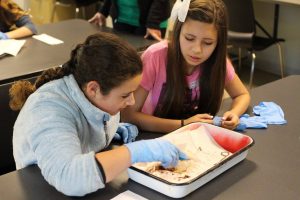
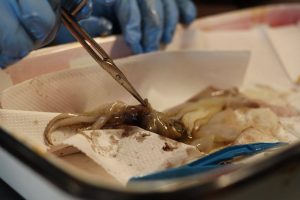
11. Squid Dissection: The Inside Scoop on Cephalopods!
What makes squid so smart? How do they change color? Find out in this hands-on squid dissection! You’ll explore squid anatomy up close, learn how they survive in the ocean, and even find their built-in “pen.” It’s messy, it’s fascinating, and it’s an adventure in marine biology!
12. Water Babies: Plankton Game!
Do you know what baby animals look like in the ocean? In this fun and interactive game, you’ll match pictures of planktonic organisms (like a blue crab in its larval form) to their adult counterparts. Can you guess which creature grows from which tiny plankton? Afterward, take a closer look at some real-life plankton under the microscope and discover the incredible diversity of life at the ocean’s surface. It’s a deep dive into the world of marine biology that’s both challenging and fascinating!
13. Paper Circuits: Light Up Your Knowledge!
Join us as we explore circuits and electricity through art! We will use copper tape and small LED lights and explore how to make a circuit on a piece of paper. Once you have completed the circuit, you will use creativity to make your circuit come to life as a light-up greeting card or light up origami!