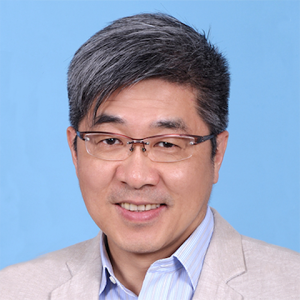
Associate Research Fellow at the Institute of Modern History, Academia Sinica
Dr. Lei received his master’s degree in physical chemistry and Ph.D. in science studies from the University of Chicago. He specializes in the history of medicine, including biomedicine and traditional medicine, in modern China and Taiwan.
His first book, Neither Donkey nor Horse: Medicine in the Struggle over China’s Modernity (University of Chicago Press, 2014) seeks to understand how Chinese medicine was transformed from an antithesis of modernity into a potent symbol and vehicle for China’s exploration of its own modernity.
His on-going research investigates the changing conceptions of the body, selfhood, and moral community through the history of two competing diseases: modern tuberculosis and laobing (“wasting disorder”), a traditional disease that is caused primarily by various forms of overwork.
Drawing on historical studies, he explores larger issues such as the relationship between modern science and non-Western knowledge traditions, the emergence of the capitalist body in China, and the role of techno-science in the modern transformation of East Asia.

Panel 3| Science, Industry, and the Logics of Reform
Civilization vs. Essence-Function (Tiyong 體用): Tianyan lun 天演論 (On Heavenly Evolution) and the Birth of Science as Cultural Authority in China
Abstract
This paper looks at the development of medical policies centered around Mao Zedong’s call for “cooperation between Chinese and Western medicine” in the Communist revolutionary bases during the War of Resistance against Japan in the 1940s. The CCP proposed the project of “scientizing Chinese medicine, Sinicizing Western medicine” as a way to forge cooperation between Chinese and Western medicine.
This paper argues that the CCP’s cooperative policy regarding Chinese and Western medicine (also occasionally referred to as old and new medicine) had an important political agenda: eliminating shamanism or witchcraft and supporting the CCP’s broader anti-superstitious campaign.
Health work and anti-superstition co-constituted one another in the Communist revolutionary agenda of building a united front in the 1940s. The cooperation between Chinese and Western medicine made possible for the CCP to decide what medical practices were legitimate, while eliminating what it considered to be illegitimate forms of “shamanism and superstition.”
Through offering alternative pharmaceutical products, medical care, and public health services, the CCP competed with religious/superstitious organizations to vie for legitimacy in governing the unfamiliar rural northern China.
