The conference is in part to celebrate our dear friend, colleague, and mentor, Prasenjit Duara’s, 75th birthday and to take stock of the immense impact his scholarship has had in the fields of history, Asian Studies, and transnational studies. It is being supported by the Asian/Pacific Studies Institute and Department of History at Duke University.
Prasenjit Duara
Oscar L. Tang Family Distinguished Professor of East Asian Studies
Duke University

Prasenjit Duara was born and educated in India and received his PhD in Chinese history from Harvard University. He was previously professor and chair of the history department at the University of Chicago (1991–2008) and chaired the committee on Chinese Studies. He then became the Raffles Professor of Humanities and directed the Asia Research Institute at the National University of Singapore (2008–2015). In 1988, he published his first book: Culture, Power and the State: Rural North China, 1900–1942 (Stanford University Press).
Culture, Power and the State won the American Historical Association’s Fairbank Prize and the Association for Asian Studies’ Levenson Prize.
Other influential books include: Rescuing History from the Nation (University of Chicago, 1995); Sovereignty and Authenticity: Manchukuo and the East Asian Modern (Rowman, 2003); and, most recently, The Crisis of Global Modernity: Asian Traditions and a Sustainable Future (Cambridge, 2014).
He has edited Decolonization: Now and Then (Routledge, 2004) and co-edited A Companion to Global Historical Thought with Viren Murthy and Andrew Sartori (John Wiley, 2014). His work has been widely translated into multiple European and Asian languages.
Prasenjit’s work provides a prime example of interdisciplinary work that illuminates larger issues that affect human beings around the world. His writings generally urge readers to become aware of the historical, geographical, epistemological and political structures that both constrain and enable human action. His first book, Culture, Power and the State in Rural North China (winning both Fairbank and Levenson Prizes) made an enormous breakthrough in our understanding of twentieth-century China by rethinking the nature of state-building. Among other things, it suggests that the logic of state penetration into the localities continued from the KMT period to the Communist period and that this process implied a different type of domination than class conflict. It also questions the category of nation-state by showing the differences in structures of power from North to South China. This first book formulates the concept of “the cultural nexus of power” to grasp the complex dialectic between local practices and the reproduction and expansion of state power, and the concept has gone on to become a standard tool of socio-historical analysis in Chinese studies.
Throughout his career, Prasenjit would search for larger concepts to understand concealed structures of domination. His next work, Rescuing History from the Nation, rethinks aspects of Chinese and Indian history through a critique of nationalism. His critique did not merely condemn the nation, but attempted to uncover its conditions of possibility in history and thereby de-naturalize both national consciousness and the reality of the nation-state. The book emerged in 1995, after the fall of the Soviet Union, when some argued that globalization might imply the end of national identity, but Prasenjit correctly suggested otherwise. Through numerous historical examples, the book suggests that although the nation plays an irreplaceable role in procuring political liberation against imperialism, it also systematically undermines the very autonomy that it ideologically posits. Although the nation became a symbol of freedom and community, political and intellectual elites saw it as a natural phenomenon, which provided it a legitimacy that could trump other forms of community. Prasenjit points to numerous conceptual conditions of the nation, especially linear history/time, which a priori relegate earlier political practices to the dustbin of history. In his view, political practice towards a better future must first come to grips with the subtle constraints of our nationalist pasts and perform the epistemological and historical underlaboring to rescue historical agency from the structures that this same agency has helped to construct.
Because so much of Rescuing was about deconstructing the nation-state, the basic category of most history writing, many scholars in the field were eager to witness how Prasenjit would actually write a history that questioned the nation-state. His response was Sovereignty and Authenticity, which dealt precisely with a topic that could not be understood within the framework of the nation-state, namely, Manchukuo. By examining the manner in which the Japanese empire attempted to turn Manchukuo into a nation, this study not only uncovered the divergent Chinese and Japanese imaginaries around this region, but also outlined a theory of imperialism that continues to be relevant to the present. Manchukuo emerged at a time when the tropes of national independence and liberation had become a means to imperial domination, a practice that continues in the age of U.S. imperialism. Sovereignty and Authenticity also examines the complex ways in which the ideology of pan-Asianism emerged as an anti-imperialist imaginary legitimizing Japanese imperialism.
In Prasenjit’s fourth book, The Crisis of Global Modernity, he turns from a primarily critical stance to a prescriptive gesture and asks how the history of pan-Asianism and Asian traditions could inform a future for planetary sustainability and flourishing. He shows how a transnational perspective is not just important to counter the repressive dimensions of the nation-state, but essential to confront some of the most pressing problems of our time, namely environmental crises and climate change, which threaten to undermine the conditions for the possibility of human life on our planet. He takes his readers on a dialectical journey to the East and West by showing how the relation between humans, nature, and transcendence has been reconstituted through various traditions in Asia and the West. In this context, he suggests that by drawing on Asian traditions’ vision of dialogical transcendence, which avoids radically separating the human, the divine, and the natural, we could provide an epistemological starting point to re-orient our practices towards creating a sustainable future.
Organziers

Haiyan Lee
Walter A. Haas Professor of the Humanities
Stanford University
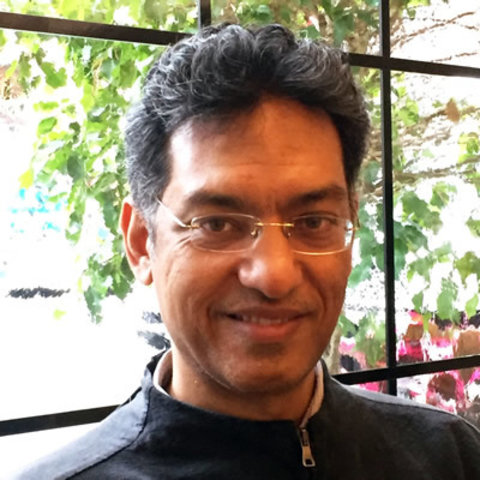
Viren Murthy
Professor of History
University of Wisconsin–Madison

Alex Nickley
Asian/Pacific Studies Institute
Duke University

Renate Kwon
Asian/Pacific Studies Institute
Duke University
