How Location Bred Connection:
The Influence of Geography & Other Factors on London’s Publishing Industry
By Ava Raffel
The following work was informed by the printer, publisher, and author relationships shown through the Gephi model discussed on the London Literary Network page.
Looking at the Gephi model, I identified several “Key Players” during this time period that were associated with a high number of publications. Choosing to examine three of these key players—Bernard Alsop, Thomas Creede, and William Aspley—an unexpected theme arose: how location bred connection. Geography was an essential factor in predicting one’s exposure to the London publishing industry, as well as one’s subsequent decision to engage with it—either as a printer, publisher, or author.
The following three sections include brief biographies of selected “Key Players” and demonstrate the indispensable role that location played in the success of their publishing feats. In addition to location, other careful observations of these three individuals, led to suggestions of traits that may be beneficial to consider in future modifications of the Gephi model.
Bernard Alsop
Bernard Alsop entered the publishing scene as a printer around 1616 under his master, Thomas Creede. Around 1625, Thomas Fawcett became Alsop’s junior partner. Their printing house was located at the end of Grub Street, an essential thoroughfare for the London book trade.
Alsop’s printing house locale was especially significant for one particular London individual: Henry Walker. Walker had begun as an ironmonger, but by the end of 1640, he decided to take a leap into an entirely different pursuit: writing. While this transition in professions seems abrupt, Walker was perfectly positioned to make the jump. Stationed in Butler’s Alley, Walker’s home was just a brief jaunt away from Alsop’s printing house. As Poyntz noted, Henry Walker “would not have had to go very far to find help with his ambition to print and sell books” (Poyntz). Aside from the convenience of being close by, the geographic closeness of these connections granted Walker a key tenet for forming relationships: proximity. While these printers, like Bernard Alsop, eventually became Walker’s professional connections, they were also, originally, his neighbors. He would have “passed them on the street” and worshiped alongside them; “seen them in alehouses” and attended the funerals of both Alsop’s and Fawcett’s daughters (Poyntz).
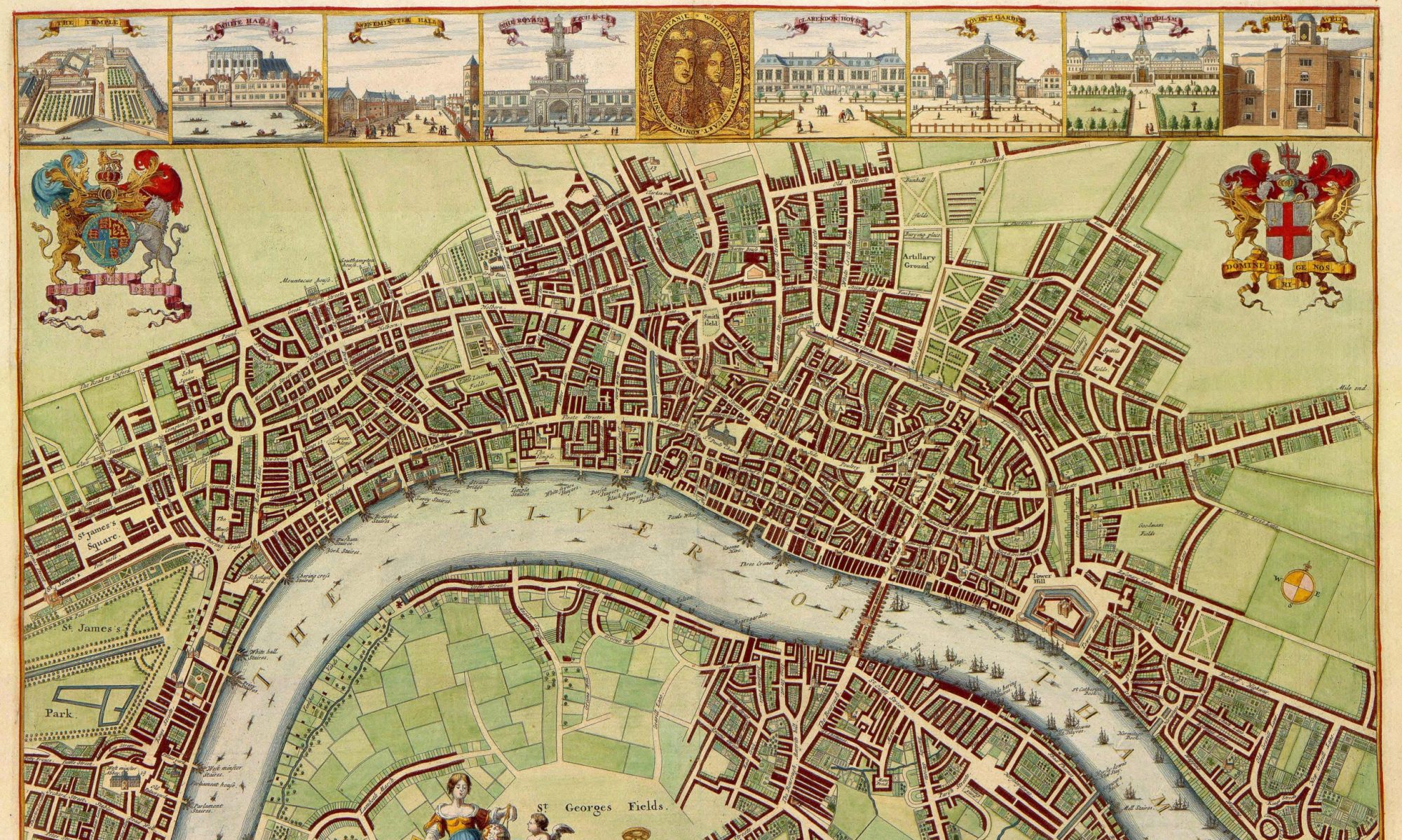
By being provided with a rough map of the area, the connections that arose between Walker and Alsop seem almost as if they were fated.
Thomas Creede
As an apprentice to Thomas East, Creede was gifted with a strong foothold in the London publishing world. This foothold proved to be quite necessary when East’s printing house was passed to Thomas Snodham instead. Fortunately, this hiccup failed to disrupt Creede’s success. He has been described as an “agent of change” and is credited as having “almost singular prominence” in the publishing world (Syme). Much of Creede’s subject matter arose from his great new idea: creating a market for printed drama. Printing was a way to extend the popularity of a play even after it had ceased to be performed on stage. Creede was a bit of a mastermind as even once he had made the initial decision to print plays, he had to “diversify, to think across as well as within structures of popularity” (Syme). From these brief quotations on Creede’s personality, it seems clear that Creede carried an entrepreneurial spirit.
Forced out of East’s house, Creede developed a strong working relationship with William Ponsonby. As Creede served as both a printer and publisher, there is some question as to what he received credit for. Usually, he was credited as the printer, while another was recorded as the publisher. However, while repeatedly credited, Creede may not have acted alone. His profound success may have come from invaluable coworkers. Thomas Creede and William Barley, a bookseller, developed a strong business relationship. Barley wasn’t a stationer, but instead worked for the Drapers’ Company. The Draper connection was significant because the theater was the source of play manuscripts. The Drapers straddled a connection between the clothing trade and the theater, while Creede, by befriending Barley, could straddle the theater and the publishing world. Syme raises a variety of questions about this entrepreneurial feat: “Who was the driving force, who procured the manuscript, who decided that publishing them might be an economically sensible idea?” (Syme). While Barley and Creede were responsible for creating a new market driven by the publications of plays, many of the publications were associated with printers that collaborated with Barley, suggesting that perhaps Barley was actually the “key player” at the center, as opposed to Creede.
How could Barley have ended up in such a situation? Well, as Syme suggests, “The physical location…almost predestined Barley to become the bookseller of choice for theater practitioners” (Syme). The location of Barley’s shop, Thoroughfare in Gracechurch—which connected London Bridge to Bishopsgate—may have triggered a unique assumption in Barley’s mind: playgoers were a significant portion of his customer base. That being said, Barley had a relative lack of success in the publishing world, especially compared to his business partner Thomas Creede. Syme theorizes an explanation to this: again, due to the location of his book store—the location that was so vital to his connection with London’s theater— served as a disadvantage to his progress in the book trade. While his location provided him with integral insights into the theater world, because he was far from publishing world’s center at St. Paul’s churchyard, his location failed to provide him with ideas of what could be important for the book trade.
Regardless of how integral Barley was to Creede’s supposedly “singular prominence,” by considering these details of Barley’s life, it seems unlikely that Creede was the “self-made publisher” that one may characterize him as if simply sorting through the Stationer’s Register. Thus, this realization points to one apparent weakness of the Gephi model discussed on the London Literary Network page: solely considering ‘who was credited with what’ glosses over the intimate, and informative, nature of these professional connections.
William Aspley
William Aspley worked for 40 years and published over 100 books. His shop was located at the heart of the book trade in St. Paul’s Churchyard. After Aspley’s twenty years in politics, he returned to the literary world with his Shakespeare Folio. What may be most interesting, however, is Aspley’s decision to, for a large part, avoid getting wrapped up in Shakespeare’s work. Aspley dedicated the bulk of his time to the publication of John Boys, a preacher. Once again, location seems to have bred this connection, as Aspley’s shop was close to Boys’ pulpit. Aspley and Boys had a very strong connection which led to a personal relationship. They had a level of trust and friendship that led Aspley to be a guarantor for Boys. Higgins notes that he has “found no other example of an author-publisher relationship from this time period to match this pair” (Higgins). Aspley and Boys collaborated multiple times, choosing each other as professional partners again and again. Through Aspley’s and Boys’ relationship, a possible connection is forged between Boys and Shakespeare: they shared the same publisher that was very dedicated to only the two of them.
While Aspley ended up working with two main clients, he began as an apprentice to George Bishop, a “powerful stationer” who was deputy printer to Queen Elizabeth (Higgins). In fact, a common link amongst Aspley’s own network was that they were all publishing in promotion of King James. This common theme may be something to search for in the sub-networks shown in the Gephi model, since this particular link of Aspley’s is quite significant: it links him to the monarchy! Aside from just connecting him to the monarchy, Aspley’s early years may have been quite influential in other ways. His master’s focus on Queen Elizabeth likely instilled Aspley with a deference to authority, as well as influencing his own focus on works in support of the state. In fact, Aspley is described at several points throughout this article with reference to such traits: he “began tentatively” and “with caution”—showing he was careful and intentional in his work—had a “consistent habit of collaborating with different figures”—showing he was open to various types of people, and had “loyalty to the state”—showing he had evidenced patterns of respect to a higher order.
While Aspley displayed a careful nature and deference to authority, he was, surprisingly, involved in a considerable fight with printer Bonham Norton as well as the conflict surrounding Eastward Hoe, a notorious scandal in which Chapman and Jonson were imprisoned. Aspley, despite these conflicts, managed to elude the authorities. Perhaps those aforementioned traits didn’t entirely remove him from disagreements, but instead provided him with a method of expertly navigating through them. This recognition of the role of conflict in these publishing networks leads to some interesting ideas for the Gephi model’s next steps. Should we code for cooperation as well as conflict in this social network model? Perhaps from that distinction, we could deduce key shared traits that benefited cooperative interactions, as opposed to conflict.
Future Work
In conclusion, the biographies outlined above are but a brief introduction to the intimate and informative connections that exist within the complex social network demonstrated by the Gephi model. Future researchers may find it illuminative to modify the Gephi model with special attention to certain personality traits, such as Thomas Creede’s entrepreneurial sprit and William Aspley’s deference to authority. All in all, the theme of location breeding connection is an important reminder that the design of spaces matter: proximity leads to connection, and those personal relationships with the proper nudge from geography, may just lead to an essential business connection.
Works Cited
Higgins, Ben, ‘A Minor Shakespearean: William Aspley at the Parrot’, Shakespeare’s Syndicate: The First Folio, its Publishers, and the Early Modern Book Trade (Oxford, 2022; online edn, Oxford Academic, 24 Mar. 2022), https://doi.org/10.1093/oso/9780192848840.003.0004, accessed 22 May 2023.
Poyntz, Nick. “Grub Street in 1641.” Mercurius Politicus, 28, Aug. 2012, https://mercuriuspoliticus.wordpress.com/2012/08/28/grub-street-in-1641/.
Syme, Holger Schott. “Chapter 2. Thomas Creede, William Barley, and the Venture of Printing Plays”. Shakespeare’s Stationers: Studies in Cultural Bibliography, edited by Marta Straznicky, Philadelphia: University of Pennsylvania Press, 2013, pp. 28-46. https://doi.org/10.9783/9780812207385-003
