Precision Health and Medicine Observation Laboratory
Health Digital Twin
Health Digital Twin is a multimodal AI platform that screens and monitors brain health using mobile sensing, speech, motion data, and cloud analytics. Designed for Parkinson’s, Alzheimer’s, and other mental health conditions, it offers objective and accessible assessments to support early diagnosis and continuous care.
Project Description
Emerging digital twin technologies are revolutionizing healthcare by enabling real-time simulation and modeling of human physiology, clinical workflows, and medical devices. Health digital twin platforms empower clinicians to design personalized treatment plans, predict disease progression, and offer continuous monitoring. These platforms analyze multidimensional behavioral patterns, identify high-risk symptoms, and deliver tailored, symptom-aware intervention strategies. They also include formative evaluation processes to ensure scalability, usability, and practical implementation—advancing the frontiers of brain health research.
International Awards
Best Paper Award
National Dachuang Award
National Software Copyright
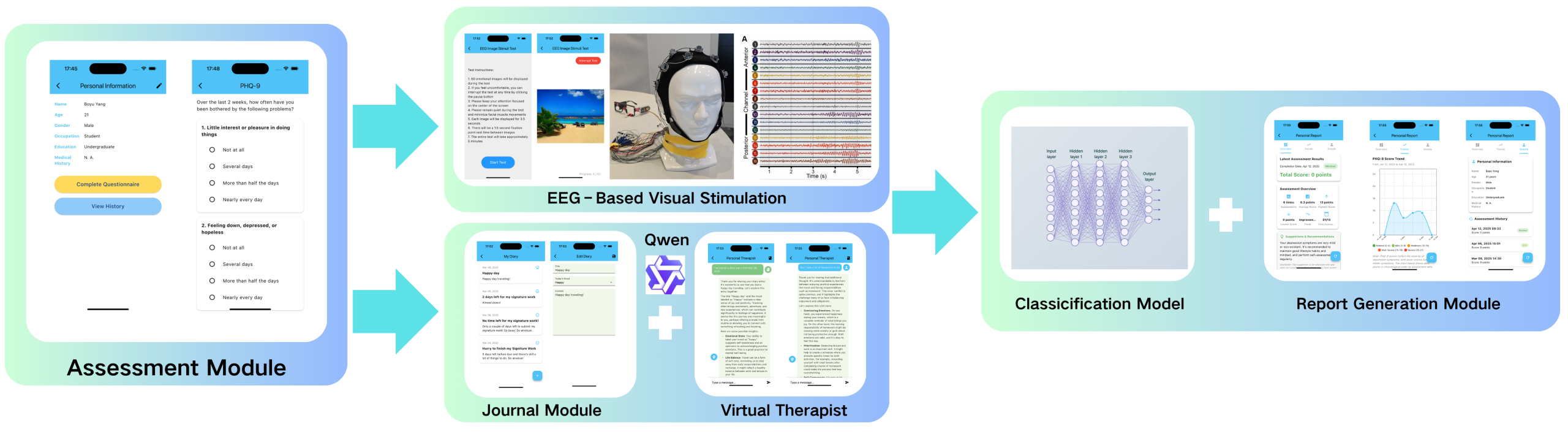
System Overiew
Our work has led to several key scientific breakthroughs, including:
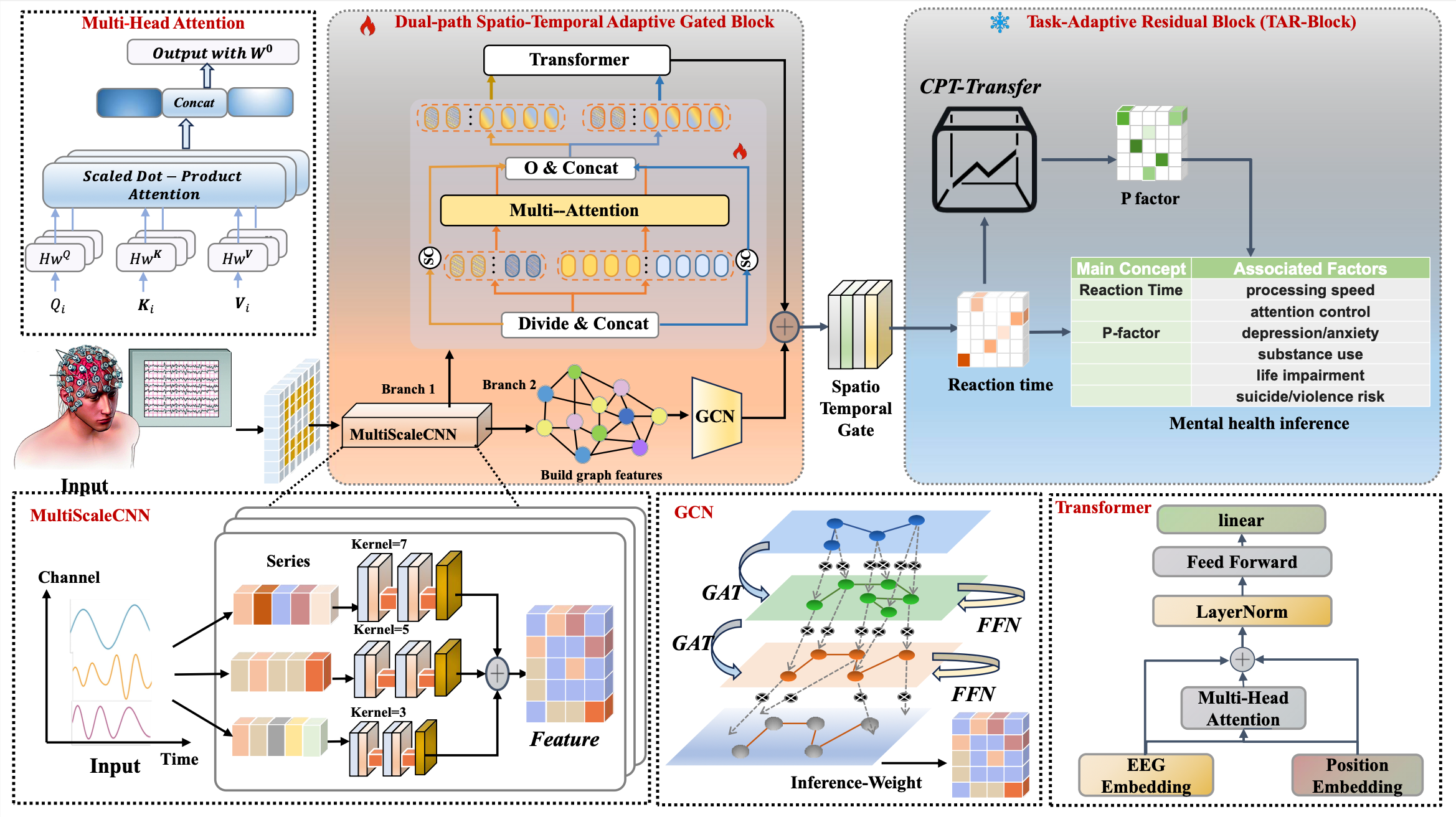
Developing mathematical models to ensure the calibration and processing of uncertain multimodal data, such as brainwave signals, medical imaging, speech/text analysis, and motion/gait tracking—along with large language models to enable clinical auxiliary diagnosis and personalized decision support.
Designing robust algorithms to extract meaningful behavioral and physiological features from noisy sensor signals for treatable chronic conditions management and physical rehabilitation applications. This groundbreaking work represents a paradigm shift in health digital twin system design, establishing a new benchmark for integrating comfort, accuracy, and real-time data processing in clinical contexts.
Another application of Health Digital Twin technology is in diabetes prevention and management, particularly tailored for the Chinese population. The novelty of this approach lies in the development of a training dataset based on a self-defined diabetes prevention guideline, which emphasizes the Chinese lifestyle, especially dietary habits. This guideline integrates culturally specific factors, particularly dietary habits and lifestyle choices unique to China. By addressing the lack of personalization and cultural relevance in existing prevention tools, the system bridges critical gaps in diabetes management. The system allows users to interact with AI in real time, receive tailored advice, and download chat histories for future reference. This study highlights the feasibility of leveraging AI to improve early prevention strategies. Such advancements are instrumental for implementing medical AI systems that doctors can trust and adopt in clinical practice.