Precision Health and Medicine Observation Laboratory
Assistive Tech for Disability
For example, prosthetic devices can range from basic mechanical designs to highly advanced robotic limbs equipped with sensor technology that responds to muscle movements, offering greater precision and functionality for the user. Similarly, wheelchairs for blind individuals can be enhanced with innovative features such as smart navigation systems, which may include GPS for route planning, audio feedback for directional guidance, and obstacle-detection sensors to improve safety and autonomy. These tailored solutions not only improve physical mobility but also empower individuals to engage more confidently in their surroundings.
Project Description
Real-Time Socket Pressure Sensing for Intelligent Prosthesis Optimization
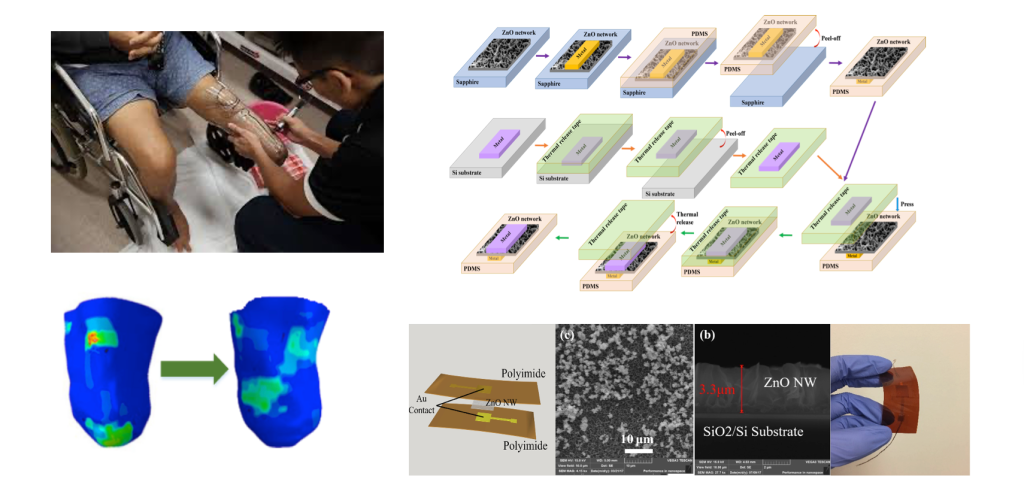
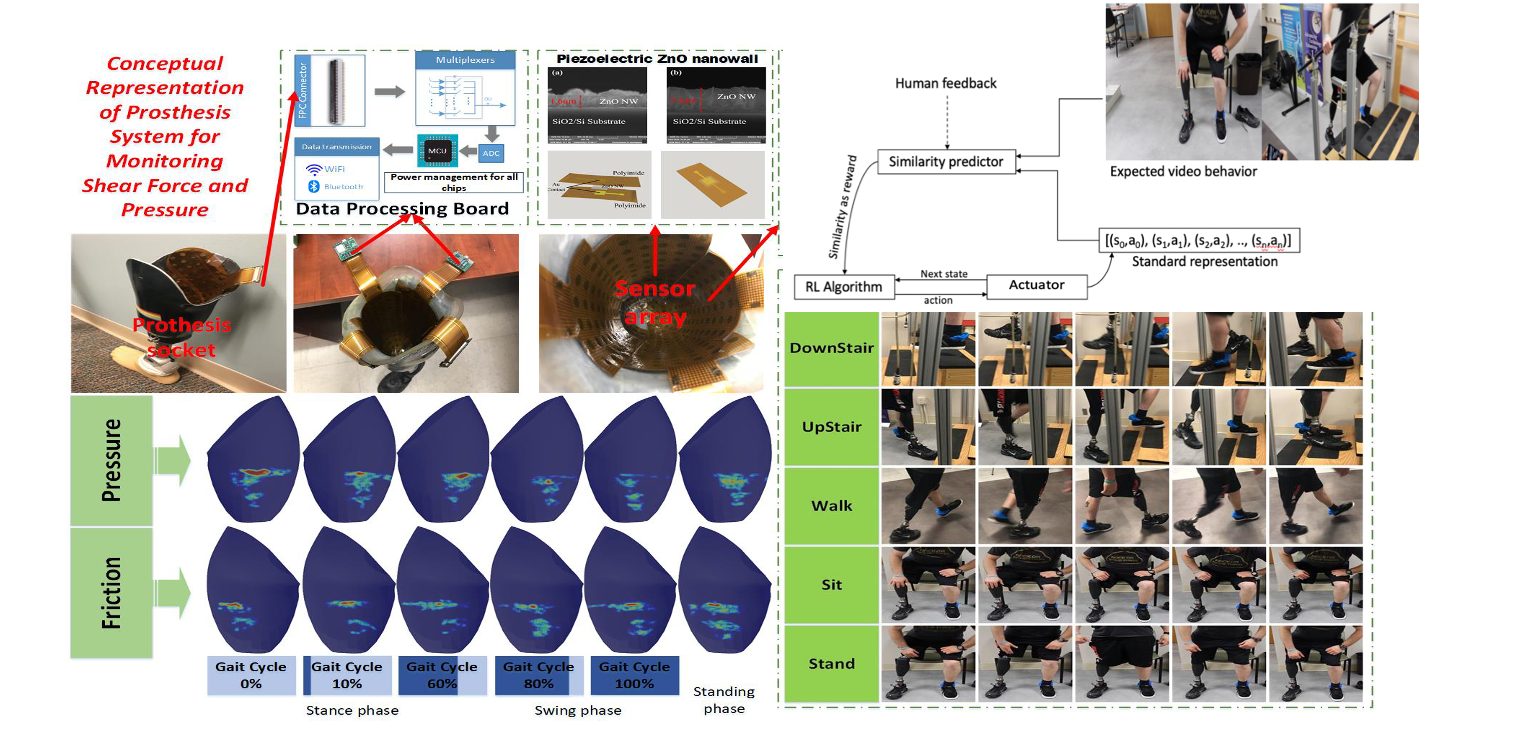
Over the past few decades, the field of prosthetics has made remarkable advancements, fueled by the development of new materials and technologies, such as targeted muscle reinnervation and powered knee and ankle prostheses. However, significant biomechanical challenges remain, particularly due to the unnatural mechanical interactions between the soft tissues of the residual limb and the prosthetic socket. Patients often experience changes in body weight, as well as fluctuations in the size and shape of their residual limb, which can lead to poor prosthetic fit. Even prosthetic sockets that initially fit well may become uncomfortable or unsuitable over time. Consequently, approximately 75% of lower-limb amputees suffer from skin-related issues—including pressure ulcers, dermatitis, infections, and pain. These challenges are even more severe for individuals with underlying conditions such as diabetes or psoriasis. To address this issue, my research team developed a wearable force-sensing system using an innovative three-dimensional nanowall network structure to continuously monitor and dynamically improve the stump-socket interaction. This flexible platform is designed to adapt to different limb shapes and changes over time while ensuring user comfort and maintaining signal fidelity.
GainsightWalker: A Smart Walker System for Visually Impaired Individuals
Our project develops a smart walker system integrating multiple sensors, including RFID, LiDAR, micro-cameras, and GPS, to assist visually impaired individuals in navigation and positioning. By detecting ground RFID tags and monitoring environmental data, the system enhances mobility in complex spaces like campuses and indoor environments. It provides auditory and tactile feedback via buzzers and vibration motors, ensuring real-time guidance. This project aims to address the need for assistive technologies, offering a cost-effective indoor positioning solution through RFID. Compared to existing solutions, our system enhances safety and convenience by bridging technological gaps in smart canes. By integrating advanced sensors and intuitive feedback mechanisms, our smart walker provides a novel solution that significantly improves mobility and quality of life for visually impaired individuals.
Publication
Designing Deep Reinforcement Learning Systems for Musculoskeletal Modeling and Locomotion Analysis Using Wearable Sensor Feedback