
This year’s symposium sessions brought together researchers, practitioners, and community leaders to explore topics in global mental health. The sessions featured presentations and discussions on themes such as adolescent mental health, alcohol-use disorder, community-based interventions, adaptation of measurement tools, child and family mental health, mental health among caregiving professions and more. Explore presentation overviews, descriptions, and recordings for each of the symposium sessions below. You can also view extended abstracts for each of the presentations here.
Morning Symposia
Time: 10:30-11:30 (symposia 1-3 are concurrent sessions)
Symposium 1: Trauma, Conflict, and Resilience
Recording: https://youtu.be/PQTxHO-oGBk
Location: Penn 1 and Zoom (same link as the conference webinar link)
Chair and Discussant: Ann Skinner, Research Scientist, Duke Center for Child and Family Policy
This symposium examines trauma and resilience across intergenerational, conflict-affected, and youth development contexts. The first presentation aims to broaden intergenerational trauma research by highlighting overlooked trauma subtypes, calling for more inclusive models and interventions. The second draws on cognitive neuroscience fieldwork with Colombian war survivors, reflecting on both methodological and ethical challenges of supporting participants’ mental health. The third shares findings from a career readiness intervention with orphaned and separated adolescents in India, demonstrating the importance of skills training in helping to reduce stress and enhance empowerment during critical life transitions. Together, these studies illuminate how trauma can manifest across settings and generations, and how sensitive and context-specific strategies can foster healing, resilience, and agency.
| Title | Presenter |
|---|---|
| Trauma, Conflict, and Resilience | |
| Making Invisible Pathways Visible: Broadening Intergenerational Trauma Research Across Subtypes, Mechanisms, and Cultures | Rebecca Hock, Hung Nguyen |
| Mental Health Challenges in Conducting Cognitive Neuroscience Research with Victims of the Armed Conflict in Colombia | Gabriela Fernández-Miranda |
| From Stress to Empowerment: Bridging Career Guidance Gaps in Indian Child Care Institutions | Ashley Talwar |
Symposium 2: Alcohol, Depression, and Intervention Strategies
Recording: https://youtu.be/sCFLNeIYRlE

Location: Penn Garden Level and Zoom
Chair: Catherine Staton, Professor of Emergency Medicine, Research Professor of Global Health, Professor in Neurosurgery
Discussant: Sarah Wilson, Associate Professor of Psychiatry and Behavioral Sciences, Associate Professor of Population Health Sciences
This symposium explores the intersections of alcohol use, depression, and intervention strategies. The first explores gendered differences in depression and alcohol use in Northern Tanzania, highlighting how sociocultural norms and social support networks shape coping behaviors between genders. The second presents a case series of a culturally adapted, nurse-delivered brief intervention in emergency care in Tanzania, showing reductions in harmful alcohol use, depression, and related consequences over two years. The third details the Alcohol Use Behavioral Phenotyping Test (AUBPT) pilot, which uses gamified, app-based behavioral tasks and machine learning to create culturally adaptable screening tools for Alcohol Use Disorder (AUD) in low- and middle-income countries. Together, these studies illustrate how culturally-adapted, innovative, and context-specific strategies can address the burden of alcohol use and comorbid mental health conditions in resource-limited settings.
| Title | Presenter |
|---|---|
| Alcohol, Depression, and Intervention Strategies | |
| “A Man Never Cries”: A Mixed-Methods Analysis of Gender Differences in Depression and Alcohol Use in Moshi, Tanzania | William Nkenguye |
| The impact and experience of a culturally adapted brief negotiation intervention for harmful alcohol use in an emergency care setting: A case series |
Anaelderrick Kimaro |
| Development of the Alcohol Use Behavioral Phenotypying Test (AUBPT): Pilot findings from Maringá, Brazil | Anvita Kulshrestha, Anaelderrick Kimaro, Doreen Msemakweli |
Symposium 3: Adapting Cognitive Assessments for Schizophrenia to Historically Excluded Groups
Recording: https://youtu.be/XQZIA_I7Cok
Location: Penn 2 and Zoom
Chair: Lawrence Yang, Pauline Gratz Distinguished Professor at Duke University School of Nursing
Discussant: William Stone, Associate Professor of Psychology in the Department of Psychiatry, Beth Israel Deaconess Medical Center, Harvard University
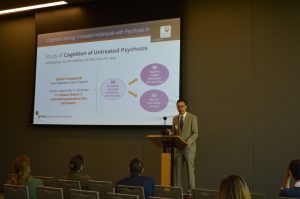
Cognitive impairment is a key feature of schizophrenia (SCZ), yet assessments are constrained by age and education. We present an adapted cognitive measure—the Flexible Adapted Cognitive Test battery for Schizophrenia (FACTS)-targeting the 27%–38% of older, undereducated individuals with SCZ worldwide. This symposium highlights advances in the use of the FACTS to broaden cognitive research in schizophrenia globally. Presentations will cover core adaptations that make the tool accessible for older, less educated respondents; new data from rural China on instruction comprehension and test completion; applications from testing in India and Nigeria; and findings from rural China showing that antipsychotic treatment effects on cognition emerge mainly after the first decade of illness. Together, these studies expand the global applicability of cognitive assessment in schizophrenia research.
| Title | Presenter |
|---|---|
| Adaptations to FACTS: Enabling Cognitive Assessments in Older, Less Educated Respondents | William Stone |
| FACTS Data Among Older Participants in Rural China: Test Instruction Comprehension and Test Completion | Margaux Grivel |
| FACTS Data Among Older, Less Educated Participants in India and Nigeria | Subhashini Gopal |
| Antipsychotic Treatment Effects on Cognition Among Never-Treated and Treated IWS in Rural China | Lawrence Yang |
Afternoon Symposia
Time: 3:00-4:00 (symposia 4-6 are concurrent sessions)
Symposium 4: Interventions for Child and Family Wellbeing
Recording: https://youtu.be/J8UPXI6wMz4
Location: Penn 1 and Zoom
Chair: Emma Mew, Post-Doctoral Associate, Duke Center for Global Mental Health
Discussant: Andrea Diaz-Stransky, Assistant Professor of Psychiatry and Behavioral Sciences
This symposium showcases innovative approaches to strengthening child and family wellbeing across diverse cultural and global contexts. The first presentation introduces Caminando Juntos, a culturally adapted psychosocial intervention designed to support Latinx immigrant families in navigating acculturative stress and fostering positive family functioning. The second uses nationally representative data from India to show how maternal depression significantly reduces timely childhood vaccination, highlighting the need to integrate parental mental health screening into child health platforms. The third presents Sathea Samathi, a new manualized therapy protocol rooted in Theravada Buddhist traditions in Cambodia, co-developed with religious and mental health leaders to promote youth flourishing. Together, these studies illustrate how culturally grounded, family-centered, and contextually tailored interventions can address pressing child and caregiver mental health needs worldwide.
| Title | Presenter |
|---|---|
| Interventions for Child and Family Wellbeing | |
| Preliminary Acceptability of Caminando Juntos, a Culturally-Adapted Psychosocial Intervention for Latinx Immigrant Families | Maeve Salm |
| Parental Mental Health and Child Vaccination in India: A SEHAT Data Study | Henry Cust |
| Facilitating Youth Flourishing with Sathea Samathi: A Theravada Buddhism-Based Mindfulness, Cognition and Behavior Change Manualized Therapy Protocol | Kate Whetton |
Symposium 5: Mental Health in Caregiving Professions
Recording: https://youtu.be/T6qBzPMT_gE
Location: Penn 2 and Zoom
Chair: Rae-Jean Proeschold-Bell, Research Professor of Global Health, Director of the Duke Center for Health Policy and Inequalities Research (CHPIR)
Discussant: Harold Koenig, Director, Center for Spirituality, Theology and Health, Professor of Psychiatry & Behavioral Sciences, Associate Professor of Medicine
This symposium explores the intersection of early life adversity, minority stress, and occupational mental health in caregiving professions. The first presentation examines the prevalence of Adverse Childhood Experiences (ACEs) among United Methodist clergy, comparing clergy to the general population and highlighting distinctive patterns of childhood adversity that may shape vocational pathways and occupational wellbeing. The second presentation focuses on divinity school students, investigating depression among sexual and gender minority (SGM) students relative to their peers and the role of shame in shaping mental health trajectories over time. A third project examines hope as a unique positive emotion, showing that it enhances meaning and purpose, particularly among those with high ACEs or mental health challenges. Together, these studies provide novel insights into how formative experiences and identity-related stressors influence the mental health underscoring the importance of tailored support systems for clergy and seminarians and highlighting the unique role of hope in mental health resilience.
| Title | Presenter |
|---|---|
| Mental Health in Caregiving Professions | |
| Prevalence of Adverse Childhood Experiences among United Methodist Clergy: Considerations for Occupational Mental Health | Jane Bo-Hyeong Lee, David Eagle |
| Depression Among Divinity School Students: Symptoms, Shame, and Sexual and Gender Minority Status | Elizabeth Johnson |
| Examining Stories of Hope and Meaning in Life | Megan Edwards, Patty Van Cappellen |
Symposium 6: Innovations in Mental Health: Games, Measures, and Frameworks for Global Change
Recording: https://youtu.be/DTRlN7r1eHI
Location: Penn Garden Level and Zoom
Chair: Avi Kenny, Assistant Professor of Biostatistics and Bioinformatics, Assistant Research Professor of Global Health
Discussant: Joao Ricardo Vissoci, Associate Professor in Neurosurgery and Emergency Medicine, Associate Research Professor of Global Health, Assistant Professor in Biostatistics and Bioinformatics
This symposium brings together three innovative projects that advance understanding of the complex interplay between mental health, behavioral interventions, and global challenges. The first tests a novel hybrid intervention that combines CBT with tabletop role-playing games to enhance social skills across age groups. The second examines data from the Hepatitis C Alcohol Reduction Trial, showing that reductions in alcohol use alone do not drive improvements in pain or psychological distress. The third shares global perspectives on the mental health impacts of climate change and proposes a framework to guide future research and interventions. Together, these projects illustrate how new methods, measures, and frameworks can expand the boundaries of global mental health research and practice.
| Title | Presenter |
|---|---|
| Innovations in Mental Health: Games, Measures, and Frameworks for Global Change | |
| Leveling Up Social Skills: A Randomized Clinical Trial on Role-Playing Games in Cognitive-Behavioral Therapy | Rafael Novaes |
| Reduction in alcohol use does not predict improvements in pain or psychological distress: Findings from the Hepatitis C Alcohol Reduction Trial (Hep ART) | Jia Yao, Rae-Jean Proeschold-Bell |
| Developing a framework for understanding and addressing the impacts of climate change on global mental health | Christine Gray, Maeve Salm, Joao Vissoci |
