
Fengyan is a classical Chinese word that literally translates to “beacon smoke” or “signal smoke.” It refers to the smoke or fire signals used historically along ancient Chinese border fortifications (like the Great Wall) to warn of incoming enemy attacks.
There are three ways to understand this term:
- Historical Function:
- Fengyanwas part of an early warning system where guards lit fires or smoke on beacon towers to relay military alerts across long distances rapidly.
- Figurative Meaning:
- In literature and modern usage, it symbolizes war, conflict, or turmoil.
- Example: “fengyan siji” 烽烟四起 means “war breaks out everywhere” (smoke of war rises all around).
- Cultural Context:
- Similar to English phrases like “smoke signals” (though Native American contexts differ) or “beacons of war,” but with specific ties to Chinese history.
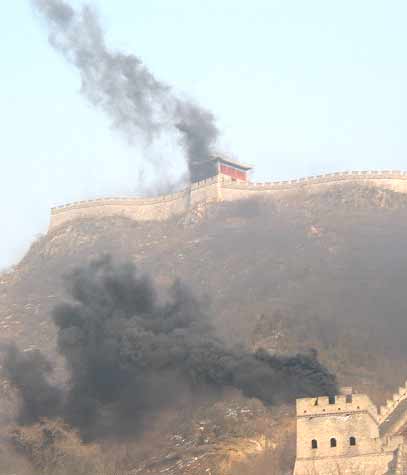
Image showing beacon smoke on the Great Wall.
