It is a typical type of bronze mirror in ancient China, got its name from its octagonal shape like a water caltrop flower.
In Chinese literature, linghua jing is often used as a synonym for a woman’s mirror, usually serving as a carrier for the woman’s affection and lovesickness for her valentine. The femininity of linghua jing might not only derive from the association between flower and woman, but also because of the labor division in ancient China: Water caltrop has been a food source for people living next to rivers, lakes and ponds in the south (where water caltrop grows). Since ancient times, most people who engaged in water chestnut picking were young women.
The bond between linghua jing and romantic love is also related to a famous Chinese story called pojing chongyuan 破鏡重圓 [broken mirror joined together]:
In the Southern Dynasties, there was Princess Lechang of Chen State, who was in love with her husband Xu Deyan. Unfortunately, Emperor Wen of the Sui Dynasty sent troops to attack Chen State in order to unify China, and the state was in danger. Worrying that the war would separate them, Xu Deyan divided a bronze mirror/linghua jing into two pieces, giving a piece to Princess Lechang, and said, “If we get separated one day, let someone take it to the market to sell it on the Lantern Festival, and I will try to find it.”
The Chen State was soon conquered, and later, Princess Lechang became the concubine of Yang Su, the Duke of Yue of Sui Dynasty. Missing his wife, Xu Deyan traveled hundreds of miles to the market in the capital city Chang’an (today’s Xi’an) during the Lantern Festival. He saw an old servant selling half a bronze mirror/linghua jing. Xu Deyan took the half-piece of mirror and found out that it perfectly fitted his half-piece mirror. So, he wrote a poem and asked the old servant to give it to his mistress. After the princess saw the poem, she was so sad that she shed tears all day long. When Yang Su heard about this, he was touched by the affection between the two and allowed the princess to reunite with Xu Deyan. From then on, the term pojing chongyuan 破鏡重圓 [broken mirror joined together] was used to refer to the reunion and reconciliation after the separation or breakup of couples。
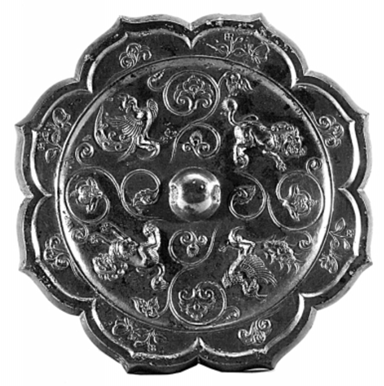
Image of a Linghua jing 菱花鏡 [water caltrop flower-shaped mirror]
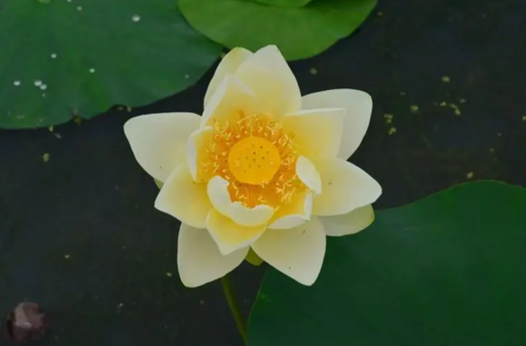
Water caltrop flower
