

OUR RESEARCH IN WILMINGTON
Our team spent time interviewing historians, artists, and citizens regarding the event.
The first step with any site that becomes the focus of the America’s Hallowed Ground team is to meet with and interview key stakeholders and community members to learn the history of their hallowed spaces and collaborate on the types of programs which might be helpful in the preservation and promotion of their stories.
In November of 2021, America’s Hallowed Ground co-directors Charlie Thompson and Mike Wiley and core advisors/members of the America’s Hallowed Ground team (which include writers, musicians, filmmakers and more) visited Wilmington to explore critical sites from the coup and interview community stakeholders.
A two-day listening session with key Wilmington community members (including descendants of the victims of 1898) and activists familiar with the coup was convened. The team interviewed Wilmington historian Cynthia Brown, Wilmington educator and community organizer, Mrs. Bertha Boykin Todd, Dr. Jan Davidson of the Cape Fear Museum of Science and History, Cedric Harrison of WilmingtoNColor, and others to learn about the history of the city, current projects related to 1898 and more. These conversations helped shape the work of our team as we began to structure how we might approach our work with students and artists to help Wilmington honor and keep 1898 alive.
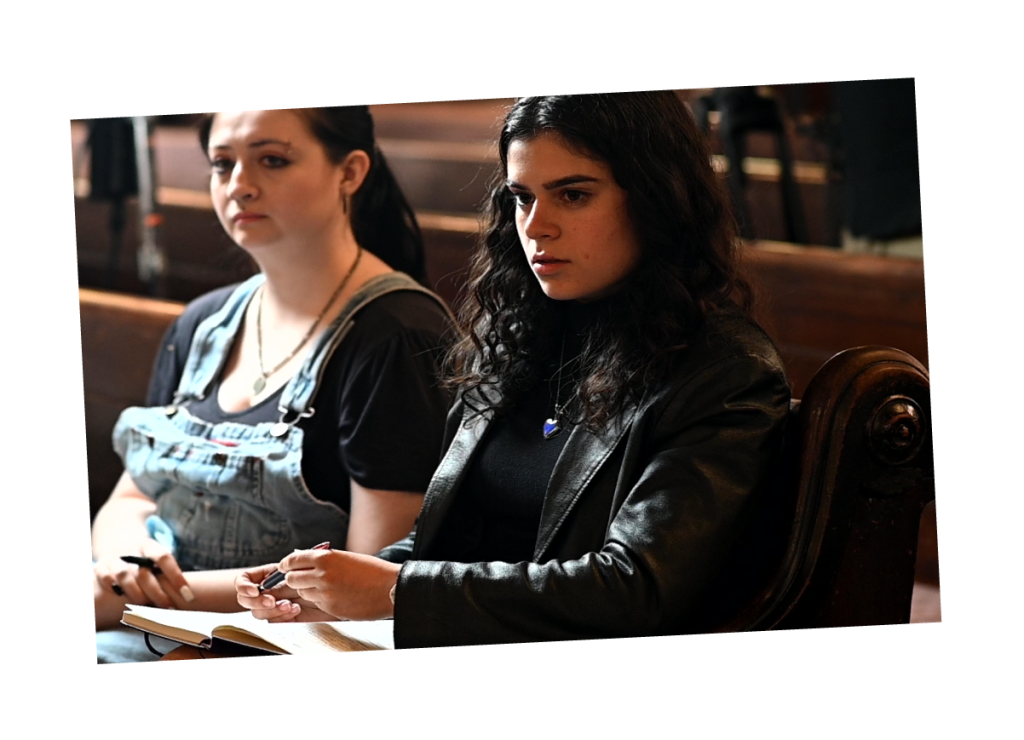
The team’s work continued in Spring 2022 via a Duke University Cultural Anthropology course that examined Wilmington 1898 through the lens of ethnography and showcased how artistic expression can make research both accessible and memorable to broader populations. Duke University undergraduate students traveled to Wilmington in April, visiting sites with Thompson and Wiley, doing anthropological fieldwork, and eventually completing public history-oriented projects of their own.
In Memoriam
Cynthia Jevette Brown
9.28.55 – 11.23.23
The America’s Hallowed Ground team would like to acknowledge the immense contribution of Cynthia Brown to our work in Wilmington. Ms. Brown’s great grandmother survived November 10, 1898 and recounted the day’s events to her when Cynthia was just eight. As a teen, Ms. Brown was intent on learning more about the coup but was denied access to the information by local librarians. As an adult, she worked as the human resources director for the city of Wilmington and as a local historian committed to ensuring the events of 1898 would not be forgotten. Her work was featured in a lengthy article in The Washington Post in 2020. Our team met with Ms. Brown on multiple occasions and her insights were critical in assisting our students with their research and work.
Ms. Brown passed away in 2023, but we are forever grateful for her assistance in our work.
