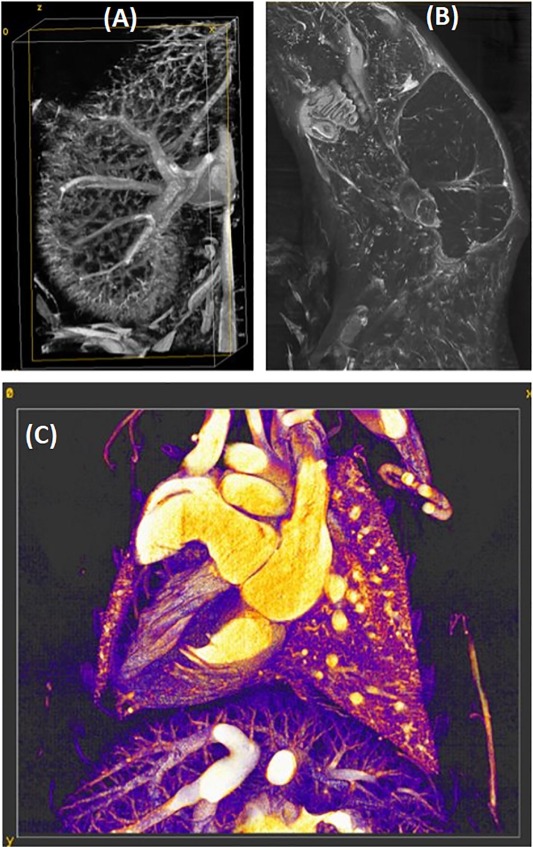
Virtual Wistar Rats Enable Realistic PCCT Simulations

Our team developed anatomically variable digital Wistar rat phantoms for realistic preclinical imaging simulations, enabling PCCT studies & reducing animal use.

Segars, H. E., Nadkarni, R., Badea, C. T., Badea, A., Chin, B., Johnson, G. A., Payne, J., Samei, E., & Segars, W. P. (2025). Development of anatomically variable digital Wistar rat phantoms for small animal imaging research. Medical Physics, 52(8), e18057. https://doi.org/10.1002/mp.18057


Posted in Uncategorized | Leave a comment

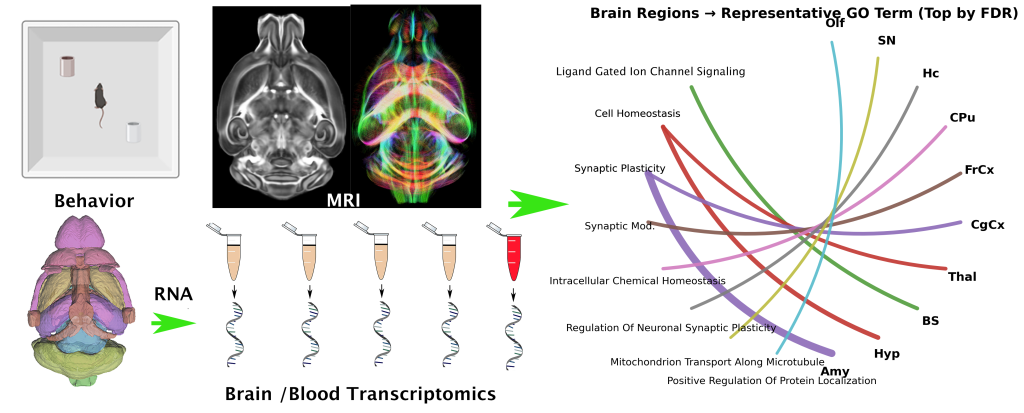
Olfactory-Guided Behavior Uncovers Signatures of AD risk

Could your sense of smell reveal Alzheimer’s risk years before memory loss?
Our new study connects olfactory behavior, brain networks, & blood gene signatures to early AD vulnerability.

Moon, H.S.; Han, Z.Y.; Anderson, R.J.; Mahzarnia, A.; Stout, J.A.; Niculescu, A.R.; Tremblay, J.T.; Badea, A. Olfactory-Guided Behavior Uncovers Imaging and Molecular Signatures of Alzheimer’s Disease Risk. Brain Sci.2025, 15, 863. https://doi.org/10.3390/brainsci15080863

Leave a comment

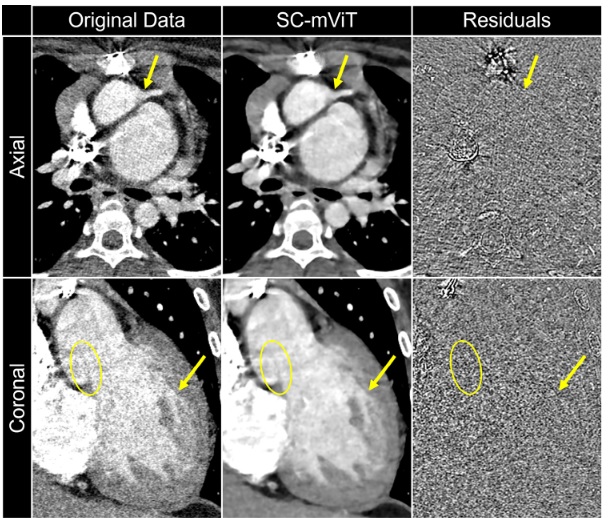
Adaptive AI Denoising for Pediatric Cardiac PCCT

We developed a data-adaptive, self-supervised deep learning method combining sparse coding (SC) +  visual transformer (ViT) for denoising pediatric cardiac photon-counting CT. Preserves anatomy, adapts to noise, generalizes well—even to preclinical data.

Clark, D. P., Cao, J. Y., & Badea, C. T. (2025). Denoising pediatric cardiac photon-counting CT data with sparse coding and data-adaptive, self-supervised deep learning. Medical Physics. https://doi.org/10.1002/mp.17918

Posted in spectral CT | Leave a comment

PCCT-Visible Bioprinted Patch

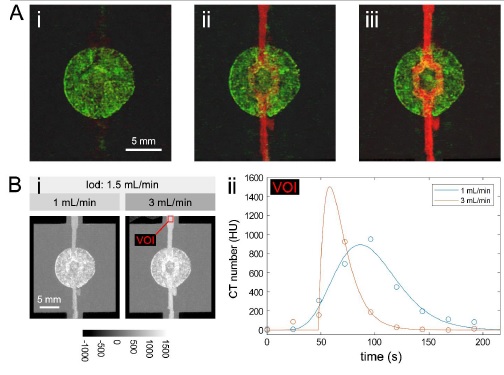
Our team developed a CT-visible bioprinted vascular patch using dual-contrast bioinks. Photon-counting CT enabled precise tracking of structure and perfusion, highlighting the role of imaging in cardiac repair.

Gil, C. J., Allphin, A. J., Jin, L., Salar Amoli, M., Rezapourdamanab, S., Tomov, M. L., Hwang, B., Sridhar, V., El Shammas, L. R., Wu, Y., Evans, C. J., Li, L., Singh, Y., Nandwani, R. K., Nish, J., Shen, M., Mahmoudi, M., Bauser, H. D., Pourmorteza, A., Roeder, R. K., Badea, C. T., & Serpooshan, V. (2025). Image-guided cardiac regeneration via a 3D bioprinted vascular patch with built-in CT visibility. Chemical Engineering Journal, 475, 165926. https://doi.org/10.1016/j.cej.2025.165926

Posted in spectral CT | Leave a comment

Rapping Research

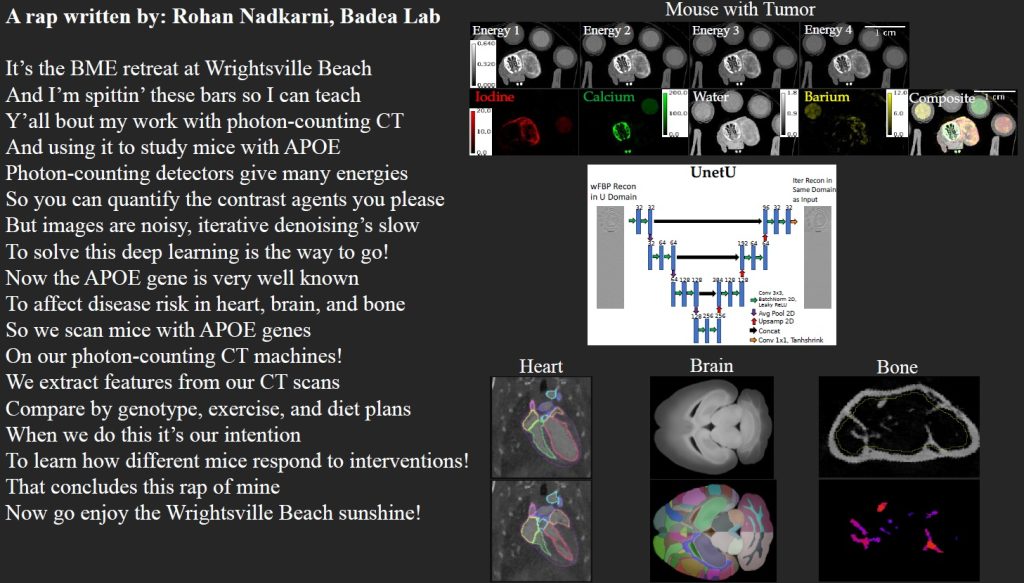
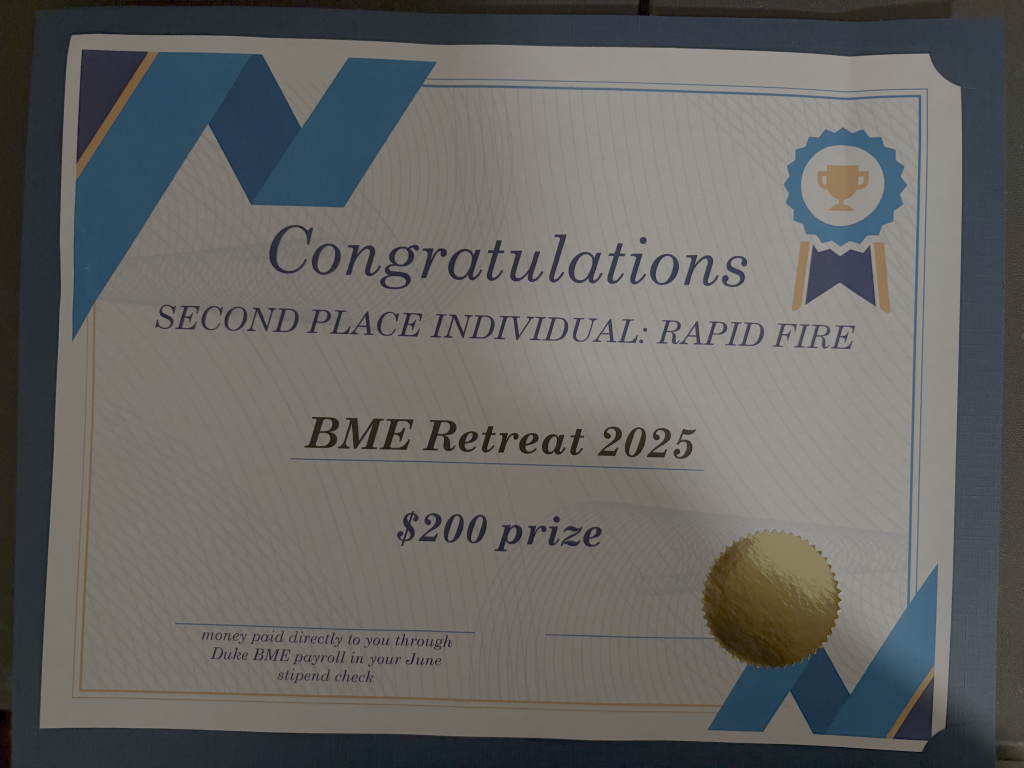
Our QIAL lab member Rohan Nadkarni brought the heat at the BME retreat—taking 2nd place in the rapid-fire challenge with original rap lyrics

Posted in Uncategorized | Leave a comment

Photon-Counting Micro-CT for Perfusion Imaging

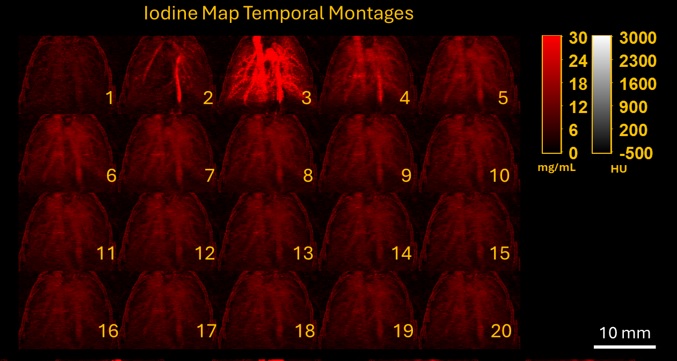
This study introduces a benchtop photon-counting micro-CT system for dynamic small animal perfusion imaging. Deep learning methods enable rapid 5D  (3D + Time + Energy) imaging and quantitative blood flow analysis, supporting high-throughput preclinical vascular research.

Allphin AJ, Nadkarni R, Clark DP, Badea CT. Photon-counting micro-CT scanner for deep learning-enabled small animal perfusion imaging. Phys Med Biol. 2025 Jun 27. doi: 10.1088/1361-6560/ade94b. PMID: 40578400

Posted in spectral CT | Leave a comment

Hae Sol Moon Defends PhD on Alzheimer’s Modeling

Congratulations! Dr. Hae Sol Moon has successfully defended his PhD on “Integrative Modeling of Alzheimer’s Disease Risk”.

Posted in Uncategorized | Leave a comment

Celebrating Dr. Alex Allphin’s PhD Defense!

Huge congratulations to Dr. Alex Allphin on a successful PhD defense! A key member of our QIAL lab, Alex’s work has pushed the boundaries of imaging science.

Posted in Uncategorized | Leave a comment

Mapping Exercise-Induced Brain Changes in Alzheimer’s Disease

Voluntary & enforced exercise drive distinct brain changes in Alzheimer’s models.
MRI reveals how emotion, memory, & motor circuits adapt—showing exercise’s neuroprotective power.

Badea A, Mahzarnia A, Reddy D, et al. Neuroimaging biomarkers of neuroprotection: Impact of voluntary vs. enforced exercise in Alzheimer’s disease models. Magn Reson Imaging. 2025;110406. doi: 10.1016/j.mri.2025.110406

Posted in Uncategorized | Leave a comment

APOE-Dependent Cardiac Response to Exercise in Mice via PCCT

This study investigates the impact of exercise on cardiac function across different APOE genotypes in mice using low-dose cardiac photon-counting micro-CT and deep learning-based segmentation. Results show significant, genotype-dependent improvements in cardiac performance, with the largest effects observed in APOE3 and APOE4 mice.

Allphin AJ, Nadkarni R, Han ZY, Clark DP, Ghaghada KB, Badea A, Badea CT. Assessing the cardioprotective effects of exercise in APOE mouse models using deep learning and photon-counting micro-CT. PLOS ONE. 2025 Apr 10; https://doi.org/10.1371/journal.pone.0320892.

Posted in Uncategorized | Leave a comment